Monday, July 24, 2006

All I Really Really Want Is Zigazig Ha...

In an article entitled “Girl Power as Anarchism”, that appeared in The Guardian on Monday and has now been reprinted in this past Saturday’s Globe and Mail under the title “What Happened to Girl Power?”, John Harris writes about the legacy of girl power, ten years after the Spice Girls’ single “Wannabe” topped the charts.

Harris claims that despite heavy media criticism and the band being “shot through with absurdity and contradiction…their claim to be waging war on a testosterone-heavy consensus just about held up.” That the Spice Girls were a valid form of feminist thought is an argument I had with many people during those first heady years of Spicemania.

The Spice Girls were widely criticized for declaring their maxim of “Girl Power” while dressing in revealing outfits and generally not being very cerebral. (I remember reading a Vogue interview where the author gave a list of words that the girls had to have defined during a conversation, one being “sibling.”) The irony of the situation was that critics divorced the women’s sexuality and intrinsic interests from the band’s explanation of Girl Power: we are going to do what we want to do and we’re not going to let men dictate what that is (which is basically a tenet of feminism). Critics wouldn’t let overt sexuality and an interest in fashion exist with feminist thought. But these two things are not mutually exclusive.

Being the feminist that I am, I can’t ignore the fact that many societal factors influence what women perceive as sexy or interesting. I shave my legs because I say I like the way it feels and looks, but really, through many subconscious avenues, I have been told that I like the way it feels and looks. But the basic underpinnings of the Spice Girls’ assertion were that you should feel good about yourself and not let anyone cut you down. Is this way of thinking so inconsequential and enslaved?

Harris mentions in his article that he read “The Whole Woman” by Germaine Greer, published in 1999, “when Spice hegemony was fading fast. ‘The Spice Girls did make a difference,’ [Greer] wrote, ‘because their most passionate fans were eight-year-old girls.’ A study of children's oral culture had found, in the post-Spice climate, that ‘whereas half the space in school playgrounds used to be taken up by a self-selecting group of boys playing football, girls' clapping and dancing games were taking over’.” The eight-year-old girls took on board the message of Girl Power and were putting it into action; and not by becoming part of the male world by playing football. They maintained their interests (just as the Spice Girls maintained theirs, as well as their sexualities), marrying that with a greater sense of self-worth and entitlement.

The Spice Girls are not the voiceless, nameless girls that we see splashed across men’s magazines. They may have dressed similarly to the nameless girls, but their voice was what set them apart. They took their notoriety and influence and changed the thinking and actions of little girls.

And all they really wanted? To “zigazig ha…”

Sunday, July 23, 2006

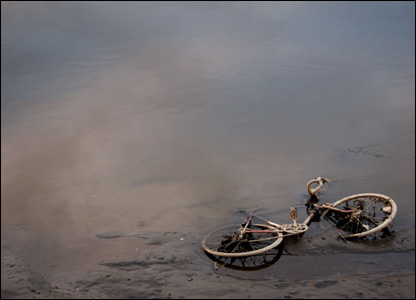
Bicyclette Quebecois


Faithful readers of this blog will recall a photo of an abandoned bicycle underwater in Amsterdam in a previous post. Here is another abandoned bicycle, this one in Quebec.

Tuesday, July 18, 2006

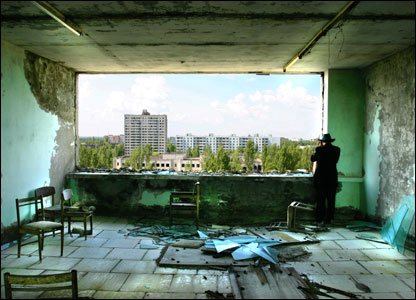
The View From Here


What is it about the restricted area around the Chernobyl reactor that makes for such despondent photos with dolefully muted colours?

Friday, July 14, 2006

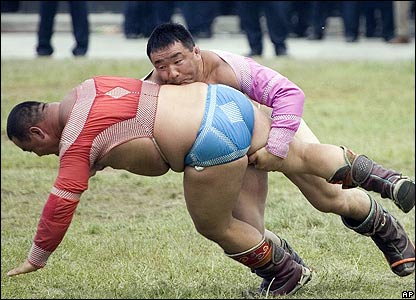
Mongolian Wrestling


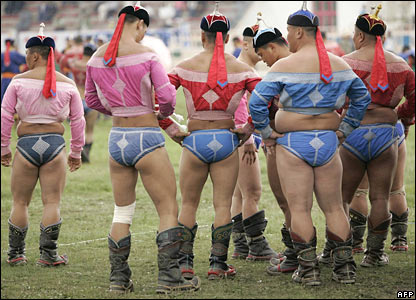
Congratulations to those who guessed it - the Guess the Sport II post was a picture of wrestlers waiting to compete at the annual Naadam Festival (in Ulan Bator, the Mongolian capital). The festival coincides with the 800th anniversary of the founding of the Mongol empire by Genghis Khan.

Thursday, July 13, 2006

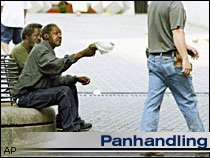
Panhandling

Jane Pitfield, conservative and mayoral candidate, is pushing for an anti-panhandling by-law to be read at City Hall. This from a woman who lives the high Leaside life where, if the undesirables of society make it too far up Bayview, they’re quickly shooed back to their Don Valley homes (Open-air bedrooms, complete with surrounding trees and pleasing tarps to keep out the rain. A great fixer-upper option!).

How does panhandling make it to the top of Ms. Pitfield’s agenda of things to change?

I can’t remember a time when someone was rude to me if I did not fulfill their request of a quarter or a loonie. In fact, all I hear these days is the polite phrase: “Thanks anyway, have a good day,” even to people who have whole-heartedly ignored their fellow human’s plea. I once heard a guy, seated comfortably in his SUV, tell a panhandler to get a job. An exchange of words occurred, the panhandler remaining polite and dignified, the SUV driver disintegrating into insults and epithets.

Perhaps it is not an anti-panhandling law we need, but an anti-asshole law. Just as you would politely decline being able to give the time to a fellow human being because you weren’t wearing your watch (and not scold them for being so imbecilic and inept for forgetting to put one on that morning – oh wait, you forgot, too), so should you acknowledge the request, “spare some change?” with eye contact and a polite, “sorry,” instead of ignoring, or worse, chastising the person below you who, “but for the grace of God,” go you.

Wednesday, July 12, 2006

Clapham, July 3rd

”Simon!” calls Lyla as she sees him stoop to fit his tall frame through the truncated door.

He sees her and smiles, nodding slightly and comes over, his eyes flitting self-consciously to the table of girls who have noted his entry with stares and whispers.

“Hello!” he says warmly, receiving the embrace that Lyla has offered, half-standing out of her chair.

She holds him a moment too long, protecting him, perhaps. He is still her sweet Simon: innocent and unknowing, struggling to figure out his place in this world. Although the sunglasses he places on the table are ten times the price she has ever paid for a pair. She can’t quite see him in the light that most people do, especially the table of girls who are surreptitiously trying to get Simon in the viewfinder of their camera phones.

“It’s like a bloody fishbowl,” says Lyla, not moving her lips in a lazy attempt at her own surreptitiousness as Simon sits down and leans in to hear her.

“Yeah, well, I know,” says Simon, unsure if he wants to get into another discussion about his newly-found fame.

“So, how are you?” asks Lyla, sensing his hesitation, eager also to return to the distilled form of normalcy the two friends now inhabit.

“Good, good,” says Simon. “I’m off for a week in France with Charlotte.”

“Ooo! Whereabouts?”

“Down near Toulouse – we’ve found – “

“Excuse me…”

It’s one of the girls from the table. She is grinning and can’t be more than 16 or 17 years old. Lyla and Simon look up toward her.

“Are you Simon from Seafish?” she asks, her made-up eyes eager and focused on Simon.

“Er, yes, I am,” he says, casting a quick glance at Lyla, who smiles slightly and then looks at the table.

“Can I have your autograph?” She offers Simon a pen and a journal, white with pink flowers on the covers, the first half of the blank pages covered with snippets of writing in different hands.

“Sure,” says Simon, taking the journal and finding the next blank page. “What’s your name?” He looks up at her, eyebrows raised.

“Charlotte.”

“Ah. Same as my girlfriend’s,” he says, and Charlotte giggles, receiving the closed journal and pen when he is finished.

“Thanks,” she says, raising her shoulders to her ears, still grinning.

“No worries,” says Simon, grinning back.

“Bye!” she says, backing away slowly.

“Bye,” says Simon.

“Bye,” says Lyla, after the girl has turned away and is walking swiftly back to her fold.

Simon and Lyla watch her until she sits, the heads of the other girls forming a tent around the journal. Simon and Lyla turn back to each other. They exchange a look that is half-quizzical, half-surprise, which then dissolves into a shared snicker.

“Right,” says Simon, “Where were we?”

Tuesday, July 11, 2006

Guess the Sport II


These participants are waiting to compete in which event (and in which country if you're feeling sporting)? First correct answer receives a replica pair of briefs, worn in the photo.

Friday, July 07, 2006

Thoughts from Terry

"It's like, sometimes you go to a party, right, and everyone's all fuckin' loaded and you're not loaded, so you go up to people and you're like, how's it going and they're like, woooo!!! And then you're like, ya, okay; and you're trying to talk a bit and they're fuckin' loaded and then you realize the only way to keep going is to catch up to them. So you shotgun a few and then you get good and pissed right away."

FUBAR, 2002

Thursday, July 06, 2006

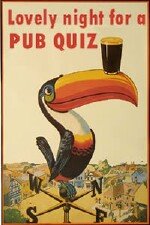
The Pub Quiz

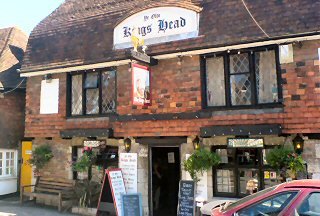
I was first introduced to the Pub Quiz on Wednesday nights at the King's Head pub in the English village of Battle while spending a year working overseas. I was still in an American-tourist state of finding everything in Britain romantically quaint, so sitting in a low-ceilinged, 600-year-old building was new and exciting. I paid my quid’s entry fee and started the first of 5 rounds on all manner of topics. This became an almost weekly event, my team winning the competition only once. When we won, we only got about five pounds apiece, but it was the weekly title of Pub Quiz Winners that was so coveted.

Later, while living in Sydney, Australia, I found another Pub Quiz at the Trinity pub. My knowledge of North American sports teams proved to be an asset to my team of mostly-British backpackers, although one overseas call was made (illegally) to discern the name of the Pittsburgh hockey team (Penguins). My trivia talents were better rewarded at the antipodean quiz night: my team was announced as "Last Week's Winners" twice.

Upon returning to Canada I was able to sate my thirst for trivia by playing the NTN trivia game that some bars have where you type in answers on a little box with an antenna. But this form of competition lacked the focus, camaraderie and social interactions of a proper pub quiz.

So I tried to do my own. The only problem was, being a primary school teacher, I wanted everyone to do well and began giving hints and clues and awarding extra points, much to the dismay of some of the more serious participants.

And now I have discovered a better-organized pub quiz with a better turn-out which runs at the Duke of York pub in Toronto. It is run by Pub Stumpers, a trivia league established in 2004. Upon entry, I noticed quite a specific demographic: participants were university students, the girls clad in trendy retro-80s outfits and the boys in graphic t-shirts and thick-rimmed spectacles. I sat down in my simple jeans and ordered a pint, in anticipation of my brother’s arrival. Surely our collected genepool would see us to the top of the tables.

I felt immediately intelligent, easily answering questions like, which animal has the highest blood pressure (the giraffe) and according to the poem, which child is full of woe (Wednesday’s – and I know this because I was born on this sorrowful day). My brother cruised through such queries as Frank Beard is, ironically, the only member of which band to not sport a beard (ZZ Top) and which South American country is named after the Latin word for silver (Argentina). The music round was the most fun, trying to extricate the name and artist from only a few bars of a song. Embarrassingly, I got “I Need to Know” by Mark Anthony and was convinced that a Foreigner song was actually “Join the Joyride” by Roxette. Brother Tim came through with “Video Killed the Radio Star” by The Buggles, which I was sure (along with most of the other contestants) was an A-Ha song.

So, what is it that brings people out to quiz nights? The pursuit of intellectual dominance? The team spirit and co-operation of the contestants? The arguments that erupt over whether a “grimalkin” is a cat or a hamster (it’s a cat)? The excuse to have 3 pints on a Tuesday night?

All of the above. The pub quiz gives a focus to the night’s events, it provides a goal for revelers to co-operatively strive for, and it supplies conversation starters for people to get to know each other better. The Pub Quiz also has a way of bringing every person in the room together, creating a community of trivia buffs who call out to the Quiz Master and to each other, all in pursuit of that elusive weekly title: Pub Quiz Winners.

Wednesday, July 05, 2006

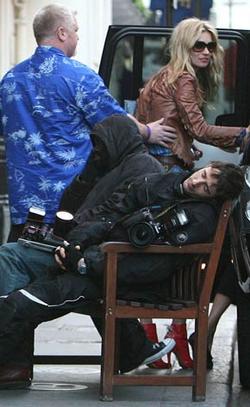
Avoiding the Paparazzi


All those celebrities that complain about being hounded by the paparazzi need to become more creative with their avoidance techniques.

Instead of sending out decoys or exiting at the rear of buildings, follow Kate Moss's lead: party until really, really late so that it's early (like 5:45am) and then sneak past the photographers while they're sleeping.

Genius.

Thursday, June 29, 2006

I Hate These Shoes


I've been away. I've been away trying to come up with other fashion trends that I have hated, like the ubiquitous shoes shown above. However, I can't remember any.

Comfort, schmumfort. These shoes make a seemingly normal person look like a mammoth-hooved garden gnome.

Wednesday, June 14, 2006

Eat Your Heart Out, Jack Handy


Then all of a sudden,
something turned your world
upside down...

Tuesday, June 13, 2006

World Cup Equalizer


Sudanese refugees watch a World Cup game at a camp in Darfur.

Sunday, June 11, 2006

Baby Brangelina

A couple of years ago, I swore off ever buying another one of those glossy, graphic gossip magazines because, like that bag of chips that looks so tempting on the shelf a the corner store, I knew that after the purchase and consumption I would eventually end up feeling empty and slightly stupid.

Even though I have not actually purchased Us or People or a similar rag for several years now, I have managed to keep abreast of the events in the lives of several celebrities by reading magazines at the gym and wandering the internet: I know some of the details of the Heather Locklear-Denise Richards feud, I’ve seen Britney Spears’s various maternal mishaps and I can name the offspring of Gwyneth and Chris, Katie and Tom, Gwen and Gavin, and now Brad and Angelina.

But it wasn’t until the birth of Shiloh Nouvel and the subsequent interview that “Brangelina” gave in Namibia, thanking the country for hosting the birth, that the complete weirdness of our culture’s obsession with the lives of famous people really hit me.


Here are two parents, one a UN Goodwill ambassador, who have just sold their newborn pictures for over $4 million (the money will be given to charity) and are now discussing the birth in a country where the infant mortality rate is 48.1 in 1000 births (compare to 4.69 in Canada). And this is major news.

It just seems such an odd thing to hold an almost “press conference” about the birth of a child. But, as celebrity magazine sales show (and column inches in respected newspapers around the world exhibit), we want to know about the exploits of those in the public eye.

Now if I could only swear off the chips…

Friday, June 02, 2006

Notes from the Classroom

Okay, this is slightly self-indulgent, but when you're a teacher and a kid says something funny or you say something you never thought you'd have to in your life; you only have yourself to laugh with. And so, I share:

CUTE KID QUOTES

My children were using unit cubes to explore division problems with remainders when one student became convinced that one of his unit cubes had been taken by a fellow student. He said to me, “I had remainder 7 and now I only have remainder 6! She has my cube!”

PHRASES YOU NEVER THOUGHT YOU'D UTTER...

I said this right after a boy fell on his hands and knees, positioned his face 10cm from the floor, and blew out his nose as hard as he could: “If you have something up your nose, get a tissue. Now, can you find the booger and clean it up."

Monday, May 29, 2006

Guess the Sport


Okay, this is an actual competition that took place in Gloucestershire, England this past weekend. Any guesses as to the sport? Find the answer in the Comments window...

Sunday, May 28, 2006

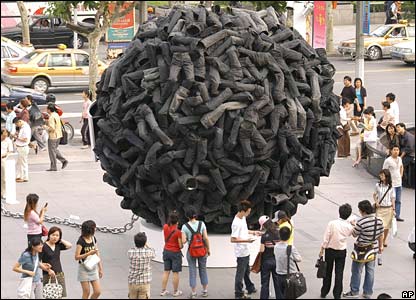
Ball of Jeans


If I were a geneticist, I'm sure I could come up with some witty caption here, punning the word gene and referring to strands of DNA.

Thursday, May 25, 2006

Chick Lit Through the Ages

“With their work routinely marketed with frothy cover illustrations and stamped “chick lit,” young, urban female authors struggle with a label that pushes sales as much as it undermines their efforts.” So reads the caption of Leah McLaren’s self-reflexive article about this new genre in June’s issue of Fashion magazine.


But is the genre of “chick lit” really new? Hasn’t “chick lit” existed since the inception of the novel, just in a slightly different form? (But, perhaps, marketed in a slightly different way?) And is this why I contained the novel moniker in non-committal quotation marks so many times in the previous 50 or so words?

A brief history of the novel: when humans began writing down their stories on parchment instead of cave walls, they often did so in the form of ballads, sermons, poetry and plays – forms to which illiterate access was easy. So with the move away from the authority of the Church and rise of the middle class around 1700, there came increasing literacy amongst this class and thus the rise of the novel. This is the argument of Ian Watt’s Triple Rise Thesis, which has been widely criticized for its assumptions, but will serve my simple purpose here.

Mary Shelley was one of the first female authors to write in the form of the novel; however, it was Jane Austen, who included several central female characters and their quotidian happenings in her novels of manners, who really started the “chick lit” genre. Austen’s novels include all the romance, negotiations of society and character growth that we see in many of the popular “chick lit” novels today.

Just as Catherine “greatly preferred cricket…to dolls” in Austen’s Northanger Abbey, and the title character in Emma enjoys such unladylike pursuits as archery, our modern day heroines like Bridget Jones do not fit the romantic feminine stereotype. We enjoy reading about slightly flawed characters (flaws that we may see in ourselves) who eventually stumble through the imperfections of life to prevail in the end (usually by landing a Marc Darcy or a Mr. Knightley). The reading is emotionally light, lacking in any heavy issues.

Compare this to the rise of the romance genre, with flowing hair and chiseled pecs on the pink and white covers, and the elaborately described scenes of love and loss on the pages inside. These novels work on ideas of perfect and flawless love. Their sole audience is women and their sole purpose is that of escape, with little critical analysis or thought needed.

So perhaps this is where “chick lit” veers from the more serious literature written by women. Virginia Woolf’s novels deal with homosexuality and suicide, Sylvia Plath’s deal with mental illness: their novels do include the female experience of traditional romantic relationships, but it is never the central theme. Lives tend to be less than ideal, the subject matter focussing on struggles that may not be solved in the end.

The same can be said of many contemporary (Canadian) authors – Margaret Atwood, Alice Munro, Sylvia Fraser, Ann-Marie MacDonald – these authors write from the perspective of “other”: marginalized members of society trying to negotiate their place within it. These stories are denser, pithier dissections of our so-called lives. They make us take a look at our imperfect existence and draw connections to ourselves.

Bridget Jones may have marked the shift from romance to “chick lit”: Helen Fielding presented us with a flawed character in an essentially romantically structured novel. She included elements of “perfect love’ from the romance genre with the idea of imperfect characters from weightier tomes. It is, perhaps, not as dark a reality as authors such as Atwood and Plath might illustrate, but still moves away from the idea of ideal, true love that follows a fated, effortless path.

Like Bridget Jones, the new, successful spring of pink and teal novels, set out pleasingly on tables in bookstores, combine the endeavour for perfection with the reality of “chick” life. McLaren may feel that the label undermines her efforts as a serious novelist (she has recently written The Continuity Girl, which I haven't read), but is she really writing about serious subjects?

Good literature, regardless of the author's gender, is engaging, thought-provoking and enduring. And these adjectives can be applied to any book, regardless of the gravity of the subject matter. Sometimes, all you need is to read about how Catherine lands Mr. Knightley. I'm sure Jane Austen would agree.

Wednesday, May 24, 2006

How Does a Teenage Boy Cross the Road?


Oh, how I hate that languid walk of teenage boys as they saunter across the street, slowing traffic with their invincible arrogance and over-sized pants. I fantasize about speeding up and driving into them, feeling the satisfying thud as their skinny bodies; no longer hard and impenetrable, but porous and delicate; hit the front end of my car and sail gracefully, slowly, to a soaring soundtrack, out of my way.

Saturday, May 20, 2006

Homer the Philosopher

Just as Simpsons devotees have been arguing for ages: The Simpsons is a forum for modern philosophical discourse, led by the great philosopher of our age, Homer Simpson. Read the full analysis as explored by philosopher Julian Baggini.