Maybe it’s my unpredictable female hormones or the fact that I was almost convinced of the benefits of this UN-sanctioned war in Afghanistan; but I am now completely deflated by the news that president Hamid Karzai has signed a law that puts severe limits on the rights of Shia women. True, Karzai has backpeddaled after an intense international response, but it still brings up many uncomfortable questions.
The first has to do with the international response. Many critics used this opportunity to decry this step back in the UN’s quest to better the rights of women in Afghanistan. While certainly a bonus, this was not the reason the UN approved the forced removal of the Taleban. They went in because the Taleban were harbouring and funding terrorists who were loosely linked to the September 11th attacks.
Sally Armstrong, speaking on CBC’s The Current yesterday, pointed out that countries have never gone to war over women’s rights. I remember an article in Glamour magazine, of all places, detailing the oppression of women under the Taleban back in the early 90s. Western leaders cooled their heels for almost a decade before addressing the problems with the regime, their impetus certainly not being women’s rights.
So the UN is now in Afghanistan, nation-building and setting up democracy: essentially forcing Western ideals on a culture that has just proved they don’t hold. And this is where my deflation comes from: change like this can’t be imposed, it has to come from within and it’s going to take a really long time. Hell – when both my grandmothers were born, they were born into Western societies where being female precluded their right to vote. (By the time both reached the age of majority, they were afforded these rights. It is a right that I take for granted every time I enter a voting booth, despite only holding this right for a couple generations.)
The second question that arises is the fact that the law applies only to the Shia minority – a branch of Islam practised by the ethnic Hazaras, who, if you’ve read The Kite Runner you’ll know, are the social underclass to the majority Pashtuns (who are mainly Sunni). Not only is this law a gender issue, it is also a social one: Hazara women have been pushed to the lowest rung. Critics say that Karzai signed the law in order to get votes from the Shia population – but why is there a separate law for Shia women? (Although there is talk of a set of family laws being drawn up for the Sunni population - we'll see how these affect women's rights.)
Although the UN may have put in place a government that is supposed to share its democratic ideals, there is still a long road ahead until those ideals are accepted in everyday practice.
Showing posts with label politics and world events. Show all posts
Showing posts with label politics and world events. Show all posts
Saturday, April 04, 2009


Sunday, March 15, 2009
The Palin Is Just Not That Into You
First comes love, then comes… No, wait – first comes marriage, then… Oh shit, it was the baby first, then a forced engagement, then – what am I missing in Bristol Palin’s romantic history? Oh yeah – a little thing called freewill and a woman’s right to choose not to be the posterchild for Republican reproductive control. (Which is a bit difficult in the bedrooms and backseats of the nation as Bristol has demonstrated.)
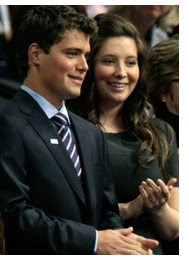 It’s official: Bristol Palin and Levi Johnston, who were once "committed to accomplish what millions of other young parents have accomplished: to provide a loving and secure environment for their child,"* have broken up.
So now little Tripp will grow up, cared for by a single mother – an archetype so despised by the vile Ann Coulter who believes "Single motherhood is like a farm team for future criminals and social outcasts”. Oh how I love the way conservatives unwittingly screw each other with their black-and-white statements.
Bristol recently stated in an interview with Greta Van Susteren that abstincence is “not realistic” and that “[sex] is more and more accepted among kids [her] age” (really?), something Mama Palin and Coulter seem to ignore. So instead of making the hard choice to terminate the pregnancy, Bristol had the kid and is now setting up her own little future criminal.
But the thing is, little Tripp will probably be okay. Like all sweeping, black-and-white statements, they leave out the little grey nuances. Coulter claims 70% of inmates, teenage runaways and delinquents, and drug users (amazing how this percentage is constant throughout) come from single parent homes. Regardless of the accuracy of Coulter’s stats, she is only looking at one variable – how many parents raise you – and completely discounting all the other factors that go with criminal activity, drug abuse etc. like socio-economic status, mental illness and abuse, to name a few.
The fact that Tripp will be raised by a single mother who has a set of support systems in place (ie. money and Mama Palin) already puts him ahead of the criminals that fall into Coulter’s 70%. It’s not Bristol’s marital status that affects her kid’s success, it’s her socio-economic status.
Hopefully Sarah Palin has learned that to support abstinence-only sex education is one of these sweeping statements. It completely discounts a pretty intense factor: teenage lust; something which Bristol spelled out for her mom in her interview with Greta Van Susteren.
It is a grand thing that America chose wisely last November and voted in a president who understands that sweeping statements (hello, War on Terror) are always riddled with shades of that truth.
______________________________
*Mama Sarah, December 2008
 It’s official: Bristol Palin and Levi Johnston, who were once "committed to accomplish what millions of other young parents have accomplished: to provide a loving and secure environment for their child,"* have broken up.
So now little Tripp will grow up, cared for by a single mother – an archetype so despised by the vile Ann Coulter who believes "Single motherhood is like a farm team for future criminals and social outcasts”. Oh how I love the way conservatives unwittingly screw each other with their black-and-white statements.
Bristol recently stated in an interview with Greta Van Susteren that abstincence is “not realistic” and that “[sex] is more and more accepted among kids [her] age” (really?), something Mama Palin and Coulter seem to ignore. So instead of making the hard choice to terminate the pregnancy, Bristol had the kid and is now setting up her own little future criminal.
But the thing is, little Tripp will probably be okay. Like all sweeping, black-and-white statements, they leave out the little grey nuances. Coulter claims 70% of inmates, teenage runaways and delinquents, and drug users (amazing how this percentage is constant throughout) come from single parent homes. Regardless of the accuracy of Coulter’s stats, she is only looking at one variable – how many parents raise you – and completely discounting all the other factors that go with criminal activity, drug abuse etc. like socio-economic status, mental illness and abuse, to name a few.
The fact that Tripp will be raised by a single mother who has a set of support systems in place (ie. money and Mama Palin) already puts him ahead of the criminals that fall into Coulter’s 70%. It’s not Bristol’s marital status that affects her kid’s success, it’s her socio-economic status.
Hopefully Sarah Palin has learned that to support abstinence-only sex education is one of these sweeping statements. It completely discounts a pretty intense factor: teenage lust; something which Bristol spelled out for her mom in her interview with Greta Van Susteren.
It is a grand thing that America chose wisely last November and voted in a president who understands that sweeping statements (hello, War on Terror) are always riddled with shades of that truth.
______________________________
*Mama Sarah, December 2008
Sunday, December 07, 2008
A PARLIAMENTARY CAROL
With thanks to Gary Mason and apologies to Charles Dickens.
STAVE ONE
Parliament was dead: to begin with. There is no doubt whatever about that. The prorogation order was signed by Ms. Jean, who was a little put out at being called home early from her European trip, after a lengthy discussion in her oak-panelled study. Stephen’s name was on it, too. Parliament was as dead as a door-nail. Until January 26th.
Stephen was curled up in bed, awaiting Laureen to finish in the ensuite. This was going to be the first night in a very long time that he would be able to sleep without worrying about the economy, about slips of the tongue (addressing someone else as Prime Minister, why? Why’d he do that?), or about that nasty coalition forming like a pay equity case, across the floor from him.
Stephen drifted into sweet slumber, not even noticing Laureen as she crawled in beside him without a thought to possible suspension of her right to legal recourse for pay equity issues.
But alas, his sleep did not last long and he awoke in the middle of the night, thirsty and slightly peckish. Swinging his legs out of bed, he shuffled to his bedroom door. Reaching out his hand for the handle, he immediately pulled back. He no longer saw a door handle, but Stephane Dion’s face.
Closing his eyes and shaking his head, Stephen thought he must be dreaming. He opened his eyes and looked again at the handle. It was just a handle. He trudged downstairs and peered in the fridge, hoping that some of those PC Wild Pacific Salmon Mini Wellingtons that Galen Weston had sent over were still in the fridge.
“Monsieur Har-per.”
Stephen spun around to see Stephane Dion standing before him, clutching the parliamentary mace, completely transparent.
“Mercy!” said Stephen, his hand at his chest. “What are you doing troubling me at this hour?”
“You will be haunted by three spirits,” said M. Dion, without any attempt at anger or passion.
“Oh no!” said Stephen. “You, Layton and Duceppe!”
Dion smiled. “I am on my way out. Without their visits, you cannot hope to shun the path I follow.”
And with that, Dion was gone. Stephen popped a salmon wellington in his mouth and headed for the couch. He was soon fast asleep.
STAVE TWO
Stephen awoke with a start to find Belinda Stronach kneeling beside him on the couch. Her hair was soft and blonde, her skin dewy and glowing in the dark Ottawa night. She wore a blue pantsuit and fire engine red lipstick.
“Hello, Stephen,” she whispered.
“Belinda! What are you doing here?”
“I’m the Ghost of Parliament Past.”
“Long Past? Like back in 1926 when Mackenzie King asked Lord Byng to prorogue Parliament to avoid a motion of censure?”
“No. Your past. Walk with me.”
Belinda offered Stephen her hand and led him out the door of 24 Sussex Dr., down the road and along Wellington towards the Parliament buildings. They climbed the stairs to the public gallery. Stephen looked to his chair in the House, but instead of him sitting there, it was Paul Martin. He looked across the floor to where his party sat and watched a parliamentary session that was all too familiar to Stephen.
“I remember this,” whispered Stephen. “It was right around the time of the Gomery Commission so I knew I had more of the public on my side. I think the Liberals were presenting the federal budget?”
“That’s right,” purred Belinda.
“We were going to vote against an amendment the Liberals had made in order to….” Stephen’s voice trailed off.
“…bring down the government.” Belinda finished his thought.
“Didn’t you…”
“..cross the floor? I did. I didn’t agree with you forcing an early election. And I’d come to my senses about that Peter MacKay fellow. Come. We have a press conference to see.”
Belinda led Stephen out of the public gallery and down to where a woman had cameras and microphones surrounding her. She was talking about national unity and how it was being jeopardized by an alliance between “him” and the Bloc Quebecois, only because “he” wanted to bring down the current government.
“Is that you?” asked Stephen.
“Yes,” replied Belinda. “And do you know who I’m talking about?”
Stephen hung his head as he remembered how fervently had had railed against the coalition for courting Bloc Quebecois support.
“But it’s just politics,” he said.
“I must go now,” said Belinda. “Sweet dreams.”
Stephen watched as Belinda melted into the background of the press conference that was still going on. He sat down on the stairs and leant his head against the banister. Soon, he was fast asleep again.
STAVE THREE
Stephen awoke in an uncomfortable position inside the parliament buildings. Still feeling quite peckish, he headed down to the cafeteria to see if it was open. Arriving at the entrance, he was shocked to find Jean Chretien lounging in an easy chair, a tumbler of whiskey in his hand.
“Bonsoir,” he said smiling.
“What are you doing here?” asked Stephen.
Jean leaned forward in his chair, cupping the whiskey glass in both his hands. “I am the Ghost of Parliament Present, “ he smiled, arching an eyebrow.
“But you left office five years ago!” exclaimed Stephen.
“I’m back consulting,” said Jean, rising and heading into the cafeteria. “Follow me.”
They entered the cafeteria and stopped beside a table of men and women, their faces downcast.
“I can’t believe it’s finally happened,” said one of the women, swirling around the coffee in her mug. “I always knew AbitibiBowater was in a bit of trouble, but I didn’t think it would actually close its doors. I guess my kids are getting a helluva lot less from Santa this year.”
“Keep moving,” said Jean, guiding Stephen towards another table of people.
“They’re temporary only because they think the government’s going to step in,” said one of the men, a GM baseball cap atop his head.
“At least we’ll get through Christmas,” said a woman, eyes downcast.
“Yeah, but all the bills from Christmas come in early January, right when we’re scheduled to be temporarily laid off!” chimed in a grey-haired man with a chubby face.
“You think the government will give us a bailout?” asked the woman.
“What government?” answered another woman. “They’ve taken a seven week holiday during the economic crisis, leaving us with no stimulus package. All the other countries are busy trying to figure out how to get their citizens out of financial trouble and ours is on holiday!”
“Bloody Conservatives,” mumbled the man with the GM hat.
“Bloody Harper,” mumbled the first woman.
“But…I…” Stephen stumbled over his words, “It’s just politics.”
“I must go,” said Jean, swigging the last of his whiskey.
Stephen followed Jean out of the cafeteria and watched him fade into the background. He sat down on the chair that Jean had been sitting on and let his head fall to the side.
“I wanted to cut the political party subsidies,” he said to himself, “That would have saved some money.” And with that, he fell into a deep sleep.
STAVE FOUR
Stephen was awoken by the sound of wind. He opened one eye and saw a phantom approaching him. It was shrouded in a dark robe and did not speak as it stood before him.
“Am I in the presence of the Ghost of Parliament Yet To Come?” he asked.
The spectre did not answer, but beckoned with its hand. Stephen rose and followed the ghost through the halls of parliament.
They came upon a scene of Brent Butt, cellphone in hand.
“Yeah. Yeah. No – we just don’t think he’s topical right now,” he paused. “Yeah, I know he did a great job last time he was on. Well, I wouldn’t say natural ability, but he got a few laughs. Yeah, no – I think I’m going to pass.”
The ghost beckoned again for Stephen to follow him to another scene, this time of Rick Mercer on a cellphone.
“No, he says he won’t do the skinny-dipping again. He says his new post is much too serious to resort to humourous nudity. Yeah, I told him that, but the man’s got quite a bit on his plate, undoing all the damage, you know. Maybe we can get Harper to do the Polar Bear swim. Make a joke about losing his cahones. I don’t know – we’ll give it to the writers. Yeah – let me know. Okay. Okay. Bye.”
“Spirit! What is he talking about?”
The ghost did not answer, but pointed to the Office of the Prime Minister, a place with which Stephen was very familiar. The ghost gestured for Stephen to enter. Slowly, Stephen pushed the heavy door open. The room was empty. He turned to look at the Ghost of Parliament Yet To Come. The ghost floated across the floor, behind the desk and took a seat in the Prime Minister’s chair.
“What are you doing?” whispered Stephen.
Again, the phantom was silent, but slowly moved its hands to its hood and began to draw back the cloak.
Stephen’s eyes filled with terror as the ghost in the chair removed the hood. There he was, smiling with his grey wispy hair slightly askew: Bob Rae.
“No!” shouted Stephen. “No! This cannot happen! I must do something! Something to stop this horrible future! I won’t be vindictive with political party subsidies! I’ll give civil servants back the right to strike! I’ll work with the opposition! I’ll act like I’m in a minority government! Anything!”
STAVE FIVE
Two men sat in an Ottawa pub, enjoying an early February beer. One sported a graying mustache, the other, dark heavy eyebrows. The mood was sombre.
“Well,” said Jack, “the guy’s a weasel, that’s for sure. I can’t believe Canadians were okay with his backtracking. That fiscal update was a huge mistake, but everyone seems to have forgiven him.”
“I can’t believe the political ads over the Christmas season!” said Michael. “I mean, I thought those Galen Weston salmon wellington ads were annoying, but come on!”
“If only Michaelle had denied him, we could have taken over back in December and sorted out this economic mess,” said Jack.
“If only we’d had a better leader back in October, we could have avoided this mess in the first place, “ said Michael.
“I guess he’s got a lot more than just his platform under his sweater,” said Jack.
Michael raised his glass in the air and Jack followed suit.
“Stephen Harper remains as Prime Minister,” said Michael with a sigh. “God help us, everyone.”
STAVE ONE
Parliament was dead: to begin with. There is no doubt whatever about that. The prorogation order was signed by Ms. Jean, who was a little put out at being called home early from her European trip, after a lengthy discussion in her oak-panelled study. Stephen’s name was on it, too. Parliament was as dead as a door-nail. Until January 26th.
Stephen was curled up in bed, awaiting Laureen to finish in the ensuite. This was going to be the first night in a very long time that he would be able to sleep without worrying about the economy, about slips of the tongue (addressing someone else as Prime Minister, why? Why’d he do that?), or about that nasty coalition forming like a pay equity case, across the floor from him.
Stephen drifted into sweet slumber, not even noticing Laureen as she crawled in beside him without a thought to possible suspension of her right to legal recourse for pay equity issues.
But alas, his sleep did not last long and he awoke in the middle of the night, thirsty and slightly peckish. Swinging his legs out of bed, he shuffled to his bedroom door. Reaching out his hand for the handle, he immediately pulled back. He no longer saw a door handle, but Stephane Dion’s face.
Closing his eyes and shaking his head, Stephen thought he must be dreaming. He opened his eyes and looked again at the handle. It was just a handle. He trudged downstairs and peered in the fridge, hoping that some of those PC Wild Pacific Salmon Mini Wellingtons that Galen Weston had sent over were still in the fridge.
“Monsieur Har-per.”
Stephen spun around to see Stephane Dion standing before him, clutching the parliamentary mace, completely transparent.
“Mercy!” said Stephen, his hand at his chest. “What are you doing troubling me at this hour?”
“You will be haunted by three spirits,” said M. Dion, without any attempt at anger or passion.
“Oh no!” said Stephen. “You, Layton and Duceppe!”
Dion smiled. “I am on my way out. Without their visits, you cannot hope to shun the path I follow.”
And with that, Dion was gone. Stephen popped a salmon wellington in his mouth and headed for the couch. He was soon fast asleep.
STAVE TWO
Stephen awoke with a start to find Belinda Stronach kneeling beside him on the couch. Her hair was soft and blonde, her skin dewy and glowing in the dark Ottawa night. She wore a blue pantsuit and fire engine red lipstick.
“Hello, Stephen,” she whispered.
“Belinda! What are you doing here?”
“I’m the Ghost of Parliament Past.”
“Long Past? Like back in 1926 when Mackenzie King asked Lord Byng to prorogue Parliament to avoid a motion of censure?”
“No. Your past. Walk with me.”
Belinda offered Stephen her hand and led him out the door of 24 Sussex Dr., down the road and along Wellington towards the Parliament buildings. They climbed the stairs to the public gallery. Stephen looked to his chair in the House, but instead of him sitting there, it was Paul Martin. He looked across the floor to where his party sat and watched a parliamentary session that was all too familiar to Stephen.
“I remember this,” whispered Stephen. “It was right around the time of the Gomery Commission so I knew I had more of the public on my side. I think the Liberals were presenting the federal budget?”
“That’s right,” purred Belinda.
“We were going to vote against an amendment the Liberals had made in order to….” Stephen’s voice trailed off.
“…bring down the government.” Belinda finished his thought.
“Didn’t you…”
“..cross the floor? I did. I didn’t agree with you forcing an early election. And I’d come to my senses about that Peter MacKay fellow. Come. We have a press conference to see.”
Belinda led Stephen out of the public gallery and down to where a woman had cameras and microphones surrounding her. She was talking about national unity and how it was being jeopardized by an alliance between “him” and the Bloc Quebecois, only because “he” wanted to bring down the current government.
“Is that you?” asked Stephen.
“Yes,” replied Belinda. “And do you know who I’m talking about?”
Stephen hung his head as he remembered how fervently had had railed against the coalition for courting Bloc Quebecois support.
“But it’s just politics,” he said.
“I must go now,” said Belinda. “Sweet dreams.”
Stephen watched as Belinda melted into the background of the press conference that was still going on. He sat down on the stairs and leant his head against the banister. Soon, he was fast asleep again.
STAVE THREE
Stephen awoke in an uncomfortable position inside the parliament buildings. Still feeling quite peckish, he headed down to the cafeteria to see if it was open. Arriving at the entrance, he was shocked to find Jean Chretien lounging in an easy chair, a tumbler of whiskey in his hand.
“Bonsoir,” he said smiling.
“What are you doing here?” asked Stephen.
Jean leaned forward in his chair, cupping the whiskey glass in both his hands. “I am the Ghost of Parliament Present, “ he smiled, arching an eyebrow.
“But you left office five years ago!” exclaimed Stephen.
“I’m back consulting,” said Jean, rising and heading into the cafeteria. “Follow me.”
They entered the cafeteria and stopped beside a table of men and women, their faces downcast.
“I can’t believe it’s finally happened,” said one of the women, swirling around the coffee in her mug. “I always knew AbitibiBowater was in a bit of trouble, but I didn’t think it would actually close its doors. I guess my kids are getting a helluva lot less from Santa this year.”
“Keep moving,” said Jean, guiding Stephen towards another table of people.
“They’re temporary only because they think the government’s going to step in,” said one of the men, a GM baseball cap atop his head.
“At least we’ll get through Christmas,” said a woman, eyes downcast.
“Yeah, but all the bills from Christmas come in early January, right when we’re scheduled to be temporarily laid off!” chimed in a grey-haired man with a chubby face.
“You think the government will give us a bailout?” asked the woman.
“What government?” answered another woman. “They’ve taken a seven week holiday during the economic crisis, leaving us with no stimulus package. All the other countries are busy trying to figure out how to get their citizens out of financial trouble and ours is on holiday!”
“Bloody Conservatives,” mumbled the man with the GM hat.
“Bloody Harper,” mumbled the first woman.
“But…I…” Stephen stumbled over his words, “It’s just politics.”
“I must go,” said Jean, swigging the last of his whiskey.
Stephen followed Jean out of the cafeteria and watched him fade into the background. He sat down on the chair that Jean had been sitting on and let his head fall to the side.
“I wanted to cut the political party subsidies,” he said to himself, “That would have saved some money.” And with that, he fell into a deep sleep.
STAVE FOUR
Stephen was awoken by the sound of wind. He opened one eye and saw a phantom approaching him. It was shrouded in a dark robe and did not speak as it stood before him.
“Am I in the presence of the Ghost of Parliament Yet To Come?” he asked.
The spectre did not answer, but beckoned with its hand. Stephen rose and followed the ghost through the halls of parliament.
They came upon a scene of Brent Butt, cellphone in hand.
“Yeah. Yeah. No – we just don’t think he’s topical right now,” he paused. “Yeah, I know he did a great job last time he was on. Well, I wouldn’t say natural ability, but he got a few laughs. Yeah, no – I think I’m going to pass.”
The ghost beckoned again for Stephen to follow him to another scene, this time of Rick Mercer on a cellphone.
“No, he says he won’t do the skinny-dipping again. He says his new post is much too serious to resort to humourous nudity. Yeah, I told him that, but the man’s got quite a bit on his plate, undoing all the damage, you know. Maybe we can get Harper to do the Polar Bear swim. Make a joke about losing his cahones. I don’t know – we’ll give it to the writers. Yeah – let me know. Okay. Okay. Bye.”
“Spirit! What is he talking about?”
The ghost did not answer, but pointed to the Office of the Prime Minister, a place with which Stephen was very familiar. The ghost gestured for Stephen to enter. Slowly, Stephen pushed the heavy door open. The room was empty. He turned to look at the Ghost of Parliament Yet To Come. The ghost floated across the floor, behind the desk and took a seat in the Prime Minister’s chair.
“What are you doing?” whispered Stephen.
Again, the phantom was silent, but slowly moved its hands to its hood and began to draw back the cloak.
Stephen’s eyes filled with terror as the ghost in the chair removed the hood. There he was, smiling with his grey wispy hair slightly askew: Bob Rae.
“No!” shouted Stephen. “No! This cannot happen! I must do something! Something to stop this horrible future! I won’t be vindictive with political party subsidies! I’ll give civil servants back the right to strike! I’ll work with the opposition! I’ll act like I’m in a minority government! Anything!”
STAVE FIVE
Two men sat in an Ottawa pub, enjoying an early February beer. One sported a graying mustache, the other, dark heavy eyebrows. The mood was sombre.
“Well,” said Jack, “the guy’s a weasel, that’s for sure. I can’t believe Canadians were okay with his backtracking. That fiscal update was a huge mistake, but everyone seems to have forgiven him.”
“I can’t believe the political ads over the Christmas season!” said Michael. “I mean, I thought those Galen Weston salmon wellington ads were annoying, but come on!”
“If only Michaelle had denied him, we could have taken over back in December and sorted out this economic mess,” said Jack.
“If only we’d had a better leader back in October, we could have avoided this mess in the first place, “ said Michael.
“I guess he’s got a lot more than just his platform under his sweater,” said Jack.
Michael raised his glass in the air and Jack followed suit.
“Stephen Harper remains as Prime Minister,” said Michael with a sigh. “God help us, everyone.”
Wednesday, December 03, 2008
Steph’s Guide to the Coalition
You know, my Canada used to include Quebec. But now I’m thinking, let them separate.
Tonight, Stephen Harper (has he coloured his hair in an attempt to avoid the stuffy-sweater-wearing image that hounded him during this past election?) was pretty heavy handed about the Bloc Quebecois’s support of the coalition, trying to scare Canadians with the prospect of Gilles Duceppe and his nefarious plans to separate. I say, who cares? Let them go. Quebec could be like Lesotho, but without the absolute monarch and annual virgin marriages. Or like Azerbaijan, with its little property on the other side of Armenia. We could travel abroad on a 5 hour train ride from Toronto without the hassle of an American boder – how fabulously European.
But to the matter at hand: the coalition (of the willing; ‘cos there’s a hell of a lot of people out west who are certainly not willing – isn’t it fabulous to watch them squirm and shout the word “undemocratic” as they claw to keep their beloved Conservatives in power?). Does Stephane Dion have the cahones? He’s got to have a hell of a lot of politicians propping him up and telling him everything is going to be alright as he steps back into the political limelight he thought he’d left back in October. He’s trying: his speech tonight was an attempt at an impassioned address. And ideologically, I’m with him (as is the constitution – take that, you wimpering righties!) But really, I think Jack Layton and his porn mustache would certainly make a better candidate for prime minister (his desire for that post is palpable, especially in recent months, I've found).
So it is all up to Michaelle Jean, who was probably having a lovely European time in Prague before she was yanked back to this Canadian reality. She meets with Stephen Harper tomorrow when he will request a prorogation of parliament. Will she suspend parliament, or refuse Harper’s request and allow a vote of non-confidence on Monday? Will she allow for an historical change in Canada’s history? Will she comment on Harper’s dye-job?
To quote my brother, who knew Canadian politics could be so sexy?
Tonight, Stephen Harper (has he coloured his hair in an attempt to avoid the stuffy-sweater-wearing image that hounded him during this past election?) was pretty heavy handed about the Bloc Quebecois’s support of the coalition, trying to scare Canadians with the prospect of Gilles Duceppe and his nefarious plans to separate. I say, who cares? Let them go. Quebec could be like Lesotho, but without the absolute monarch and annual virgin marriages. Or like Azerbaijan, with its little property on the other side of Armenia. We could travel abroad on a 5 hour train ride from Toronto without the hassle of an American boder – how fabulously European.
But to the matter at hand: the coalition (of the willing; ‘cos there’s a hell of a lot of people out west who are certainly not willing – isn’t it fabulous to watch them squirm and shout the word “undemocratic” as they claw to keep their beloved Conservatives in power?). Does Stephane Dion have the cahones? He’s got to have a hell of a lot of politicians propping him up and telling him everything is going to be alright as he steps back into the political limelight he thought he’d left back in October. He’s trying: his speech tonight was an attempt at an impassioned address. And ideologically, I’m with him (as is the constitution – take that, you wimpering righties!) But really, I think Jack Layton and his porn mustache would certainly make a better candidate for prime minister (his desire for that post is palpable, especially in recent months, I've found).
So it is all up to Michaelle Jean, who was probably having a lovely European time in Prague before she was yanked back to this Canadian reality. She meets with Stephen Harper tomorrow when he will request a prorogation of parliament. Will she suspend parliament, or refuse Harper’s request and allow a vote of non-confidence on Monday? Will she allow for an historical change in Canada’s history? Will she comment on Harper’s dye-job?
To quote my brother, who knew Canadian politics could be so sexy?
Sunday, November 30, 2008
Steph’s Guide to Surviving the Current Financial Crisis
1. Get a job in the public sector.
I find it laughable that all those business types have their knickers in a knot over the tabled 12% over 4 years salary increase for elementary teachers. They complain that those of us getting paid by the government shouldn’t expect such an increase during an economic downturn. In the booming years when my Bay Street counterparts were making six figures and charging their entertainment expenses to the company, I never expected bonuses at the end of the year for any professional successes with students and I have no expense account to entertain the parents of my students. Public servants take the middle road: job security, but never making a huge amount of money. That’s the gamble of business – you stand to make a ridiculous amount of money in the fat years, but you have to accept that lean years are always a possibility.
2. Five months prior to collapse, buy property.
This will allow you to practise a more modest way of spending. All of a sudden your monthly expenses go up, so your disposable income goes down and you have to make cuts in spending. It also serves as a good excuse when turning down offers of a weekend in New York or a night on the tiles.
3. Vote in a left-leaning government.
Oh…shit… Well, we may be solving that one right now.
4. Dispense with any significant others before Christmas.
Just make sure it’s far enough ahead that you can’t be accused of ruining the holiday for them. Without a romantic partner to buy for and to attend a whole other set of parties with, your spending will plummet. It also cuts down on incidental expenses like the extra groceries you had to buy to feed them and restocking beer supplies.
5. Suggest a more modest family Christmas.
Out with materialism and in with environmentalism and altruism. Instead of buying heaps of things that no one needs or wants, suggest donating money to charities instead. Or buy consumables like, say…enough bottles of alcohol to replenish drying up liquor cabinets (hint, hint - ed.).
6. Break your foot. (This is key.)
You are now housebound and can’t go out. All little expenditures like that four dollar latte and those cute bowls at Pier 1 that hop into your shopping bag unexpectedly have been cut out. So have those last minute, unnecessary purchases in the checkout line of places like Shopper's Drug Mart, IKEA and Roots.
You also can’t pop up the road for a pint – way too tiring on crutches (and slightly dangerous to the healing process should that one pint turn into four, interfering with balance and judgment). Getting to and from any kind of social engagement must be elaborately planned, therefore many will have to be declined. Never mind the fact that any kind of holiday outfit will have to be accessorized by a big, grey aircast and crutches, immediately downgrading your attractiveness by at least 30%. This should also help to maintain your single (and therefore parsimonious) status into the new year.
And people feel sorry for you, so they’ll go out and buy you a four-dollar latte and refuse reimbursement. They'll also drive you places, so you save on gas (you can't drive your stick-shift car, anyway).
Spend you days at home, reading stories on the internet about how people are dealing with the credit crunch by having dinner parties at home, recycling key pieces in their closet and having martinis on their couches.
Now only if I could somehow get that liquor cabinet restocked...
I find it laughable that all those business types have their knickers in a knot over the tabled 12% over 4 years salary increase for elementary teachers. They complain that those of us getting paid by the government shouldn’t expect such an increase during an economic downturn. In the booming years when my Bay Street counterparts were making six figures and charging their entertainment expenses to the company, I never expected bonuses at the end of the year for any professional successes with students and I have no expense account to entertain the parents of my students. Public servants take the middle road: job security, but never making a huge amount of money. That’s the gamble of business – you stand to make a ridiculous amount of money in the fat years, but you have to accept that lean years are always a possibility.
2. Five months prior to collapse, buy property.
This will allow you to practise a more modest way of spending. All of a sudden your monthly expenses go up, so your disposable income goes down and you have to make cuts in spending. It also serves as a good excuse when turning down offers of a weekend in New York or a night on the tiles.
3. Vote in a left-leaning government.
Oh…shit… Well, we may be solving that one right now.
4. Dispense with any significant others before Christmas.
Just make sure it’s far enough ahead that you can’t be accused of ruining the holiday for them. Without a romantic partner to buy for and to attend a whole other set of parties with, your spending will plummet. It also cuts down on incidental expenses like the extra groceries you had to buy to feed them and restocking beer supplies.
5. Suggest a more modest family Christmas.
Out with materialism and in with environmentalism and altruism. Instead of buying heaps of things that no one needs or wants, suggest donating money to charities instead. Or buy consumables like, say…enough bottles of alcohol to replenish drying up liquor cabinets (hint, hint - ed.).
6. Break your foot. (This is key.)
You are now housebound and can’t go out. All little expenditures like that four dollar latte and those cute bowls at Pier 1 that hop into your shopping bag unexpectedly have been cut out. So have those last minute, unnecessary purchases in the checkout line of places like Shopper's Drug Mart, IKEA and Roots.
You also can’t pop up the road for a pint – way too tiring on crutches (and slightly dangerous to the healing process should that one pint turn into four, interfering with balance and judgment). Getting to and from any kind of social engagement must be elaborately planned, therefore many will have to be declined. Never mind the fact that any kind of holiday outfit will have to be accessorized by a big, grey aircast and crutches, immediately downgrading your attractiveness by at least 30%. This should also help to maintain your single (and therefore parsimonious) status into the new year.
And people feel sorry for you, so they’ll go out and buy you a four-dollar latte and refuse reimbursement. They'll also drive you places, so you save on gas (you can't drive your stick-shift car, anyway).
Spend you days at home, reading stories on the internet about how people are dealing with the credit crunch by having dinner parties at home, recycling key pieces in their closet and having martinis on their couches.
Now only if I could somehow get that liquor cabinet restocked...
Monday, August 04, 2008
Pretty Things
 It was a repeat episode of The View today (I could tell by the mugs) and Barack Obama was the guest. As would be expected, conservative Elisabeth Hasselbeck grilled the Democrat candidate about his relationship with his pastor, Jeremiah Wright, who once made “incendiary” (Obama’s word) comments about the September 11th attacks:
We have supported state terrorism against the Palestinians and black South Africans, and now we are indignant because the stuff we have done overseas is now brought right back to our own front yards. (For a clip, click here)
These comments, which I completely agree with, were seen as unpatriotic and therefore Obama, whom I suspect secretly agrees with Wright, had to distance himself from Wright or face irrevocably damaging his campaign. The problem with American politics is that they place patriotism above all else: above rational thought, historical mistakes and personal freedoms. It’s that mentality of you are either with us or against us; there is no in between and certainly no room for debate. Obama, who represents (or at least, at one time represented) so much hope for the future of American foreign policy, cannot publicly agree with the idea that Americans can commit whatever atrocities they see fit in other countries, but absolutely can’t understand why others would want (and indeed plan and execute) to do the same.
But I digress. What struck me was that one of the women (I think it was Barbara Walters) stumbled a bit over paying Obama a compliment: she wasn’t sure if she should say how attractive he was. But she did, he accepted it with laughter, and the discussion moved to politics, which was Obama’s reason for being there.
Feminism has made some impact on separating women’s looks from what makes up their personality in that the women of The View were afraid to comment on Obama’s attractiveness (surely this is good, showing that there is no double standard?). Making any kind of comment on Hillary Clinton’s appearance would be seen as offside – but is that because she is not an overly attractive individual, therefore we can easily concentrate on her areas of expertise?
Julie Couillard, whom Heather Mallick describes as “the beautiful woman who had the bad judgment to date the ex-foreign affairs minister Maxime Bernier,” spent a lot of time in the news - not just for exposing Monsieur Bernier, but for exposing the top swell of one of her breasts. The Canadian press couldn’t get past it, as Mallick points out later in her column: “a trio of female Globe and Mail columnists…attacked Couillard for her breasts, her fragrant beauty and her insistence on defending her dignity as a woman.”
I guess what I’m trying to say is this: someone’s attractiveness is a big part of who they are. Sometimes it's what they're known for (models come to mind), sometimes it's part of what they're known for (Belinda Stronach, some might say). It's easy to see attractiveness as part of a man: Obama is a great orator, he seems to be quite good at the political game and he’ll already have a passport if he makes it to the White House (Georgie Boy did not. In fact, only something like 10% of Americans have a valid passport). But Obama is also pretty good-looking. The women of The View could pay him the compliment and then move on to what he was there for.
But when it comes to women, it’s a bit sketchier. Couillard (and indeed, other attractive women who have other things going for them) was not given the same courtesy that the women of The View gave Obama. Her beauty and sexuality were what was focused on in the media, instead of her reason for making headlines. It's silly to assume we do not notice (or judge) a person by their attractiveness: many psychological studies have proven otherwise and at the end of the day, we just want to procreate with genetically superior people. But someone's attractiveness is only a part of what they have to offer.
Sunday, August 03, 2008
A Few Things
I’ve been away – both literally and figuratively. And this step back into bloggery may be brief, and for that I apologize – I just can’t seem to kick my writer’s arse these days…
Cheese, Please
Last week, Quebec announced it will allow its fromagers to produce raw-milk cheese, aged under 60 days, breaking from a continent-wide ban on unpasteurized cheese. It's something to do with harmful bacteria that the New World sees as a health risk in cheese ripened in under two months, even though many gastronomes maintain some cheeses reach their peak within a month, those pesky bacteria actually contributing to the taste and texture of the cheese.
The French (and other Europeans) have been enjoying these unpasteurized cheeses for centuries with no ill effects. In fact, pregnant French women have no restrictions on these types of cheeses, unlike us hyper-sensitive North Americans who ban brie and other foodstuffs like sushi from expectant mothers (despite the identical argument that Japanese mums-to-be have eaten raw fish for centuries). North Americans freak out during pregnancy (just recently I witnessed a pregnant woman hiding the fact she was drinking Coke from her husband), yet once these precious packages are born, they allow them to ride in big yellow school buses on the highway with no seatbelts (another WTF?!?! of mine, but that’s another post).
And A Four-Day Work Week, Too
In a bid to save energy, Nova Scotia Energy Minister Richard Hurlburt has suggested that government employees work only four days a week. Employees would work four 10-hour days and have a three day weekend, reducing the number of vehicles on the road and possibly the amount of power used in government buildings. The set up is about to be test-driven in Utah, starting on Monday. Although this seems like a good idea to a holiday-loving, easily-adaptable singleton like yours truly, there are issues arising in Utah around childcare, second jobs and night school.
All of this is untroubling to me, as I sit in the middle of my zero-day work week, annoyed that the Liquor Store will be closed tomorrow and the beach will be overrun with hard-bodied and flabby tanners alike. I also await the second round of my long-weekend-pot-smoking neighbour whose fumes waft through my flat only when the rest of the world has Monday off. While the workaday world looks forward to these summer long weekends, us teachers just wish they'd be over. Thank god those Americans will be starting their four day work week tomorrow and there will be a new episode of The View.
Cheese, Please
Last week, Quebec announced it will allow its fromagers to produce raw-milk cheese, aged under 60 days, breaking from a continent-wide ban on unpasteurized cheese. It's something to do with harmful bacteria that the New World sees as a health risk in cheese ripened in under two months, even though many gastronomes maintain some cheeses reach their peak within a month, those pesky bacteria actually contributing to the taste and texture of the cheese.
The French (and other Europeans) have been enjoying these unpasteurized cheeses for centuries with no ill effects. In fact, pregnant French women have no restrictions on these types of cheeses, unlike us hyper-sensitive North Americans who ban brie and other foodstuffs like sushi from expectant mothers (despite the identical argument that Japanese mums-to-be have eaten raw fish for centuries). North Americans freak out during pregnancy (just recently I witnessed a pregnant woman hiding the fact she was drinking Coke from her husband), yet once these precious packages are born, they allow them to ride in big yellow school buses on the highway with no seatbelts (another WTF?!?! of mine, but that’s another post).
And A Four-Day Work Week, Too
In a bid to save energy, Nova Scotia Energy Minister Richard Hurlburt has suggested that government employees work only four days a week. Employees would work four 10-hour days and have a three day weekend, reducing the number of vehicles on the road and possibly the amount of power used in government buildings. The set up is about to be test-driven in Utah, starting on Monday. Although this seems like a good idea to a holiday-loving, easily-adaptable singleton like yours truly, there are issues arising in Utah around childcare, second jobs and night school.
All of this is untroubling to me, as I sit in the middle of my zero-day work week, annoyed that the Liquor Store will be closed tomorrow and the beach will be overrun with hard-bodied and flabby tanners alike. I also await the second round of my long-weekend-pot-smoking neighbour whose fumes waft through my flat only when the rest of the world has Monday off. While the workaday world looks forward to these summer long weekends, us teachers just wish they'd be over. Thank god those Americans will be starting their four day work week tomorrow and there will be a new episode of The View.
Thursday, February 14, 2008
Flowers in February

A boy displaced by recent violence in Kenya smells a rose at a refugee camp in Nairobi's Mathare slum (from news.bbc.co.uk)
Around this time two years ago, I listened to David Suzuki speak about the state of our world. To make a point about the massive carbon footprint that humans make, he deconstructed the act of ordering pizza from room service in a North American hotel room: where the anchovies came from and how they got there; where the cheese and flour were made and how they were transported to the hotel; where the copper in the telephone wires used in placing the room service call was mined and how it was transported; where the electricity came from to power the elevator that the room service waiter used to deliver the pizza. He forced his listeners to think about the massive global impact of a simple action that we do without thinking about.
I often think about where food comes from and what its environmental impact has been. Last year I read The 100 Mile Diet, a book about a couple who ate food from within 100 miles of their home for a year. Reading that book caused me to stand in the grocery store one day, for a good 5 minutes looking quite lost, trying to decide between a pint of organic New Zealand blueberries and a pint of regular Nova Scotian blueberries. (I went with the maritime variety.)
I wonder where the wood from the Ikea bedframe I like comes from. I wonder where the materials in the new mattress I should buy soon come from. I wonder where my futon mattress will go when I finally retire it.
 And on today, Valentine’s Day, I'll add another product for us to think about. Where did the flowers you bought for your valentine come from? How did they get to you? One-quarter of the flowers that Europe* imports come from Kenya, a country mired in violence ever since the disputed elections in December. This year, roadblocks and street barricades have made it much more difficult to transport flowers throughout the country. I wonder where that bloom got stopped, perhaps at gunpoint, on its way to someone’s paramour.
 *Canada gets over half of its flower imports from Colombia, which is quite the carbon emissions when you consider the plane ride from Bogota to Toronto.
Wednesday, January 30, 2008
Notions of the Nano
 Much has been made recently over the Tata Nano: a car which is compact, cheap (costing only $2500), and available to citizens of the developing world. Although it’s size and horsepower must make it quite fuel efficient, the mere fact that cars are now available to vast swaths of the world’s non-vehicle owning population means a huge output in carbon emissions during a time in history when the need for reduction is so prevalent (perhaps only to the general population, though – the politicians don’t seem to be worried about signing on to any kind of agreement to reduce our carbon emissions as nations, shame on you Stephen Harper and George Bush).
 We affluent North Americans and Europeans tsk at the car manufacturers for providing this option for the working poor of our world, discussing with our friends the environmental catastrophe this will herald from the comfort of our over-sized cars, idling outside Starbucks.
Why shouldn’t Indians be given a chance to drive to their outsourced jobs at call-centres, spending their American dollars on the mighty (yet mini) car?
This is an issue at which my social and environmental beliefs clash. We are so haughty in our dismissal of the underclasses of the world trying to reach our standard of living. It’s like the Americans freaking out over Pakistan and Iran manufacturing nuclear weapons, all the while cataloguing their own stash, cozy in their self-appointed position of global protector, independently making decisions on who gets invaded or ousted. But with all that we know about carbon emissions, are we not insane to put millions more cars on the roads? That huge spike at the end of Al Gore’s climate graph is about to be blown off his Powerpoint screen.
So what do you do? You live by the smallest carbon footprint as you can. You use reusable containers and recycle what you can (even the annoying things like batteries). You drive less, live and shop closer to work, use less electricity. You buy local produce when you can, and find products with little or no packaging.
And you can think about what it must be like for a family of four, living in a 2 room apartment on the east side of Delhi, to finally be able to own a thing that to us represents freedom, convenience and status.
Monday, July 23, 2007
1989
1989, the number, another summer (get down)
Sound of a funky drummer…
Our freedom of speech is freedom or death
We gotta fight the powers that be.
- Public Enemy
I’ve been thinking a lot about 1989 recently. It is the picture of the lone protester in Tiananmen Square that started it, brought up in conversation with a friend of mine. The Unknown Rebel, unmoving in front of a column of angry tanks, sidestepping into their path each time they tried to go around him. A single man representative of a huge fight that was happening around the world at that time.
1989 was a year of struggle, as evidenced in the lyrics of Fight the Power by Public Enemy. While Public Enemy continued to document and sustain the struggle for black equality started in 1960s, a decade synonymous with mass social change, elsewhere around the world was seeing tremendous change in human rights and freedoms.
The 200th anniversary of the French Revolution, a revolution based on basic human freedoms - Liberté, égalité, fraternité, ou la mort! (Freedom, equality, brotherhood, or death!) - saw the fall of several repressive regimes in eastern Europe. Poland saw its first free parliamentary elections since the war; Ceausescu’s dictatorship was ended in Romania (he was later executed); the Velvet Revolution in Czechoslovakia saw the overthrow of the Marxist/Leninist government; the Republic of Hungary was declared; and in August, 2 million people across Estonia, Latvia and Lithuania joined hands across 600 km to demand freedom and independence from the Soviet Union.
1989 was also the year that the Berlin Wall came down – physically and symbolically. I can remember watching the event on television – hundreds of people climbing over the wall, yelling and celebrating, and battering it down with decades’ worth of suppressed anger and frustration at their lack of freedom, fractured families and silenced voices.
 The silenced voices of South Africa experienced an administrative shift in 1989 (and this is not to say that black South Africans allowed their voices to be silenced: many raged against apartheid since its inception after the National Party’s win in the 1948 elections). Newly elected president F.W. de Klerk scrapped the Separate Amenities Act (an act which segregated the races in all areas of life – from white beaches to black universities) and in early 1990, released Nelson Mandela from his 27 years in prison for his determined refusal to allow his voice to be silenced. I am still amazed to this day at the winds of change that persisted so, allowing a political prisoner to become South Africa’s first black president just 4 years later.
South America also experienced its share of newfound freedoms: Chile held its first free elections in 16 years, ultimately ousting Augusto Pinochet who was later tried for human rights abuses, from his protracted presidency. Brazil also saw its first free elections after 25 years of a ruling military regime.
1989 witnessed the end of Soviet occupation of Afghanistan; the release of the Guilford Four (a group of people wrongfully convicted of blowing up an English pub during the Troubles – their case was one of police manipulation and disinformation – see the film In The Name Of The Father); the Exxon Valdez spill (perhaps a key event in the raising of our environmental awareness); and of course, the series of protests from April to June in Tiananmen Square.
There is no real answer as to what happened to the Unknown Rebel, the man that stood alone in front of the tanks bearing down on him and his country’s freedom. There are some claims he was executed – a brutal ending to such an inspirational action. I prefer to believe what Jan Wong writes in her book Red China Blues: My Long March from Mao to Now: he is still alive and in hiding in China. And I have to believe that if I am to still hold onto the hope that the winds of change in 1989 have not died. We came a long way that year, but the fact that the man in front of the tanks has to be in hiding (or indeed, was executed) tells us that we have a long way to go still.
Sound of a funky drummer…
Our freedom of speech is freedom or death
We gotta fight the powers that be.
- Public Enemy
I’ve been thinking a lot about 1989 recently. It is the picture of the lone protester in Tiananmen Square that started it, brought up in conversation with a friend of mine. The Unknown Rebel, unmoving in front of a column of angry tanks, sidestepping into their path each time they tried to go around him. A single man representative of a huge fight that was happening around the world at that time.
1989 was a year of struggle, as evidenced in the lyrics of Fight the Power by Public Enemy. While Public Enemy continued to document and sustain the struggle for black equality started in 1960s, a decade synonymous with mass social change, elsewhere around the world was seeing tremendous change in human rights and freedoms.
The 200th anniversary of the French Revolution, a revolution based on basic human freedoms - Liberté, égalité, fraternité, ou la mort! (Freedom, equality, brotherhood, or death!) - saw the fall of several repressive regimes in eastern Europe. Poland saw its first free parliamentary elections since the war; Ceausescu’s dictatorship was ended in Romania (he was later executed); the Velvet Revolution in Czechoslovakia saw the overthrow of the Marxist/Leninist government; the Republic of Hungary was declared; and in August, 2 million people across Estonia, Latvia and Lithuania joined hands across 600 km to demand freedom and independence from the Soviet Union.
1989 was also the year that the Berlin Wall came down – physically and symbolically. I can remember watching the event on television – hundreds of people climbing over the wall, yelling and celebrating, and battering it down with decades’ worth of suppressed anger and frustration at their lack of freedom, fractured families and silenced voices.
 The silenced voices of South Africa experienced an administrative shift in 1989 (and this is not to say that black South Africans allowed their voices to be silenced: many raged against apartheid since its inception after the National Party’s win in the 1948 elections). Newly elected president F.W. de Klerk scrapped the Separate Amenities Act (an act which segregated the races in all areas of life – from white beaches to black universities) and in early 1990, released Nelson Mandela from his 27 years in prison for his determined refusal to allow his voice to be silenced. I am still amazed to this day at the winds of change that persisted so, allowing a political prisoner to become South Africa’s first black president just 4 years later.
South America also experienced its share of newfound freedoms: Chile held its first free elections in 16 years, ultimately ousting Augusto Pinochet who was later tried for human rights abuses, from his protracted presidency. Brazil also saw its first free elections after 25 years of a ruling military regime.
1989 witnessed the end of Soviet occupation of Afghanistan; the release of the Guilford Four (a group of people wrongfully convicted of blowing up an English pub during the Troubles – their case was one of police manipulation and disinformation – see the film In The Name Of The Father); the Exxon Valdez spill (perhaps a key event in the raising of our environmental awareness); and of course, the series of protests from April to June in Tiananmen Square.
There is no real answer as to what happened to the Unknown Rebel, the man that stood alone in front of the tanks bearing down on him and his country’s freedom. There are some claims he was executed – a brutal ending to such an inspirational action. I prefer to believe what Jan Wong writes in her book Red China Blues: My Long March from Mao to Now: he is still alive and in hiding in China. And I have to believe that if I am to still hold onto the hope that the winds of change in 1989 have not died. We came a long way that year, but the fact that the man in front of the tanks has to be in hiding (or indeed, was executed) tells us that we have a long way to go still.
Epilogue
Perhaps at some point I will further explore the fact that Seinfeld and The Simpsons, two popular, long-running and highly-acclaimed comedy shows, made their debuts in 1989. Interesting that these two shows broke away from the happy family comedies of the 80s, so content with the status quo.
Sunday, April 22, 2007
Are You There, Allah? It's Me, Margaret...
 Dear Margaret Wente
I am not a huge fan of yours on a good day. I find you oppressively right-wing, with no empathy for anyone other than white, middle class newspaper columnists.
Your column this Saturday (which, to be honest, I rarely read because of the reasons mentioned in the previous paragraph) was a loosely veiled attack on Islam, the veil being the completely inappropriate one of the killings at Virginia Tech.
Yes, I know you mentioned nothing of Islam, just jihadists. I’m sure you meant the fundamental jihadists, not the everyday Muslims who follow this pillar of Islam through non-violent interpretations. And I’m sure those Muslims would be horrified at the comparison of Cho Seung-Hui, a young man with serious mental illness, to fundamental jihadists. As am I.
How can you possibly use the commonalities of a “martyr video” and “military garb and guns” to compare the two? What you see in Cho Seung-Hui’s video is his pent up anger at a society in which he felt powerless and invisible. His “manifesto” and posturing finally gave him the power he must have felt he lacked much of his life.
The “insane regime with an army of young men to do its bidding” is about poverty and lack of education. Cho Seung-Hui’s cold-blooded killing was about depression and a sense of alienation. Young, fundamental jihadists kill because they feel part of a larger group; Cho Seung-Hui killed because he felt a complete disconnection with any kind of group.
The killings at Virginia Tech were a horrifying and upsetting event. Do not use the tragedy as a platform for criticism of a religion that you (and I) know very little about.
Sincerely,
Steph
Tuesday, April 17, 2007
April Showers, April Shootings
 Leah McLaren, who I love to hate (and who fully stole the first seasonal reference of April being the cruellest month from me), wrote about her negative physiological and psychological reactions to spring in her column this past Saturday.
While the rest of us are coming out of hibernation and experiencing a lift in spirits, it appears that those with mental illnesses like manic depression and psychosis experience an increase in symptoms in the spring. McLaren interviewed Tatyana Barankin, a clinical psychiatrist affiliated with the Centre for Addiction and Mental Health:
"April and May are not easy months for psychiatrists," she told me over the phone between patients. "Manic behaviour and psychosis are often exacerbated by the weather. Our moods are very affected by the amount of light we get and while very often depression lifts, that does not apply to anxiety or manic behaviour."
Interesting, I thought, and continued reading the Style section.
But then yesterday, the shooting at Virginia Tech occurred. And it reminded me of Columbine, which also happened in April during my first year of university.
Of the 19 shootings in the past 10 years that have occurred in US schools, nearly half (42%) have happened in March, April or May. Compare that to 26% of the shootings occurring in September, October or November. February, June and December each have one shooting occurrence whereas January, July and August have seen no mass killings at US schools.
McLaren’s reaction was diagnosed as “anniversary reaction” brought on by the memories of exam stress. One would expect that Cho Seung-hui, the man named as the shooter at Virginia Tech, and who had been referred for counselling because of work produced in his creative writing course, perhaps had more going on.
Maybe he would have identified with the awkward and painful reawakening that Eliot writes about in the first few lines of his oft-quoted poem, The Wasteland:
April is the cruellest month, breeding
Lilacs out of the dead land, mixing
Memory and desire, stirring
Dull roots with spring rain.
Winter kept us warm, covering
Earth in forgetful snow, feeding
A little life with dried tubers.
Thursday, March 15, 2007
Cricket and Politics
 As I write this, Zimbabwe is playing Ireland in the World Cup of Cricket, a nice little connection between this post and my last post about sports and politics. While the Ireland v. England game at Croke Park in Dublin invoked memories of political strife, this cricket match today is steeped not in memory, but in current events.
It is not the teams that make this match significant, it is the fact that Zimbabwe is competing in a world sporting event (and in the only sport in which they have any kind of international ranking) while the governments of many of its opposing teams are discussing further sanctions against Mugabe and his government.
Zimbabwe has been on a downward spiral for a while now: President Mugabe has ruled the country since 1980, maintaining office throughout several shady elections. He imposed land redistribution in 2000 in order to make owning farms more equitable after British colonialism (most farms were owned by whites), which the opposition believes destroyed what was once one of the more developed economies in Africa. Zimbabwe’s annual inflation rate is the highest in the world at 1700% and there are constant food and fuel shortages. In 2004, it was officially reported that a third of the adult population was HIV positive and there was almost no access to anti-retroviral drugs for those stricken with the disease.
 The day before the opening ceremony of the Cricket World Cup, a “Save Zimbabwe” prayer meeting was broken up by police enforcing a ban on political gatherings imposed by Mugabe. One protester was killed and Morgan Tsvangirai, the leader of Movement for Democratic Change (MDC), was arrested and beaten. The photos of Tsvangirai leaving the hospital have sparked international criticism and talk of extended sanctions.
 And all the while, the sporting community tallies runs and critiques bowlers. Andy Bull pointed this out in his sport blog in the Guardian today. Bull notes that a register of talented, top-of-their-game players have refused to play for their country because of its political situation and we should be asking why.
I watched my first international game of cricket in Sydney in 2001 (Australia vs. Zimbabwe), with Buck, a white Zimbabwean who had fought in the Second Chimurenga. Buck supported his team with passion, despite the fact that several of his friends were losing their farms and livelihoods with every man out. Buck said he would never live in Zim again, but he would never lose his fervour for the national cricket team.
So yes, we should be asking why. We should be keeping a close eye on Zimbabwe's human rights abuses and act accordingly as a global community. But we should also see Zimbabwe's cricket games for what they are: a uniting of countrymen within a team, and a meeting of countries within a sport; all for the love of the game. And it would be a shame to lose one of the world's best national cricket teams because players cannot play for a team whose country has forsaken them.
Saturday, March 03, 2007
Caption Contest! Caption Contest!

What, praytell, is the heir to the throne saying on his trip to Qatar with his new missus?
Sunday, February 25, 2007
Rugby vs. Politics
 Ireland have beat England 43-13 in a Six Nations rugby match played at Croke Park, a setting steeped in the history of Irish-British relations.
It was here, in November 1920, that British forces fired into the crowd during a Gaelic football match in what was thought to be a retaliation for the killing of several members of the Cairo gang (a group of British Intelligence agents) by the IRA. These deaths, along with several shootings in Dublin later that evening and the death of some Irish prisoners at the hands of British guards, is why November 21st became known as Bloody Sunday.
The recently refurbished Croke Park, home of the Gaelic Athletic Association, has only hosted national sporting events (Gaelic football and hurling) up until this year. The Irish rugby union and soccer teams have been granted permission to use Croke Park while their sporting ground, Landsdowne Road, undergoes construction. The first international game was against France two weeks ago, and unfortunately for the Irish, France won by 3 points.
The historic Ireland-England game follows several key events in the Northern Ireland Peace process in the last 18 months. In September 2005, the IRA decommissioned all of its weapons; this past January, Sinn Fein, the political wing of the IRA, voted to support the Police Service of Northern Ireland ; and on March 7th we will see elections for the Northern Ireland Assembly which has been suspended since October 2002 following allegations of Republican spying. This is all leading up to the March 26th deadline for devolution (Irish home rule).
 Just as in the political sphere, the rugby game was not without tension. There was much discussion as to whether or not England’s national anthem, God Save the Queen, should be sung before the match. The expression of English pride was perhaps not appropriate in light of the former Croke Park events, however the anthem was sung and the Irish fans were respectful. It was, though, an emotionally charged game for the Irish team and some players had tears in their eyes as they lined up at the beginning of the match.
Victorious, perhaps on several levels, the Irish team shook hands with the English players at the end of the match. And so sport reflects the political climate. It has been a long and slow move toward peace in Northern Ireland, but if politicians can take inspiration from the Croke Park match, perhaps the different sides can meet, debate, and then shake hands at the end of it.
For more on Irish history, read my post on Ireland's Many Histories.
Wednesday, February 21, 2007
Dartmouth Chicks?
 I hadn’t realized the full impact of Dixie Chick Natalie Maines’s off-the-cuff comment about being embarrassed to come from the same state as President Bush that she made to London audience back in 2003 until I saw the documentary “Shut up and Sing.” The film details the incredible fallout from Maines’s comment, showing fans’ desertion and aggression toward the band, mainly in the southern Jesusland states. The film flip-flops between the 2003 tour and the band’s resolve to make a new album, two years later, and to restructure their musical identity.
The documentary, ads for which were not run on several American networks, premiered at the Toronto International Film Festival and had a modest run in theatres this past autumn. (Interestingly enough, when sales for their 2003 tour dropped off
 in the southern states, they remained strong in Canada and several dates were added – Moosejaw was a possible gig mentioned in the film.) But their five wins at the Grammys last week was a quiet vindication for the band. They left behind their country roots and fans and were embraced by the arts community and a whole new rock fanbase.
Welcome to the United States of Canada, ladies. We’re happy to have you.
Wednesday, September 20, 2006
Zimbabwe Business
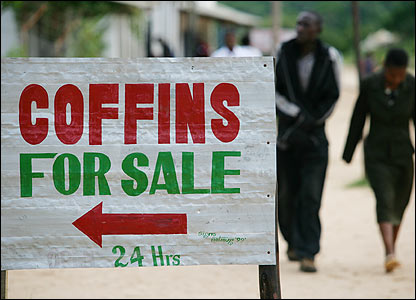
Death is one of the few growth industries in Zimbabwe due to the number of people dying of AIDS.
Thursday, July 13, 2006
Panhandling
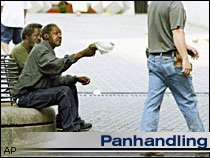 Jane Pitfield, conservative and mayoral candidate, is pushing for an anti-panhandling by-law to be read at City Hall. This from a woman who lives the high Leaside life where, if the undesirables of society make it too far up Bayview, they’re quickly shooed back to their Don Valley homes (Open-air bedrooms, complete with surrounding trees and pleasing tarps to keep out the rain. A great fixer-upper option!).
 How does panhandling make it to the top of Ms. Pitfield’s agenda of things to change?
I can’t remember a time when someone was rude to me if I did not fulfill their request of a quarter or a loonie. In fact, all I hear these days is the polite phrase: “Thanks anyway, have a good day,” even to people who have whole-heartedly ignored their fellow human’s plea. I once heard a guy, seated comfortably in his SUV, tell a panhandler to get a job. An exchange of words occurred, the panhandler remaining polite and dignified, the SUV driver disintegrating into insults and epithets.
Perhaps it is not an anti-panhandling law we need, but an anti-asshole law. Just as you would politely decline being able to give the time to a fellow human being because you weren’t wearing your watch (and not scold them for being so imbecilic and inept for forgetting to put one on that morning – oh wait, you forgot, too), so should you acknowledge the request, “spare some change?” with eye contact and a polite, “sorry,” instead of ignoring, or worse, chastising the person below you who, “but for the grace of God,” go you.
Tuesday, May 02, 2006
Gardening With the Conservatives
So, the Conservatives brought out their federal budget today, complete with a whole percent taken off our GST (now how will us Ontarians calculate the tax in our head? 15% was so easy…). And like true, blueblood Tories, all the tax cuts benefit those of us who make over $36 000, or some such comfortable number.
And their biggest folly, according to moi? This childcare credit, $1200 for parents to spend as they see fit.
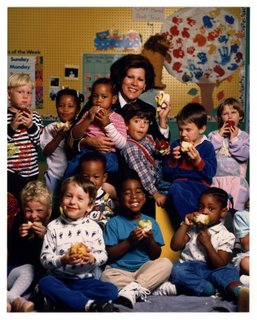 Well, that’s the problem with society, you see. Not all parents see fit. This is not a rant about the misspending of that money. I’m sure many parents are happy to receive a grand from the government and will spend it responsibly. But like the Conservatives’ clamp down on crime by rounding up the criminals and givin’ ‘em longer sentences, the Tories’ about turn from national daycare connects nicely with my gardening metaphor: it cuts the weed at the stalk, temporarily removing the bad stuff - all that work and money into a national daycare programme - and ignores the roots – the healthy and vigourous development of our children.
 We are seeing the results of all those Harris cuts to social programmes back in the 90s with more guns being shot off by misguided youth, failed by social programmes and trapped in poverty. Harris got rid of the weeds, but the roots remained firm and are now growing up.
I worry that this move away from national daycare will add to our social problems. If we had a nationally funded daycare programme, it would not only allow parents to work without paying half their salary to daycare, it would provide the early childhood education that is so vital and critical. I see the effects not only of ill-parenting, but of uninformed parenting everyday at my school. I see students that have never encountered a book before kindergarten, aren’t familiar with a horse or cow, don’t know how to share toys, or have never sung a song. I’ve met kids that haven’t ventured further in this city, than to the store, a hundred metres up their street.
If we want our children to grow up to be sound, contributing citizens of our society, this education doesn’t begin at school. It begins at birth. And only recently have government agencies begun initiatives based on this idea (Parenting Centres and Early Childhood Centres have popped up around the city). But these are only accessible to those who choose to seek them out. Universally funded daycare is an incentive for parents to enroll their children and then see the vast benefits of early childhood experiences.
And their biggest folly, according to moi? This childcare credit, $1200 for parents to spend as they see fit.
 Well, that’s the problem with society, you see. Not all parents see fit. This is not a rant about the misspending of that money. I’m sure many parents are happy to receive a grand from the government and will spend it responsibly. But like the Conservatives’ clamp down on crime by rounding up the criminals and givin’ ‘em longer sentences, the Tories’ about turn from national daycare connects nicely with my gardening metaphor: it cuts the weed at the stalk, temporarily removing the bad stuff - all that work and money into a national daycare programme - and ignores the roots – the healthy and vigourous development of our children.
 We are seeing the results of all those Harris cuts to social programmes back in the 90s with more guns being shot off by misguided youth, failed by social programmes and trapped in poverty. Harris got rid of the weeds, but the roots remained firm and are now growing up.
 I worry that this move away from national daycare will add to our social problems. If we had a nationally funded daycare programme, it would not only allow parents to work without paying half their salary to daycare, it would provide the early childhood education that is so vital and critical. I see the effects not only of ill-parenting, but of uninformed parenting everyday at my school. I see students that have never encountered a book before kindergarten, aren’t familiar with a horse or cow, don’t know how to share toys, or have never sung a song. I’ve met kids that haven’t ventured further in this city, than to the store, a hundred metres up their street.
If we want our children to grow up to be sound, contributing citizens of our society, this education doesn’t begin at school. It begins at birth. And only recently have government agencies begun initiatives based on this idea (Parenting Centres and Early Childhood Centres have popped up around the city). But these are only accessible to those who choose to seek them out. Universally funded daycare is an incentive for parents to enroll their children and then see the vast benefits of early childhood experiences.
Wednesday, April 12, 2006
Subscribe to:
Posts (Atom)