I have just finished reading Heather Mallick’s Pearls in Vinegar, written in the style of a Japanese Pillow Book, a form which appears to be a few paragraphs on a variety of sometimes-connected topics. Inspired by the short, non-committal bursts of writing commenting on everyday life, I thought I might take another stab at blogging. I was getting quite sick of seeing that tomato zombie guy every time I forlornly returned to my blog, only to remain witless and wordless.
On Reading
At school these days, we teach children when to abandon books (as part of a larger plan of teaching reading behaviours). While reviewing the reasons we might not finish a book (words are too hard, topic is not interesting, you don’t like the author’s style of writing), I realized that I rarely abandoned books. I would plough through novels, intent on finishing them, but missing large sections as I read the words on the page, but really didn’t take in what was going on.
And so I abandoned several books: Sister Crazy by Emma Richler, On Beauty by Zadie Smith (however I do plan to come back to this one), Snow Falling on Cedars by Joseph Guterson (okay, I abandoned this one awhile ago) and The God Delusion by Richard Dawkins (although this was a forced abandon, as it was due back at the library and unrenewable). I was beginning to worry that I had lost my taste for fiction (and that non-fiction was just a repetition of the same facts and ideas about teapots in space, extended to 400-odd pages) and that being drawn into a good book was out of reach.
Luckily good old Ian McEwan stepped up in the form of a phone call from the library saying that it was my turn to read On Chesil Beach, which I’d put a hold on back in July. Wanting to keep up a run of good books, I went out and bought Anil’s Ghost by Michael Ondaatje, an author I can always rely on to bring a density of thoughts, images and meaning to a single sentence. The ending, which I read on a terrace in the Cayman Islands, had me gazing out to sea for a good ten minutes after I closed the book.
Cayman Americanization
I spent the week after Christmas in the Cayman Islands with my cousin and his girlfriend who now live out there. Having visited several Caribbean Islands in the past (and having not been out of the province for a year and a half), I was looking forward to a change of scenery, some fried plantains with rice and peas, and a whole lot of sun.
And while I got these wishes, I also got a lesson in Americanization. Though a British territory (and populated by many ex-pat Brits), the main port of George Town is set up for foreign workers as well as the daily onslaught of Cruise Shippers, who must line up like cattle to get on and off their ships. There are several Burger King and Wendy’s outlets as well as higher end restaurants (with higher end pricing) offering middle of the road Italian and seafood options. It took a trip into West Bay, where many locals live, to find a place that would actually serve me rice and peas.
And the bars along the main drag, though frequented by some Caymanians and some Jamaicans (who make up about 20% of the island’s population), were staffed and patronized by Australians, Kiwis, Canadians Americans and Brits, all playing the likes of Bon Jovi and Prince, with an NFL game on TV in the background. It felt like my undergrad years, with the heat turned up.
Getting asked out via email
I’m trying to figure out if this is a new low or high in my dating career. The uncle of a kid in my class asked me out via email. His sister-in-law (the kid's mom) suggested it, saying I was a lovely person (possible high); however, going on just this recommendation, I wonder about his standards (possible low). A fellow teacher did some detective work (by asking the sister of the kid in my class) and determined that the uncle is getting a bit chubby and lives in a messy house. I declined politely. He could have been that tomato zombie guy.
Showing posts with label on writing. Show all posts
Showing posts with label on writing. Show all posts
Sunday, January 13, 2008


Sunday, August 12, 2007
Harry Potter and the Pre-order of the Deathly Hallows
 Now that Harry Potter mania has died down (presumably because everyone has finished the last book and seen the latest movie), and I am on page 350 of the 600-odd pages of the penultimate book (I’m always behind in most areas of my life), perhaps now I can comment on the insanity.
Why is it that everyone goes so crazy over Harry Potter? Why are there midnight release times, pre-order options on a myriad of websites and newsworthy reports of security breaches of the manuscript?
J.K. Rowling, who conceived of Harry Potter on a train ride between Manchester and London, combines a set of factors that have worked together to make the series as popular as it is.
Escapism, Pure & Simple
The first book in the series, Harry Potter and the Philosopher’s Stone, was published in 1997, so I can’t link its creation to any post 9/11 desire for escapism. But there was certainly the interim after the first invasion of Iraq and some gruesome stuff going on in Kosovo. But regardless of world politics, the Harry Potter series provided a magical other-world full of spells, fantastical creatures and mysterious secrets. As any good book should take you into another reality, Harry Potter’s world of wizards and witches took readers into an entirely different realm of magic with its characters and curiosities. A realm that although it functioned differently from ours, still maintained…
Relatable Characters & Experiences
I’m seeing this more and more as the series progresses. Especially in Harry Potter and the Half-Blood Prince, which I’m reading now. Although Harry is imbued with exceptional powers (even when measured against those in the wizarding world), he still falls victim to such teenage afflictions as jealously, most notably when he catches Ginny Weasley kissing Dean in the corridor and we read Harry’s internal monologue, mulling over whether or not it is brotherly love, or something else, that makes him want to smash poor Dean in the face. The love played out as anger and bitterness between Hermione and Ron is another example of real-life situations that readers can relate to. And the character Luna is a wonderful sketch of those awkward, slightly-removed-from-reality-type kids we had in our classes growing up – and how lovely is Harry’s empathy and acceptance of her.
Wicked Wordsmithery
This is one of J.K. Rowling’s greatest talents: making up new words and interesting names: Dumbledore evokes quiet power and sagacity. Voldemort sounds like menacing thunder booming. Harry’s Herbology class is filled with such onomatopoeic plants as Snargaluff (requiring protective gloves to handle), Whomping Willows (requiring speed, agility and perhaps a helmut to avoid injury) and Bubotubers (decidedly less dangerous than the previous flora, but its pus can still cause painful boils, nonetheless). Some other fabulous locutional concoctions: Ambrosius Flume (a businessman), Budleigh Babberton (a charming village), Barnabas Cuffe (editor of The Daily Prophet), Mundungus Fletcher (a shady member of the Order of the Phoenix) and St. Mungo's Hospital for Magical Maladies and Injuries (self-explanatory, no?).
Classic Narrative Devices
And of course, as many critics have pointed out, J.K. Rowling employs all those plots and characters we’ve seen before: good vs. evil and their inherent connection (hello Luke Skywalker and Darth Vader), orphans unraveling their pasts, the journey from boy to man, and political allegory. (I hear that there is more than a hint that the political climate in Deathly Hallows mirrors what was happening during World War II. And having just seen the most recent movie, the Ministry taking over Hogwarts and instituting curricular change and teacher evaluations rings true of educational reforms of the past.)
So there are several factors that contribute to the wild success of Rowling’s magical narratives. Put together, these provided a series of books that saw ridiculous security over the official release date of the latest publication (imagine suing people over the release of On Chesil Beach, an excerpt of which I’m sure I read prior to publication – isn’t it in keeping with protocol to release an excerpt?) and saw the book in people’s hands across this city and around the world during the last week of July. And all these factors will keep me going for the next 250 pages of The Half-Blood Prince. After that, I'll need a serious Potter break before attempting the final 700+ page installment that may toll the end of Potter Mania.
Saturday, April 14, 2007
New Format, Odd Title
 It’s spring and it’s time for a new look. I thought a nice soothing green would be appropriate.
And in honour of this new look, I would like to draw your attention to The Stray Shopping Carts of Eastern North America: A Guide to Field Identification, a book that has won for Oddest Title of the Year a prize offered by The Bookseller.
Second place was awarded to Tattooed Mountain Women and Spoon Boxes of Dagestan and Better Never To Have Been: The Harm of Coming Into Existence came in third.
The winners were chosen by internet votes.
link to BBC story
Monday, March 26, 2007
Keep On Bloggin'
Following along from yesterday’s post, this blog post in the Guardian is interesting: it seems that the creation of new blogs peaked back in October, but people are not keeping up with their wordsmithery (shut up, it’s a word in my mind). There are currently a whole bunch of untended blogs floating about in the cyber-nebula, receiving hits by loyal readers, but to no reward (I’m talking to you, mxi).
When I first entered into the blogosphere, all I could find were boring posts about what people did on a daily basis (see The Banal Blogosphere from February 2006), but soon I built up a tidy catalogue of blogs that went beyond the silly antics of the author’s cat or a blow-by-blow recount of a fight the author had with her ex-boyfriend.
So maybe this is the next stage in the evolution of the blog. Once considered a pastime or self-indulgent endeavour, blogging has been taken up by politicians, TV personalities and struggling writers exercising their wordsmithery. (I said, shut up.)
When I first entered into the blogosphere, all I could find were boring posts about what people did on a daily basis (see The Banal Blogosphere from February 2006), but soon I built up a tidy catalogue of blogs that went beyond the silly antics of the author’s cat or a blow-by-blow recount of a fight the author had with her ex-boyfriend.
So maybe this is the next stage in the evolution of the blog. Once considered a pastime or self-indulgent endeavour, blogging has been taken up by politicians, TV personalities and struggling writers exercising their wordsmithery. (I said, shut up.)
Sunday, March 04, 2007
The Sacred Art of Avoidance
 So, I’m spending my weekend writing report cards (the pointlessness of which I could discuss at length with you, dear reader, should you elect to join me in sharing the pricier bottle of tempranillo at that tapas place in Kensington). Yes, it is an exercise in composition (which is supposed to be my bag), but if asked, I might compare it to repeatedly jabbing a sharpened pencil into my eye: that is, quite unpleasant.
Back in the day, when I had to complete such writing assignments as essays and lab reports (and the odd poem, god bless those Creative Writing courses), my living space would be at its cleanest because I felt I couldn’t work unless every last piece of dust and debris had been seen to. The more metacognitive individual might have referred to this process as procrastination.
Well, as I look around my apartment maintenant, it remains in a bit of a state: clothes strewn on chairs (not on the floor – yet), dirty dishes awaiting lavation, diaphanous clusters of dust bunnies secretly growing under chairs and behind electronic devices…
 And my report cards, nowhere close to completion.
Why am I forsaking this oft-tested method of house cleaning?
The answer, my friends, is the internet. When I am trying to decide the repercussions of assigning little Johnny a D rather than a C in Science, all of a sudden the need to know the movements of Kate Moss and Posh Spice become of the utmost importance. So does checking to see how many people have read my blog in the 15 minutes since I last checked (oh… none). And maybe I’ll just check the BBC website to see if anything important has happened in the world since checking that news feed 20 minutes ago.
The internet, especially this high speed “always connected” form, has proven to be quite the distraction. One wonders if having the dial-up version might limit my need for the immediate gratification of answers to random questions that pop into my head (I wonder if I can find that Swiss guy I met in Alice Springs in 2000. I know, I’ll check facebook again).

The internet, generally, and facebook , specifically. I have eschewed the popular mySpace and ignored invitations to join facebook in the past, because I thought it was very high school, with its visual list of “friends” and shameless self-centredness of a webpage devoted entirely to oneself. But hell, that is essentially what this blog is, and I am my own biggest fan, so I signed up.
And so, let the addiction begin. You could spend hours getting lost in the web of friends of friends’ friends, occasionally stumbling upon a boy you liked in grade 5 (oh, Adam Purcell) or used to go out with your roommate but is now married to a girl who is friends with your friend’s little sister (yes, you, Carey Avery). There’s also the distraction of messages, friend requests, wall posts and pokes, a feature which remains unexplained, even in the FAQ section of the website.
At this moment, not only are my report cards unfinished, the demands of my household are not being attended to (nice use of the passive voice, eh?). But my knowledge of the whereabouts and associates of a number of people who I used to know has increased tenfold. And yes, I do see that in composing this post about the art of procrastination, I am actually indulging in it.
Now if only I could explain why Johnny’s knowledge of the inner workings of animal habitats and communities has actually decreased tenfold, I’d be on my way…
Wednesday, February 28, 2007
What Book's It Going to Be Then, eh?
Several blogs have posted this test that matches your personality with a great novel.
 I was A Clockwork Orange (57% Great Book – whatever that means, no one seems to know). Interesting that the novel follows the protagonist through his hedonistic, unsympathetic youth to his jail time and then his integration back into society. He looks back at his youth, and although he knows what he did was wrong, he believes it is part of growing up.
Interesting because, I took the test after I witnessed several adolescents at lunchtime the other day, not doing anything untoward, but just being adolescents. And I thought, as I often have, what a horrible age, but also necessary. I had to go through being 14 to learn those lessons. I wish the 30 year old me could have imparted wisdom on the 14 year old me, but I know that she never would have listened…
Oh, and I won't take it personally that the book I was aligned with has one screwed up main character...
 I was A Clockwork Orange (57% Great Book – whatever that means, no one seems to know). Interesting that the novel follows the protagonist through his hedonistic, unsympathetic youth to his jail time and then his integration back into society. He looks back at his youth, and although he knows what he did was wrong, he believes it is part of growing up.
 Interesting because, I took the test after I witnessed several adolescents at lunchtime the other day, not doing anything untoward, but just being adolescents. And I thought, as I often have, what a horrible age, but also necessary. I had to go through being 14 to learn those lessons. I wish the 30 year old me could have imparted wisdom on the 14 year old me, but I know that she never would have listened…
Oh, and I won't take it personally that the book I was aligned with has one screwed up main character...
Tuesday, February 27, 2007
Running in Tokyo
 My friend Mikael is in Tokyo, having just run the marathon there. He and his boyfriend have kept a blog and I’ve provided links to the posts that made me laugh out loud at Mikael’s clever writing:
"...both of us feel like shiny neon magic this morning!"
”Under different circumstances this might have been strange.”
Photo used without permission. (Is that okay, Mark? I just love it!)
Monday, February 19, 2007
The Sony Reader
 This is interesting: Sony has come out with kind of an iBook (wait a minute, where have I heard that before?) where you store digital files of books and then read them off a small computer screen (“smaller than many paperbacks”!). It even comes with an iTunes-esque managing system you load onto your computer.
This could just be one of those new-fangled things that scholarly types decry at first (“But I need to feel the well-worn pages in my hands!” "How can I make notes in the margins?”), but then eventually get used to. We store our music on devices the size of a package of gum, so why not books?
Well, I must agree with those elbow-patched intellectuals – it IS nice to feel the pages beneath your calloused hands (don’t you love the mismatched widths of the pages of some hardcovers, jutting out from between the smooth book jacket?). Folding over the top of a page to mark a particularly good piece of prose is an archaic practice, yes; but has not met with any innovations in the last 600 years, save for the hallowed bookmark, which would be rendered obsolete by the Sony Reader. And though I have browsed extensive CD collections in people’s homes, it is not the same as browsing the shelves of tightly packed books, head cocked to the side, scanning spines.
 And, somewhat tellingly, the sample text displayed on the Sony Reader is from The Da Vinci Code. This is a device for the masses. And though I have read (and enjoyed) The Da Vinci Code, I do understand Stephen W. Beattie when he says “if my girlfriend ever chose The Da Vinci Code over me, it would be her way of telling me that we were done.”
Friday, February 16, 2007
So Tense and a Whip
The Wordsmith website says that "all the life's wisdom can be found in anagrams. Anagrams never lie," then offers to find the thousands of anagrams your name (or any other word or combination of words) can produce.
The website speaks the truth. Anagrams of my name include:
we step on a danish
a poet had new sins
one pint, sew a dish
nee a hand, piss two
And perhaps the most worrying:
a hand, two penises
(Thanks to Sarah for the link.)
The website speaks the truth. Anagrams of my name include:
we step on a danish
a poet had new sins
one pint, sew a dish
nee a hand, piss two
And perhaps the most worrying:
a hand, two penises
(Thanks to Sarah for the link.)
Tuesday, February 13, 2007
Conjuring the Cold
 So the debate continues: can a writer be trusted to properly evoke a setting where she or he has never been? Marcel Berlins doesn’t think so. Writing in the Guardian, he wonders if an author can “be trusted to deliver the crucial human and emotional elements” if they “can't get the geographical and social background right.” Berlins says he would have been "more satisfied [with Stef Penney's The Tenderness of Wolves if she] had absorbed the atmosphere, the cold and the scenery at first hand." But could he really tell? He even states in his column that perhaps only some Canadian readers will notice minor discrepancies in Penney's descriptions.
My goodness, this issue is getting a lot of press. Note to self: when publishing first novel, admit to some affliction that has some sort of bearing on the creation of the novel, sit back and count the column inches.
Monday, February 12, 2007
Creates, Sweats and Publishes
I’m always pleased when I hear of authors who set their stories in places they haven’t been. Most of my fictional writing is set in places I have been, and I even embarked on a trip to parts of Africa, as my current writing project is set in Zimbabwe. I never made it to Zimbabwe (due to a mugging incident in Cape Town which occurred within four hours of our arrival there), and this has always remained as an uneasy disconnect in my writing process (as well as in my life in general). I have continued the piece, but with much more research into the landscapes, botany and customs of the region.
 So I was gratified to hear that the winner of the Costa Book of the Year Award, Stef Penney, set her novel The Tenderness of Wolves in the wilderness of Canada; a place she had never been. Her writing was based on research she had done in the British Library (partly due to her agoraphobia, as was widely reported).
But then along comes Lynn Truss, she of Eats, Shoots and Leaves fame, with this article in which she scoffs at the idea that writers must “write what they know” (a concept that was first taught to me by Natalie on the Facts of Life back in ’86, just as I was finishing my first short story, Sandy Runs Away, a bittersweet tale of a mongrel dog who runs away from a mean family into the arms of an 11 year-old girl with striking similarities to the tenderfoot author, who, coincidently, wouldn’t stop asking her parents for a dog).
Truss writes: “The thing is, we fiction writers are quite touchy when people fail to appreciate the supreme importance of imagination in our work. I love the idea of Penney constructing the landscape of her book from maps and records in the British Library. That was a true creative act. Any fool with a Visa card can buy a ticket and go to look at an expanse of snow.”
I do see her point: a good author relies on their imagination and abilities as a wordsmith to present a scene and transport their reader to a different place and time. And granted, novels have been set in the past (and future) by authors who haven’t actually lived during those times, so why can’t space be as negotiable as time?
 But still, there lingers within me that troubled disassociation from my setting that leaves me lacking literary confidence: I can’t properly describe the msasa trees or the sounds of the dark nights, even when people show me pictures or try to evoke a scene for me. No matter how often I re-read Alexandra Fuller, I still don't have a complete sense of Zimbabwe. The smell of wet cedar leaves that lie browning over lichen-covered rocks in Algonquin is easy. So is the gentle slope of Church Lane, Tooting, with its orange-bricked Victorian row houses, windows framed by lace curtains. It takes little effort to picture the brilliant sun bouncing off waves in Sydney Harbour, the unexpected smell of Chinese jasmine wafting by. But I lose all creative confidence when writing scenes in locales I haven’t been to.
But maybe this is the old adage that writing is 10% inspiration and 90% perspiration. When you “write what you know,” there's a little less sweating. When you must describe a place you are unfamiliar with, you have to do a bit of research to write with familiarity. Stef Penney chose to sweat it out in the British Library for her book – perhaps my apprehension to write about Zimbabwe comes not from a fear of unknown places (and repeat muggings), but from a fear of Truss's proclaimed "true creative act": constructing a time and place through a combination of some imagination (say, 10%) and a whole lot of sweating.
 So I was gratified to hear that the winner of the Costa Book of the Year Award, Stef Penney, set her novel The Tenderness of Wolves in the wilderness of Canada; a place she had never been. Her writing was based on research she had done in the British Library (partly due to her agoraphobia, as was widely reported).
But then along comes Lynn Truss, she of Eats, Shoots and Leaves fame, with this article in which she scoffs at the idea that writers must “write what they know” (a concept that was first taught to me by Natalie on the Facts of Life back in ’86, just as I was finishing my first short story, Sandy Runs Away, a bittersweet tale of a mongrel dog who runs away from a mean family into the arms of an 11 year-old girl with striking similarities to the tenderfoot author, who, coincidently, wouldn’t stop asking her parents for a dog).
Truss writes: “The thing is, we fiction writers are quite touchy when people fail to appreciate the supreme importance of imagination in our work. I love the idea of Penney constructing the landscape of her book from maps and records in the British Library. That was a true creative act. Any fool with a Visa card can buy a ticket and go to look at an expanse of snow.”
I do see her point: a good author relies on their imagination and abilities as a wordsmith to present a scene and transport their reader to a different place and time. And granted, novels have been set in the past (and future) by authors who haven’t actually lived during those times, so why can’t space be as negotiable as time?
 But still, there lingers within me that troubled disassociation from my setting that leaves me lacking literary confidence: I can’t properly describe the msasa trees or the sounds of the dark nights, even when people show me pictures or try to evoke a scene for me. No matter how often I re-read Alexandra Fuller, I still don't have a complete sense of Zimbabwe. The smell of wet cedar leaves that lie browning over lichen-covered rocks in Algonquin is easy. So is the gentle slope of Church Lane, Tooting, with its orange-bricked Victorian row houses, windows framed by lace curtains. It takes little effort to picture the brilliant sun bouncing off waves in Sydney Harbour, the unexpected smell of Chinese jasmine wafting by. But I lose all creative confidence when writing scenes in locales I haven’t been to.
But maybe this is the old adage that writing is 10% inspiration and 90% perspiration. When you “write what you know,” there's a little less sweating. When you must describe a place you are unfamiliar with, you have to do a bit of research to write with familiarity. Stef Penney chose to sweat it out in the British Library for her book – perhaps my apprehension to write about Zimbabwe comes not from a fear of unknown places (and repeat muggings), but from a fear of Truss's proclaimed "true creative act": constructing a time and place through a combination of some imagination (say, 10%) and a whole lot of sweating.
Sunday, February 11, 2007
Better Blogs
 This week marks the one year anniversary of the inception of my blog [applause]. The purpose of starting Because I Said So was to get myself to write more often – I so often avoid working on longer pieces of writing because I’m tired, I don’t have enough time to get into it, I’m uninspired, blah, blah blah. My goal was to post something at least once a week, which I’ve pretty much done, although some of the posts contain barely any writing (but are interesting, nonetheless, no?).
With my blog, came the “Next Blog” button at the top of the screen. It allowed me to randomly peruse other people’s blogs from around the world, which tended to be self-indulgent and generally quite boring (for more on this, read my post about the Banal Blogosphere).
There is certainly a grand proliferation of banal blogs out there – websites that are perhaps only read by a handful of people known to the author (including this one – hi Mum!). Because of the unstimulating subject matter and limited audience, the blog form was first thought trivial. However, many blogs have caught on and log thousands of readers a day. Popular media types have started blogs (Rick Mercer, Kevin Frankish from BT, and George Stroumboulopoulos are a sample of some that I’ve read). The blog is now a valid media form and several “blogging communities” have cropped up – friends with blogs who link to each other.
My friend Lee, who used to write the now defunct See The Donkey blog, linked my blog to his when I first started (and I linked his to mine). We talked romantically about starting the new Toronto Literati – we were both in the process of writing novels and trying to make money off this creative writing lark. But what we talked idealistically about, I think is happening amongst the bloggers of the world.
I have found several intelligent, well-written blogs which I check semi-regularly – and I often find more by following the links on the good blogs. Bloggers comment on each other’s posts, thus providing me with links to a variety of appealing blogs. That Shakespeherian Rag has turned me onto Bookninja and Moonlight Ambulette (not only does this girl have a Virginia Woolf doll on her website, she also writes a piece about reading Flannery O'Connor, ending the post with a photo from a Sunday Times article about O'Connor and her own caption expressing her desire for a bag in the photo). I have all but abandoned the “Next Blog” button in favour of my own personal blog web in which I am often lost on a Sunday morning.
So happy anniversary to me, and here’s to another year of forcing myself to write, and a new year of finding more clever, engaging and readable blogs.
Tuesday, November 28, 2006
Chick Lit, Revisited
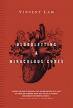 In the November 4th edition of the Globe and Mail, before the Giller prize was awarded to Vincent Lam for Bloodletting & Miraculous Cures, there was a “Giller Debate” between Andrew Gorham, Sandra Martin and James Adams. They discussed the merits of the shortlisted books and debated which one might win the largest annual prize awarded for fiction in Canada.
Out of all the books on the shortlist (De Niro’s Game, The Immaculate Conception, Home Schooling and The Perfect Circle all lost out), The Perfect Circle appealed to me the most (see "I'm Reading..." in the sidebar of this blog). What was interesting in the Globe article though, was the fact that the two men didn’t see the book as a contender:
“Andrew: Now, let’s talk about Quiviger’s The Perfect Circle. First off, and maybe this is sexist, I feel that half the reading population is removed because it’s very much a female love story.
James: You mean, it’s chick lit.
Sandra: It’s not chick lit.
Andrew: It’s great chick lit.
Sandra: It is definitely not chick lit. It’s not chick lit.
Andrew: It’s a love story and, as a man, I prefer something with a little bit more…
Sandra: Action.
Andrew: Contention.”
Mr. Gorham implies that a book dealing with relationships does not have enough substance to qualify for literary recognition.
Really?
In a previous post, I tried to delineate
 the dismissive term “chick lit” and decide why Sophie Kinsella is stamped with the label but Margaret Atwood is not. The difference, I found, was the inclusion of “weightier” topics within the female experience of love.
But can we really discount love as a trifling subject? Women and men have written about it through the ages – it is the most popular topic in poetry and song. Humans make their living arrangements and reproductive choices (usually) based on love. And when love is taken away, we plumb the depths of emotion.
 Michael Ondaatje, widely considered a “serious” author and also the winner of the 2000 Giller Prize (for Anil’s Ghost), writes the most unbelievably amazing prose describing romantic love in the chapter entitled “Katherine” in his novel The English Patient – which won him the Booker Prize. (If you haven’t read it, go read it right now. If you have, re-read it.) The English Patient is thick with the nuances of demarcation and national identity, but it would have won on the merits of its prose alone. So why does Gorham discount The Perfect Circle based only on its subject matter?
The truth is, it is only one man’s opinion. The Perfect Circle made it to the shortlist for the Giller on its literary merits, regardless of subject matter. Quiviger’s words are evocative; her style both languorous and obsessive, like those first heady weeks of a love affair. And what is great literature, but the containing of human experience into a few well-chosen words that make the reader think, ah yes; that IS how it feels…
Thursday, May 25, 2006
Chick Lit Through the Ages
“With their work routinely marketed with frothy cover illustrations and stamped “chick lit,” young, urban female authors struggle with a label that pushes sales as much as it undermines their efforts.” So reads the caption of Leah McLaren’s self-reflexive article about this new genre in June’s issue of Fashion magazine.

But is the genre of “chick lit” really new? Hasn’t “chick lit” existed since the inception of the novel, just in a slightly different form? (But, perhaps, marketed in a slightly different way?) And is this why I contained the novel moniker in non-committal quotation marks so many times in the previous 50 or so words?
A brief history of the novel: when humans began writing down their stories on parchment instead of cave walls, they often did so in the form of ballads, sermons, poetry and plays – forms to which illiterate access was easy. So with the move away from the authority of the Church and rise of the middle class around 1700, there came increasing literacy amongst this class and thus the rise of the novel. This is the argument of Ian Watt’s Triple Rise Thesis, which has been widely criticized for its assumptions, but will serve my simple purpose here.
 Mary Shelley was one of the first female authors to write in the form of the novel; however, it was Jane Austen, who included several central female characters and their quotidian happenings in her novels of manners, who really started the “chick lit” genre. Austen’s novels include all the romance, negotiations of society and character growth that we see in many of the popular “chick lit” novels today.
 Just as Catherine “greatly preferred cricket…to dolls” in Austen’s Northanger Abbey, and the title character in Emma enjoys such unladylike pursuits as archery, our modern day heroines like Bridget Jones do not fit the romantic feminine stereotype. We enjoy reading about slightly flawed characters (flaws that we may see in ourselves) who eventually stumble through the imperfections of life to prevail in the end (usually by landing a Marc Darcy or a Mr. Knightley). The reading is emotionally light, lacking in any heavy issues.
 Compare this to the rise of the romance genre, with flowing hair and chiseled pecs on the pink and white covers, and the elaborately described scenes of love and loss on the pages inside. These novels work on ideas of perfect and flawless love. Their sole audience is women and their sole purpose is that of escape, with little critical analysis or thought needed.
So perhaps this is where “chick lit” veers from the more serious literature written by women. Virginia Woolf’s novels deal with homosexuality and suicide, Sylvia Plath’s deal with mental illness: their novels do include the female experience of traditional romantic relationships, but it is never the central theme. Lives tend to be less than ideal, the subject matter focussing on struggles that may not be solved in the end.
 The same can be said of many contemporary (Canadian) authors – Margaret Atwood, Alice Munro, Sylvia Fraser, Ann-Marie MacDonald – these authors write from the perspective of “other”: marginalized members of society trying to negotiate their place within it. These stories are denser, pithier dissections of our so-called lives. They make us take a look at our imperfect existence and draw connections to ourselves.
Bridget Jones may have marked the shift from romance to “chick lit”: Helen Fielding presented us with a flawed character in an essentially romantically structured novel. She included elements of “perfect love’ from the romance genre with the idea of imperfect characters from weightier tomes. It is, perhaps, not as dark a reality as authors such as Atwood and Plath might illustrate, but still moves away from the idea of ideal, true love that follows a fated, effortless path.
 Like Bridget Jones, the new, successful spring of pink and teal novels, set out pleasingly on tables in bookstores, combine the endeavour for perfection with the reality of “chick” life. McLaren may feel that the label undermines her efforts as a serious novelist (she has recently written The Continuity Girl, which I haven't read), but is she really writing about serious subjects?
Good literature, regardless of the author's gender, is engaging, thought-provoking and enduring. And these adjectives can be applied to any book, regardless of the gravity of the subject matter. Sometimes, all you need is to read about how Catherine lands Mr. Knightley. I'm sure Jane Austen would agree.
But is the genre of “chick lit” really new? Hasn’t “chick lit” existed since the inception of the novel, just in a slightly different form? (But, perhaps, marketed in a slightly different way?) And is this why I contained the novel moniker in non-committal quotation marks so many times in the previous 50 or so words?
A brief history of the novel: when humans began writing down their stories on parchment instead of cave walls, they often did so in the form of ballads, sermons, poetry and plays – forms to which illiterate access was easy. So with the move away from the authority of the Church and rise of the middle class around 1700, there came increasing literacy amongst this class and thus the rise of the novel. This is the argument of Ian Watt’s Triple Rise Thesis, which has been widely criticized for its assumptions, but will serve my simple purpose here.
 Mary Shelley was one of the first female authors to write in the form of the novel; however, it was Jane Austen, who included several central female characters and their quotidian happenings in her novels of manners, who really started the “chick lit” genre. Austen’s novels include all the romance, negotiations of society and character growth that we see in many of the popular “chick lit” novels today.
 Just as Catherine “greatly preferred cricket…to dolls” in Austen’s Northanger Abbey, and the title character in Emma enjoys such unladylike pursuits as archery, our modern day heroines like Bridget Jones do not fit the romantic feminine stereotype. We enjoy reading about slightly flawed characters (flaws that we may see in ourselves) who eventually stumble through the imperfections of life to prevail in the end (usually by landing a Marc Darcy or a Mr. Knightley). The reading is emotionally light, lacking in any heavy issues.
 Compare this to the rise of the romance genre, with flowing hair and chiseled pecs on the pink and white covers, and the elaborately described scenes of love and loss on the pages inside. These novels work on ideas of perfect and flawless love. Their sole audience is women and their sole purpose is that of escape, with little critical analysis or thought needed.
So perhaps this is where “chick lit” veers from the more serious literature written by women. Virginia Woolf’s novels deal with homosexuality and suicide, Sylvia Plath’s deal with mental illness: their novels do include the female experience of traditional romantic relationships, but it is never the central theme. Lives tend to be less than ideal, the subject matter focussing on struggles that may not be solved in the end.
 The same can be said of many contemporary (Canadian) authors – Margaret Atwood, Alice Munro, Sylvia Fraser, Ann-Marie MacDonald – these authors write from the perspective of “other”: marginalized members of society trying to negotiate their place within it. These stories are denser, pithier dissections of our so-called lives. They make us take a look at our imperfect existence and draw connections to ourselves.
Bridget Jones may have marked the shift from romance to “chick lit”: Helen Fielding presented us with a flawed character in an essentially romantically structured novel. She included elements of “perfect love’ from the romance genre with the idea of imperfect characters from weightier tomes. It is, perhaps, not as dark a reality as authors such as Atwood and Plath might illustrate, but still moves away from the idea of ideal, true love that follows a fated, effortless path.
 Like Bridget Jones, the new, successful spring of pink and teal novels, set out pleasingly on tables in bookstores, combine the endeavour for perfection with the reality of “chick” life. McLaren may feel that the label undermines her efforts as a serious novelist (she has recently written The Continuity Girl, which I haven't read), but is she really writing about serious subjects?
 Good literature, regardless of the author's gender, is engaging, thought-provoking and enduring. And these adjectives can be applied to any book, regardless of the gravity of the subject matter. Sometimes, all you need is to read about how Catherine lands Mr. Knightley. I'm sure Jane Austen would agree.
Saturday, March 04, 2006
Tortured Artists?
 I regularly read Lynn Crosbie’s column in Saturday’s Globe and Mail, often accompanied by a dictionary to decipher the assorted words she uses that do not reside within my personal lexicon. Several weeks ago, she published an excerpt from her poem “Liar,”* the full-length version spanning 150 pages, about a break-up with a boyfriend.
Now Crosbie tends to be caustic at the best of times, sharing her acidulous views on cultural trends in North America and deconstructing the insidious celebrity tabloids that now seem to stretch beyond the sphere of cheap newsprint, stapled and displayed at grocery store checkout aisles, to the glaring magazine aisles at reputable booksellers.
 However, the excerpts that I read from “Liar” show an even more rancorous individual, deeply hurt and seething from the humiliation she experienced at her partner’s betrayal. (It is a fallacy to assume that all writing is based on personal experience, however Crosbie has revealed in interviews that “Liar” is based on her own experience of an infidelity and subsequent break-up.) From Crosbie’s choler comes prolific and magnificent lines of poetry. Her images are striking and her words are carefully chosen.
And all this begs the question, would she be capable of such quality if she hadn’t plumbed the depths of her sadness?
Although I consider myself a writer, I haven’t written a poem of any merit since my early 20s, a time when my emotions existed a little closer to the surface. And most of my poetry was about boys and how they had hurt me.
So is Ms. Crosbie an artist because she is tortured? Was Virginia Woolf a cutting-edge novelist and Sylvia Plath a celebrated poet, because they felt their depression to their very core? Do you have to be hurt to write good poetry?
Many artists say that they write/paint/create because they “have to.” Honoré de Balzac said: “I am a galley slave to pen and ink,” meaning that he was compelled to write. Forms of art can be seen as coping mechanisms - just as the non-artists among us go to therapists, drink vast amounts of alcohol or take long runs to deal with the torment in their lives, artists create in order to deal with their feelings.
And it seems that many artists seem to have more intense feelings, especially of depression, than the average person. Lots of poets and musicians have suffered from various mental illnesses and addictions that have fuelled their creativity.**
Regardless of what motivates writers to write or musicians to compose, or artists to paint, one thing remains uniform: when shared with others, artists' creations provide a connection of feelings across human experience. There are parts of Crosbie’s poem that resonate with my experience, just as there were parts of “Mrs. Dalloway” that resonated with millions of readers or, according to the song “Semi-Charmed Kind of Life” by Third Eye Blind: “The four right chords could make me cry.”
A piece of art provides a link of experience which, despite feelings of loneliness and desperation during its creation, says to its beholder, “you are not alone.”
*
**
Subscribe to:
Posts (Atom)