Ah, Margaret Wente – you never cease to annoy me of a Saturday.
This week it was her column telling us why weddings matter more than ever. Wente writes how as a young adult she thought marriage was a “dusty relic of the patriarchy” and weddings “a silly, conformist ritual full of fake piety, tasteless clothes and ostentatious spending.” But now, of course, as an experienced 50-something, she can see the error of her young adult thinking. (This is a sly arguing technique – because you can’t really argue with an elder who is telling you that essentially your beliefs are wrong because they believed them when they were young, but now they know better.) Wente now sees her decision to seek out “self-actualization and adventure” over the “banality of coupledom and family life” as wrong – huh? But she got both! Dozens of times women who married young have told me to enjoy my single life now – they wished they had. I’ve had conversations with women who I met travelling who were divorced and in their 40s doing the backpacker thing because they wished they had done it in their 20s, but got caught up in marriage and kids.
Marriage is a dusty relic – based on the exchange of property – and few people understand my ire at the father of the bride walking her down the aisle to her husband-to-be. Some couples have chosen to have both the bride’s parents walk her down the aisle, but the symbolic tradition still remains: it is the woman who is being passed from one man (and his wife) to another man. Never mind the fact that my (and most women's) last name is that of my patrilineal heritage only.
Having been through several weddings (the cheapest of which was $15 000), weddings do invite outrageous spending. Part of this, of course, is the fact that everything you spend money on for a wedding is grossly inflated because it’s for a wedding. And our society says that’s okay because we place such importance on this one event.
Let me digress for a moment here and say that I certainly do not judge those people that enjoy the tradition and pomp of a wedding. Some people love the pageantry and the flowers and the centerpieces. But two things remain. One: I urge people to really think about where certain traditions come from. Two: I think it was Salman Rushdie that once said that women want a wedding, not a marriage (I’ll ignore his gender generalization to make my point). And for all the white tulle and roses, that’s the whole point of the day – two people promising to stay in their foxhole together.
Wente argues marriage is “indisputably the best arrangement for raising children.” I totally agree that having two people raise children is better than single parenting and having a male and female role model (although these do not have to be the mom and dad of a heterosexual couple) is ideal. But what is most important is that two people agree to stick it out together in the long run. It doesn’t take a 40K wedding to make that commitment – a simple “you’re stuck with me ‘til I’m old, babe” would suffice.
And finally, I'm not sure Wente can effectively argue that a life with someone else is "infinitely richer" than being single. For her (hopefully), she is happy because she is with a good man, not because she is part of a couple. I'd rather be single than in an unhappy relationship. If I left my partner now, I'd miss him, not having a boyfriend. And because Wente has been in a relationship for the past however many years, she has nothing to compare it to - perhaps she would have been more adventurous as a 40-something, or done things she wouldn't have as a married woman.
As Wente notes, marriage rates are in decline and people are waiting until into their 30s to marry. And there's nothing wrong with this. There's nothing wrong with getting everything you can out of life and not placing landing a husband as your primary goal. And hopefully when we all look back at our 20s and 30s, we'll say, hey - we were right. And as elders, no one can argue with us.
Sunday, May 02, 2010


Sunday, August 30, 2009
A Year of Writing Annually
Over the past several years, there has been a trend in publishing where people live differently for a year and then write about it: they give up something or follow a certain set of rules. Finlo Rohrer details this in his piece for the BBC’s online magazine. He points to Kath Kelly's How I Lived A Year On Just A Pound A Day; Neil Boorman's Bonfire of the Brands, “in which the protagonist burned all his branded goods and then lived for a year without them”; and Hephzibah Anderson’s book entitled Chastened: No More Sex in the City, in which the writer gives up sexual activity for a full 12 months.
Other examples that come to mind: The Hundred Mile Diet by British Columbians Alisa Smith and J.B. MacKinnon who, for a year, lived on food procured from within a hundred mile radius of where they lived (I’d have trouble with the no coffee rule and the lean months of winter). Or The Year of Living Biblically by A.J. Jacobs, who follows the Bible so literally that he can’t shave his beard and has to stone adulterers.
There are other projects that fall outside the annual period: Rohrer mentions to Morgan Spurlock’s documentary Supersize Me that has Spurlock subsisting on food from McDonald’s for a month. And there is also Chris Jeavans’s blog in which she details her 31 days without buying anything plastic.
Stunts? Yes. But they all make a point about their subject: plastic is pervasive, McDonald’s is not good for you, the Bible shouldn’t be used to incite hatred, our world is comestibly globalized and sometimes casual sex interferes with women’s quest for “the one”.
Lazy as I am, I wouldn’t give up much that I like doing and I feel no need to follow a novel set of rules. But, as I’m sure everyone can acknowledge, there are several things I do as a matter of course that might be interesting to the reading public. But again, the laziness – so I will write in the spirit of John Crace’s Digested Read in which he takes books and distills them down to a few pithy paragraphs. (He even digests Chastened: No More Sex in the City – check it out at the link above!)
7 Months Without a Car
Back in January, I discovered that my muffler was completely rusted through. That, accompanied with the fact that the highbeams came on whenever I signaled left or right, the gas tank could only be filled halfway due to a hole at its top, the radio and parking brake didn’t work and the hood was held down with a flimsy contraption my dad had fashioned with the warning not to go faster than 60 or he couldn’t guarantee another hood-fly-up (which had happened several months before). So I sent my car to Car Heaven. Even got $300 out of the deal.
Considering it takes me 37 seconds to commute to work by foot, that part of being carless was easy. So was the fact that I live in an area where you can very easily walk to several grocery stores and specialty food shops to pick up anything I could want. I cheated a few times and “babysat” my parents’ car while they were away so I could purchase difficult-to-carry items like the economy pack of toilet paper or the large box of laundry powder.
Social engagements were arrived at by bike or public transit – the time commitment was definitely more, but there was never any waffling over whether to drive and remain sober or have a few drinks and cab it home.
The one drawback was missing out on those quick trips across town to visit people for just a few hours. Taking public transit sometimes was just not worth it. I also found I just did not frequent those stores that were out in Scarborough and I have yet to go back to Ikea.
25 Years Without Meat
When I was nine, my dad told me how they killed animals for food. I swore I would never eat meat again, and being the stubborn firstborn that I am, for the most part I didn’t. When I say “for the most part” I mean that there were a couple McDonald’s burgers in the first few years of my vegetarianism and then a few times when I ate meat without knowing it.
It’s become more of a routine now – I only know how to make two meat dishes and when I have tried bits of meat recently, I’ve found it takes a long time to chew. Besides, restaurants are much better now than they were in the 80s about offering vegetarian options. I also can claim environmental superiority by only taking up one field for food production instead of that field, plus a few more for the animals, plus a few more to feed the animals.
12 Days Without Sugar
A few years ago, I went on the Wild Rose Herbal D-Tox Cleanse (highly recommended) on the advice of my naturopath. For 12 days I was allowed no alcohol, no dairy products, no wheat or yeast and no sugar. I found the sugar the hardest, partly because I have quite the sweet tooth, but also because there is sugar in almost all prepared foods. I began reading labels much more carefully and ended up making all my meals from scratch – just fresh fruit and vegetables, beans, eggs and rice. I lost 8 pounds and felt so much better when it was finished. I also found my blood sugar levels evened out and I didn’t have that drop at 4pm when you crave cookies and other starchy, sugary snacks.
It wasn’t easy, though – I was craving things like pizza and cake like crazy. And when the cleanse was over, I went out and had poutine and immediately felt wretched. It taught me how much extra crap goes into prepared foods and how much what I put in my body affects me.
A Week Without Cell Phones or Internet Access
This summer I spent a week at a cottage where my cell phone didn't work and there was no internet. How did I cope? I went swimming, I read books and I lay in the sun. Hmm - this one seems to be the easiest - but also the shortest.
2 Months of No Work
At the end of the past 7 Junes, I have become unemployed. Weeks stretch out before me to be filled with sleep-ins, daytime television and meeting up with other unemployed friends. Some people ask how someone could possibly fill all those empty days without some kind of project or focus. Well, as I’m currently approaching the end of my unemployment once again, I can safely say that the days were filled and they slipped by easily.
On that note, I still have part of a week to continue my lazy unemployment. Maybe I'll try for a year of living like a responsible citizen. A year of getting up when my alarm goes off. Or a year without heroin.
Other examples that come to mind: The Hundred Mile Diet by British Columbians Alisa Smith and J.B. MacKinnon who, for a year, lived on food procured from within a hundred mile radius of where they lived (I’d have trouble with the no coffee rule and the lean months of winter). Or The Year of Living Biblically by A.J. Jacobs, who follows the Bible so literally that he can’t shave his beard and has to stone adulterers.
There are other projects that fall outside the annual period: Rohrer mentions to Morgan Spurlock’s documentary Supersize Me that has Spurlock subsisting on food from McDonald’s for a month. And there is also Chris Jeavans’s blog in which she details her 31 days without buying anything plastic.
Stunts? Yes. But they all make a point about their subject: plastic is pervasive, McDonald’s is not good for you, the Bible shouldn’t be used to incite hatred, our world is comestibly globalized and sometimes casual sex interferes with women’s quest for “the one”.
Lazy as I am, I wouldn’t give up much that I like doing and I feel no need to follow a novel set of rules. But, as I’m sure everyone can acknowledge, there are several things I do as a matter of course that might be interesting to the reading public. But again, the laziness – so I will write in the spirit of John Crace’s Digested Read in which he takes books and distills them down to a few pithy paragraphs. (He even digests Chastened: No More Sex in the City – check it out at the link above!)
7 Months Without a Car
Back in January, I discovered that my muffler was completely rusted through. That, accompanied with the fact that the highbeams came on whenever I signaled left or right, the gas tank could only be filled halfway due to a hole at its top, the radio and parking brake didn’t work and the hood was held down with a flimsy contraption my dad had fashioned with the warning not to go faster than 60 or he couldn’t guarantee another hood-fly-up (which had happened several months before). So I sent my car to Car Heaven. Even got $300 out of the deal.
Considering it takes me 37 seconds to commute to work by foot, that part of being carless was easy. So was the fact that I live in an area where you can very easily walk to several grocery stores and specialty food shops to pick up anything I could want. I cheated a few times and “babysat” my parents’ car while they were away so I could purchase difficult-to-carry items like the economy pack of toilet paper or the large box of laundry powder.
Social engagements were arrived at by bike or public transit – the time commitment was definitely more, but there was never any waffling over whether to drive and remain sober or have a few drinks and cab it home.
The one drawback was missing out on those quick trips across town to visit people for just a few hours. Taking public transit sometimes was just not worth it. I also found I just did not frequent those stores that were out in Scarborough and I have yet to go back to Ikea.
25 Years Without Meat
When I was nine, my dad told me how they killed animals for food. I swore I would never eat meat again, and being the stubborn firstborn that I am, for the most part I didn’t. When I say “for the most part” I mean that there were a couple McDonald’s burgers in the first few years of my vegetarianism and then a few times when I ate meat without knowing it.
It’s become more of a routine now – I only know how to make two meat dishes and when I have tried bits of meat recently, I’ve found it takes a long time to chew. Besides, restaurants are much better now than they were in the 80s about offering vegetarian options. I also can claim environmental superiority by only taking up one field for food production instead of that field, plus a few more for the animals, plus a few more to feed the animals.
12 Days Without Sugar
A few years ago, I went on the Wild Rose Herbal D-Tox Cleanse (highly recommended) on the advice of my naturopath. For 12 days I was allowed no alcohol, no dairy products, no wheat or yeast and no sugar. I found the sugar the hardest, partly because I have quite the sweet tooth, but also because there is sugar in almost all prepared foods. I began reading labels much more carefully and ended up making all my meals from scratch – just fresh fruit and vegetables, beans, eggs and rice. I lost 8 pounds and felt so much better when it was finished. I also found my blood sugar levels evened out and I didn’t have that drop at 4pm when you crave cookies and other starchy, sugary snacks.
It wasn’t easy, though – I was craving things like pizza and cake like crazy. And when the cleanse was over, I went out and had poutine and immediately felt wretched. It taught me how much extra crap goes into prepared foods and how much what I put in my body affects me.
A Week Without Cell Phones or Internet Access
This summer I spent a week at a cottage where my cell phone didn't work and there was no internet. How did I cope? I went swimming, I read books and I lay in the sun. Hmm - this one seems to be the easiest - but also the shortest.
2 Months of No Work
At the end of the past 7 Junes, I have become unemployed. Weeks stretch out before me to be filled with sleep-ins, daytime television and meeting up with other unemployed friends. Some people ask how someone could possibly fill all those empty days without some kind of project or focus. Well, as I’m currently approaching the end of my unemployment once again, I can safely say that the days were filled and they slipped by easily.
On that note, I still have part of a week to continue my lazy unemployment. Maybe I'll try for a year of living like a responsible citizen. A year of getting up when my alarm goes off. Or a year without heroin.
Sunday, July 19, 2009
Facebook & Feminism
Betty Freidan’s 1963 book The Feminine Mystique asserts that society requires women to define themselves by their husbands and family. During this Second Wave of feminism, many women broke out of the domestic sphere, both literally (by getting jobs, sharing housework) and symbolically (not taking their husband’s name). Despite this progress it appears, according to Katie Roiphe writing on doublex.com, that social networking sites may be causing women to revert back to being defined by their family.
“You click on a friend's name and what comes into focus is not a photograph of her face, but a sleeping blond four-year-old, or a sun-hatted baby running on the beach...Where have all of these women gone?” writes Roiphe, describing the majority of profile pictures of mothers in my friends list. I did a little Facebook statistical analysis and found that almost two-thirds of my friends who are mothers, have a picture of their child in their profile picture. Compare that to a little over a third of fathers who include a photo of their child in their profile photo. And this analysis did not involve the number of banal status updates some of my friends write about toilet training, eating habits and first steps.
Now before I am branded anti-child, let me say this: I understand that we tend to talk about what is important to us and what we deal with on a daily basis. If I was dealing with spitting up babies and squealing toddlers, kids would probably be an oft-visited topic of conversation for me. And of course, if I had a kid, they would be pretty close to the centre of my world, just like I was for my mother (Right? Right, Mum?). But just like my mother, I think I would have other interests outside the sphere of family, and my child and husband would not define who I was. According to Roiphe: “One’s children are of course an important achievement, and arguably one’s most important achievement, but that doesn’t mean that they are who you are.”
But here’s the difficult dichotomy within feminism: we strive for equal rights and the freedom to define ourselves how we see fit. So if a woman wants to take a great interest in the domestic sphere, free of societal pressures and expectations, what does it matter? If she just birthed a child of her loins and she wants to put a photo of him or her on her Facebook page, who cares?
Roiphe:
It might be a bit difficult to project what book you’re reading or what cause you’re involved in through a profile photo. It is a small part of the whole Facebook page. And certainly the mothers in my friends list have other dynamic aspects of their personalities that are evident in their Facebook activities.
We need to validate archetypically female spheres: because of the whole uterus set up, women give birth to babies and due to their functioning mammary glands, tend to be the primary caregiver, especially in the first few months of infancy. Having and caring for babies does not mean women are sacrificing gains made during feminism’s heyday. However, being aware of what has gone before is essential. The Feminine Mystique illustrates a cultural shift in America where women were defined by marriage and family, yet many yearned for more. Nowadays, marriage and family may play a large part in women’s lives, but it doesn’t define them the way Friedan observed in housewives of the 1950s.
And here’s the proof: to the best of my knowledge, every single mother on my Facebook friend list is educated and employed. Thanks to feminists before them, they broke out of the domestic sphere with aspirations to higher education and careers. Some have kept their last names. I bet a few of them even let their husbands do the laundry.
Now if we could get some photos of that on Facebook…
“You click on a friend's name and what comes into focus is not a photograph of her face, but a sleeping blond four-year-old, or a sun-hatted baby running on the beach...Where have all of these women gone?” writes Roiphe, describing the majority of profile pictures of mothers in my friends list. I did a little Facebook statistical analysis and found that almost two-thirds of my friends who are mothers, have a picture of their child in their profile picture. Compare that to a little over a third of fathers who include a photo of their child in their profile photo. And this analysis did not involve the number of banal status updates some of my friends write about toilet training, eating habits and first steps.
Now before I am branded anti-child, let me say this: I understand that we tend to talk about what is important to us and what we deal with on a daily basis. If I was dealing with spitting up babies and squealing toddlers, kids would probably be an oft-visited topic of conversation for me. And of course, if I had a kid, they would be pretty close to the centre of my world, just like I was for my mother (Right? Right, Mum?). But just like my mother, I think I would have other interests outside the sphere of family, and my child and husband would not define who I was. According to Roiphe: “One’s children are of course an important achievement, and arguably one’s most important achievement, but that doesn’t mean that they are who you are.”
But here’s the difficult dichotomy within feminism: we strive for equal rights and the freedom to define ourselves how we see fit. So if a woman wants to take a great interest in the domestic sphere, free of societal pressures and expectations, what does it matter? If she just birthed a child of her loins and she wants to put a photo of him or her on her Facebook page, who cares?
Roiphe:
Many of these women work. Many of them are in book clubs. Many of them are involved in causes. But this is how they choose to represent themselves. The choice may seem trivial, but the whole idea behind Facebook is to create a social persona, an image of who you are projected into hundreds of bedrooms and cafes and offices across the country. Why would that image be of someone else, however closely bound they are to your life, genetically and otherwise? The choice seems to constitute a retreat to an older form of identity, to a time when women were called Mrs. John Smith…
It might be a bit difficult to project what book you’re reading or what cause you’re involved in through a profile photo. It is a small part of the whole Facebook page. And certainly the mothers in my friends list have other dynamic aspects of their personalities that are evident in their Facebook activities.
We need to validate archetypically female spheres: because of the whole uterus set up, women give birth to babies and due to their functioning mammary glands, tend to be the primary caregiver, especially in the first few months of infancy. Having and caring for babies does not mean women are sacrificing gains made during feminism’s heyday. However, being aware of what has gone before is essential. The Feminine Mystique illustrates a cultural shift in America where women were defined by marriage and family, yet many yearned for more. Nowadays, marriage and family may play a large part in women’s lives, but it doesn’t define them the way Friedan observed in housewives of the 1950s.
And here’s the proof: to the best of my knowledge, every single mother on my Facebook friend list is educated and employed. Thanks to feminists before them, they broke out of the domestic sphere with aspirations to higher education and careers. Some have kept their last names. I bet a few of them even let their husbands do the laundry.
Now if we could get some photos of that on Facebook…
Saturday, April 04, 2009
Not Tonight, Honey, I'm... Oh Right - Obliged
Maybe it’s my unpredictable female hormones or the fact that I was almost convinced of the benefits of this UN-sanctioned war in Afghanistan; but I am now completely deflated by the news that president Hamid Karzai has signed a law that puts severe limits on the rights of Shia women. True, Karzai has backpeddaled after an intense international response, but it still brings up many uncomfortable questions.
The first has to do with the international response. Many critics used this opportunity to decry this step back in the UN’s quest to better the rights of women in Afghanistan. While certainly a bonus, this was not the reason the UN approved the forced removal of the Taleban. They went in because the Taleban were harbouring and funding terrorists who were loosely linked to the September 11th attacks.
Sally Armstrong, speaking on CBC’s The Current yesterday, pointed out that countries have never gone to war over women’s rights. I remember an article in Glamour magazine, of all places, detailing the oppression of women under the Taleban back in the early 90s. Western leaders cooled their heels for almost a decade before addressing the problems with the regime, their impetus certainly not being women’s rights.
So the UN is now in Afghanistan, nation-building and setting up democracy: essentially forcing Western ideals on a culture that has just proved they don’t hold. And this is where my deflation comes from: change like this can’t be imposed, it has to come from within and it’s going to take a really long time. Hell – when both my grandmothers were born, they were born into Western societies where being female precluded their right to vote. (By the time both reached the age of majority, they were afforded these rights. It is a right that I take for granted every time I enter a voting booth, despite only holding this right for a couple generations.)
The second question that arises is the fact that the law applies only to the Shia minority – a branch of Islam practised by the ethnic Hazaras, who, if you’ve read The Kite Runner you’ll know, are the social underclass to the majority Pashtuns (who are mainly Sunni). Not only is this law a gender issue, it is also a social one: Hazara women have been pushed to the lowest rung. Critics say that Karzai signed the law in order to get votes from the Shia population – but why is there a separate law for Shia women? (Although there is talk of a set of family laws being drawn up for the Sunni population - we'll see how these affect women's rights.)
Although the UN may have put in place a government that is supposed to share its democratic ideals, there is still a long road ahead until those ideals are accepted in everyday practice.
The first has to do with the international response. Many critics used this opportunity to decry this step back in the UN’s quest to better the rights of women in Afghanistan. While certainly a bonus, this was not the reason the UN approved the forced removal of the Taleban. They went in because the Taleban were harbouring and funding terrorists who were loosely linked to the September 11th attacks.
Sally Armstrong, speaking on CBC’s The Current yesterday, pointed out that countries have never gone to war over women’s rights. I remember an article in Glamour magazine, of all places, detailing the oppression of women under the Taleban back in the early 90s. Western leaders cooled their heels for almost a decade before addressing the problems with the regime, their impetus certainly not being women’s rights.
So the UN is now in Afghanistan, nation-building and setting up democracy: essentially forcing Western ideals on a culture that has just proved they don’t hold. And this is where my deflation comes from: change like this can’t be imposed, it has to come from within and it’s going to take a really long time. Hell – when both my grandmothers were born, they were born into Western societies where being female precluded their right to vote. (By the time both reached the age of majority, they were afforded these rights. It is a right that I take for granted every time I enter a voting booth, despite only holding this right for a couple generations.)
The second question that arises is the fact that the law applies only to the Shia minority – a branch of Islam practised by the ethnic Hazaras, who, if you’ve read The Kite Runner you’ll know, are the social underclass to the majority Pashtuns (who are mainly Sunni). Not only is this law a gender issue, it is also a social one: Hazara women have been pushed to the lowest rung. Critics say that Karzai signed the law in order to get votes from the Shia population – but why is there a separate law for Shia women? (Although there is talk of a set of family laws being drawn up for the Sunni population - we'll see how these affect women's rights.)
Although the UN may have put in place a government that is supposed to share its democratic ideals, there is still a long road ahead until those ideals are accepted in everyday practice.
Friday, March 20, 2009
Blame
In the Globe today, there is an article by Ingrid Peritz questioning whether a faster response to Natasha Richardson’s head injury would have saved her life. A second article by Jessica Leeder talks about “talk and die syndrome” where patients are lucid and coherent right after the injury, but by the time they display worrying symptoms, it is too late. I hope this is not an attempt to lay blame in order to make sense of a random and tragic accident.
After severe headaches and signs of “instability,” Richardson was taken to a hospital nearby Mont Tremblant, where the accident occurred, and was then driven to Sacre-Coeur Hospital in Montreal for specialized treatment. The hours in between the accident and her arrival at Sacre-Coeur could have made all the difference to Richardson’s recovery, according to Peritz. But I’m not sure this situation would have gone any differently.
Richardson refused medical treatment immediately after the fall – as I’m sure do thousands of people who take a tumble during ski season. Though I’ve never hit my head, I’ve certainly had several falls on the ski slopes, off my bike and on ice. As long as you feel okay, as Richardson did at first, you brush yourself off and are on your way. Like many people, I err on the side of cavalier as opposed to hypochondria when experiencing a wide variety of symptoms and accidents. According to Doug Firby, a spokesman for Sunshine Village Ski and Snowboard Resort in Banff and quoted in Leeder’s piece: “Some of [the skiers] bang their heads. I can’t imagine a scenario in which you could actually force all those people to go to hospital.” The one thing I guess you could force them to do is wear a ski helmet, legislation that is sure to come down the pipeline soon.
But there are some accidents just happen and no amount of safety procedures and equipment can change that. It is unfortunate and utterly devastating to the loved ones of the victim who must spend an awful lot of time running through alternate “what if” scenarios in their heads. And sometimes people make glaring mistakes or are willfully negligent to safety and of course I believe these people should not be let off the hook. But sometimes accidents are just that: accidents. They are a confluence of unpreventable events.
I am reminded of Atom Egoyan’s film The Sweet Hereafter, based on a book by Russell Banks. In it, lawyer Mitchell Stephens comes to the town of Sam Dent after a school bus crash that has killed several of the town’s children. Stephens is intent on somehow laying blame for the accident – on the driver, the bus company – someone must pay for the deaths of these children.
But the conclusion of the book does not see anyone held accountable for the accident: it shows a community coming together only to mourn the deaths of the children. They see no need to find fault in order to assuage their pain – the people involved are already hurting enough.
Perhaps Richardson’s death will see calls for mandatory helmets on ski hills or better air ambulance service in the area. But it certainly should not be used to find fault where there isn’t any.
After severe headaches and signs of “instability,” Richardson was taken to a hospital nearby Mont Tremblant, where the accident occurred, and was then driven to Sacre-Coeur Hospital in Montreal for specialized treatment. The hours in between the accident and her arrival at Sacre-Coeur could have made all the difference to Richardson’s recovery, according to Peritz. But I’m not sure this situation would have gone any differently.
Richardson refused medical treatment immediately after the fall – as I’m sure do thousands of people who take a tumble during ski season. Though I’ve never hit my head, I’ve certainly had several falls on the ski slopes, off my bike and on ice. As long as you feel okay, as Richardson did at first, you brush yourself off and are on your way. Like many people, I err on the side of cavalier as opposed to hypochondria when experiencing a wide variety of symptoms and accidents. According to Doug Firby, a spokesman for Sunshine Village Ski and Snowboard Resort in Banff and quoted in Leeder’s piece: “Some of [the skiers] bang their heads. I can’t imagine a scenario in which you could actually force all those people to go to hospital.” The one thing I guess you could force them to do is wear a ski helmet, legislation that is sure to come down the pipeline soon.
But there are some accidents just happen and no amount of safety procedures and equipment can change that. It is unfortunate and utterly devastating to the loved ones of the victim who must spend an awful lot of time running through alternate “what if” scenarios in their heads. And sometimes people make glaring mistakes or are willfully negligent to safety and of course I believe these people should not be let off the hook. But sometimes accidents are just that: accidents. They are a confluence of unpreventable events.
I am reminded of Atom Egoyan’s film The Sweet Hereafter, based on a book by Russell Banks. In it, lawyer Mitchell Stephens comes to the town of Sam Dent after a school bus crash that has killed several of the town’s children. Stephens is intent on somehow laying blame for the accident – on the driver, the bus company – someone must pay for the deaths of these children.
But the conclusion of the book does not see anyone held accountable for the accident: it shows a community coming together only to mourn the deaths of the children. They see no need to find fault in order to assuage their pain – the people involved are already hurting enough.
Perhaps Richardson’s death will see calls for mandatory helmets on ski hills or better air ambulance service in the area. But it certainly should not be used to find fault where there isn’t any.
Sunday, March 15, 2009
The Palin Is Just Not That Into You
First comes love, then comes… No, wait – first comes marriage, then… Oh shit, it was the baby first, then a forced engagement, then – what am I missing in Bristol Palin’s romantic history? Oh yeah – a little thing called freewill and a woman’s right to choose not to be the posterchild for Republican reproductive control. (Which is a bit difficult in the bedrooms and backseats of the nation as Bristol has demonstrated.)
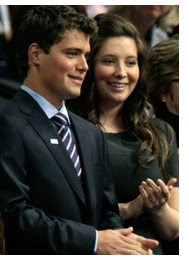 It’s official: Bristol Palin and Levi Johnston, who were once "committed to accomplish what millions of other young parents have accomplished: to provide a loving and secure environment for their child,"* have broken up.
So now little Tripp will grow up, cared for by a single mother – an archetype so despised by the vile Ann Coulter who believes "Single motherhood is like a farm team for future criminals and social outcasts”. Oh how I love the way conservatives unwittingly screw each other with their black-and-white statements.
Bristol recently stated in an interview with Greta Van Susteren that abstincence is “not realistic” and that “[sex] is more and more accepted among kids [her] age” (really?), something Mama Palin and Coulter seem to ignore. So instead of making the hard choice to terminate the pregnancy, Bristol had the kid and is now setting up her own little future criminal.
But the thing is, little Tripp will probably be okay. Like all sweeping, black-and-white statements, they leave out the little grey nuances. Coulter claims 70% of inmates, teenage runaways and delinquents, and drug users (amazing how this percentage is constant throughout) come from single parent homes. Regardless of the accuracy of Coulter’s stats, she is only looking at one variable – how many parents raise you – and completely discounting all the other factors that go with criminal activity, drug abuse etc. like socio-economic status, mental illness and abuse, to name a few.
The fact that Tripp will be raised by a single mother who has a set of support systems in place (ie. money and Mama Palin) already puts him ahead of the criminals that fall into Coulter’s 70%. It’s not Bristol’s marital status that affects her kid’s success, it’s her socio-economic status.
Hopefully Sarah Palin has learned that to support abstinence-only sex education is one of these sweeping statements. It completely discounts a pretty intense factor: teenage lust; something which Bristol spelled out for her mom in her interview with Greta Van Susteren.
It is a grand thing that America chose wisely last November and voted in a president who understands that sweeping statements (hello, War on Terror) are always riddled with shades of that truth.
______________________________
*Mama Sarah, December 2008
 It’s official: Bristol Palin and Levi Johnston, who were once "committed to accomplish what millions of other young parents have accomplished: to provide a loving and secure environment for their child,"* have broken up.
So now little Tripp will grow up, cared for by a single mother – an archetype so despised by the vile Ann Coulter who believes "Single motherhood is like a farm team for future criminals and social outcasts”. Oh how I love the way conservatives unwittingly screw each other with their black-and-white statements.
Bristol recently stated in an interview with Greta Van Susteren that abstincence is “not realistic” and that “[sex] is more and more accepted among kids [her] age” (really?), something Mama Palin and Coulter seem to ignore. So instead of making the hard choice to terminate the pregnancy, Bristol had the kid and is now setting up her own little future criminal.
But the thing is, little Tripp will probably be okay. Like all sweeping, black-and-white statements, they leave out the little grey nuances. Coulter claims 70% of inmates, teenage runaways and delinquents, and drug users (amazing how this percentage is constant throughout) come from single parent homes. Regardless of the accuracy of Coulter’s stats, she is only looking at one variable – how many parents raise you – and completely discounting all the other factors that go with criminal activity, drug abuse etc. like socio-economic status, mental illness and abuse, to name a few.
The fact that Tripp will be raised by a single mother who has a set of support systems in place (ie. money and Mama Palin) already puts him ahead of the criminals that fall into Coulter’s 70%. It’s not Bristol’s marital status that affects her kid’s success, it’s her socio-economic status.
Hopefully Sarah Palin has learned that to support abstinence-only sex education is one of these sweeping statements. It completely discounts a pretty intense factor: teenage lust; something which Bristol spelled out for her mom in her interview with Greta Van Susteren.
It is a grand thing that America chose wisely last November and voted in a president who understands that sweeping statements (hello, War on Terror) are always riddled with shades of that truth.
______________________________
*Mama Sarah, December 2008
Thursday, March 12, 2009
The Elf Is Just Not That Into You
So, I avoided the cliché of going to see He’s Just Not That Into You with a huge group of girls by going with my happily married friend Michelle. Two things:
1. At the end of He’s Just Not That Into You, the adulterers are punished by being alone. This seems a simple solution to a complex set of feelings. I am certainly not excusing adultery: I’ve had the chance to be the other woman handed to me on a two-timing plate on a few occasions and have declined each time because of my respect of this institution I’m not entirely sure I buy into. But I cannot accept this simple-minded answer that humans must fit this monogamous model and should be punished for any aberrant behaviour.
2. The conversation that Jennifer Anniston had at the wedding with the Wiccan? Yeah, I’ve basically had that exact conversation. With a guy wearing a feather in his hair. We talked fairies and elves and sprites (he was into Celtic mysticism). When I asked what category I fell into, he asked what I felt I was. I said I felt like an elf. And so he said I was an elf.
1. At the end of He’s Just Not That Into You, the adulterers are punished by being alone. This seems a simple solution to a complex set of feelings. I am certainly not excusing adultery: I’ve had the chance to be the other woman handed to me on a two-timing plate on a few occasions and have declined each time because of my respect of this institution I’m not entirely sure I buy into. But I cannot accept this simple-minded answer that humans must fit this monogamous model and should be punished for any aberrant behaviour.
2. The conversation that Jennifer Anniston had at the wedding with the Wiccan? Yeah, I’ve basically had that exact conversation. With a guy wearing a feather in his hair. We talked fairies and elves and sprites (he was into Celtic mysticism). When I asked what category I fell into, he asked what I felt I was. I said I felt like an elf. And so he said I was an elf.
Sunday, February 08, 2009
Nurse.Fighter.Boy

They are my favourite kind of stories: simple ones told beautifully.
So often stories are told with complicated subplots and twist endings; writers trying to stay two steps ahead of their audience. But those stories rarely stay with me. The ones that do are the tales of an average person who lets you into their patch of life. Gavin Hood’s movie Tsotsi is one of them. Yann Martel’s Man Booker-winning novel Life of Pi is another. And now Nurse.Fighter.Boy, a film by Toronto filmmaker Charles Officer, is another simple story told beautifully.
Filmed in and around the visually lush alleyways of the east end of Toronto, Nurse.Fighter.Boy follows Jude (the nurse) and her son, Ciel (the boy) as their pathways intersect with Silence (the fighter). Jude suffers from sickle cell anemia, an inherited blood disease that shortens life expectancy, a fact of which Ciel is keenly aware.
The opening scene is of Ciel playing the magician in his Narnia-like playspace, a role he inhabits throughout the film, reciting incantations and performing rituals to keep his mother well. He extends his protective talents to Silence in the film, a character also in need of healing. And at the film’s climax, a wonderfully crafted and acted duo of scenes, we see this healing, told in silence.
 This is the reward of telling simple stories: you can infuse them with so much more, as Officer does. His visual images of the moon, the role of magic, the presence of Jamaica (a place, I was told by a friend who grew up there, that is full of ghosts and magic) and that tenuous space between childhood and adulthood, all suffuse Officer’s film.
 And this beauty is why the simple story of Nurse.Fighter.Boy stays with me.
Friday, December 26, 2008
A 9-Year-Old’s Guide to Love
 Could a 9-year-old boy from Colorado have all the answers about how to get a girl? Alec Greven thinks he does.
After watching how boys and girls interacted at recess, he wrote a brochure entitled How To Talk to Girls, aiming to help some of those inexperienced third-graders get some play. His suggestions are much more innocent that a dating manual like The Game, but are they valid in an adult world? Well, let’s just say I’ve field-tested a few in my lifetime.
(All quotes have been taken from Zosia Bielski's article the Globe and Mail.)
“Class clowns: Turn normal. Less jokes, no jokes during class. Then you might get a girl.”
FALSE. This is the best way to get a girl. Make her laugh and you’re 38% cuter. A friend of mine was into this really cute boy, but then she got to know him and her jokes fell flat on him and he had no comebacks. Boring.
“The shy guy? They probably want to copy someone that they think is cool except it can't be a class clown or somebody that's power hungry.”
FALSE. We can spot a fake a mile off. We usually refer to them as “slimy” or “trying too hard.” A friend of mine, who I dated for, like, a minute, is like this. He has an idea of how he wants the world to see him. If he’d just relax into himself, he’d be fabulous.
"You also have to be aware that girls win most of the arguments and have most of the power. If you know that now, things might be easier."
FALSE. I may be alone on this one, but I think the age-old assumption by brow-beaten men that there’s no point in arguing with a woman and cow-towing to whatever she says (“Yes, dear”) is slightly misogynistic. It implies that there is no need to enter into a dialogue and listen to her reasoning. It’s just easier to shut her out and do what she says, because what she actually thinks doesn’t matter. I want my actions and motives questioned and I want to arrive at a mutually desirable conclusion.
"If you like a girl, comb your hair and don't wear sweats. You don't have to try too hard, but just try to look kind of clean."
TRUE and FALSE. You have to look good for the first date or two, true. And you should shower on a daily basis. But then it just doesn’t matter after that if she likes you. One guy I dated spent 90% of his time with me in sweats and once arrived at my house after the gym sans shower.
“[Pretty girls are mean because they] think they're all important and proud and they're worth more than other girls.”
TRUE. Unfortunately. We are a society obsessed with beauty – a society made up of biologically driven individuals out to get the best genes for our offspring. Pretty girls are treated differently by people and some come to act like they’re worth more than other girls.
 Sorry, Alec. Despite a publishing deal and a movie deal, it looks like your advice doesn’t quite cross to those of us able to vote. But hey – this kid’s got another 25 – 30 years before he achieves male maturity. We’ll see how well his theories apply then.
Sunday, December 07, 2008
A PARLIAMENTARY CAROL
With thanks to Gary Mason and apologies to Charles Dickens.
STAVE ONE
Parliament was dead: to begin with. There is no doubt whatever about that. The prorogation order was signed by Ms. Jean, who was a little put out at being called home early from her European trip, after a lengthy discussion in her oak-panelled study. Stephen’s name was on it, too. Parliament was as dead as a door-nail. Until January 26th.
Stephen was curled up in bed, awaiting Laureen to finish in the ensuite. This was going to be the first night in a very long time that he would be able to sleep without worrying about the economy, about slips of the tongue (addressing someone else as Prime Minister, why? Why’d he do that?), or about that nasty coalition forming like a pay equity case, across the floor from him.
Stephen drifted into sweet slumber, not even noticing Laureen as she crawled in beside him without a thought to possible suspension of her right to legal recourse for pay equity issues.
But alas, his sleep did not last long and he awoke in the middle of the night, thirsty and slightly peckish. Swinging his legs out of bed, he shuffled to his bedroom door. Reaching out his hand for the handle, he immediately pulled back. He no longer saw a door handle, but Stephane Dion’s face.
Closing his eyes and shaking his head, Stephen thought he must be dreaming. He opened his eyes and looked again at the handle. It was just a handle. He trudged downstairs and peered in the fridge, hoping that some of those PC Wild Pacific Salmon Mini Wellingtons that Galen Weston had sent over were still in the fridge.
“Monsieur Har-per.”
Stephen spun around to see Stephane Dion standing before him, clutching the parliamentary mace, completely transparent.
“Mercy!” said Stephen, his hand at his chest. “What are you doing troubling me at this hour?”
“You will be haunted by three spirits,” said M. Dion, without any attempt at anger or passion.
“Oh no!” said Stephen. “You, Layton and Duceppe!”
Dion smiled. “I am on my way out. Without their visits, you cannot hope to shun the path I follow.”
And with that, Dion was gone. Stephen popped a salmon wellington in his mouth and headed for the couch. He was soon fast asleep.
STAVE TWO
Stephen awoke with a start to find Belinda Stronach kneeling beside him on the couch. Her hair was soft and blonde, her skin dewy and glowing in the dark Ottawa night. She wore a blue pantsuit and fire engine red lipstick.
“Hello, Stephen,” she whispered.
“Belinda! What are you doing here?”
“I’m the Ghost of Parliament Past.”
“Long Past? Like back in 1926 when Mackenzie King asked Lord Byng to prorogue Parliament to avoid a motion of censure?”
“No. Your past. Walk with me.”
Belinda offered Stephen her hand and led him out the door of 24 Sussex Dr., down the road and along Wellington towards the Parliament buildings. They climbed the stairs to the public gallery. Stephen looked to his chair in the House, but instead of him sitting there, it was Paul Martin. He looked across the floor to where his party sat and watched a parliamentary session that was all too familiar to Stephen.
“I remember this,” whispered Stephen. “It was right around the time of the Gomery Commission so I knew I had more of the public on my side. I think the Liberals were presenting the federal budget?”
“That’s right,” purred Belinda.
“We were going to vote against an amendment the Liberals had made in order to….” Stephen’s voice trailed off.
“…bring down the government.” Belinda finished his thought.
“Didn’t you…”
“..cross the floor? I did. I didn’t agree with you forcing an early election. And I’d come to my senses about that Peter MacKay fellow. Come. We have a press conference to see.”
Belinda led Stephen out of the public gallery and down to where a woman had cameras and microphones surrounding her. She was talking about national unity and how it was being jeopardized by an alliance between “him” and the Bloc Quebecois, only because “he” wanted to bring down the current government.
“Is that you?” asked Stephen.
“Yes,” replied Belinda. “And do you know who I’m talking about?”
Stephen hung his head as he remembered how fervently had had railed against the coalition for courting Bloc Quebecois support.
“But it’s just politics,” he said.
“I must go now,” said Belinda. “Sweet dreams.”
Stephen watched as Belinda melted into the background of the press conference that was still going on. He sat down on the stairs and leant his head against the banister. Soon, he was fast asleep again.
STAVE THREE
Stephen awoke in an uncomfortable position inside the parliament buildings. Still feeling quite peckish, he headed down to the cafeteria to see if it was open. Arriving at the entrance, he was shocked to find Jean Chretien lounging in an easy chair, a tumbler of whiskey in his hand.
“Bonsoir,” he said smiling.
“What are you doing here?” asked Stephen.
Jean leaned forward in his chair, cupping the whiskey glass in both his hands. “I am the Ghost of Parliament Present, “ he smiled, arching an eyebrow.
“But you left office five years ago!” exclaimed Stephen.
“I’m back consulting,” said Jean, rising and heading into the cafeteria. “Follow me.”
They entered the cafeteria and stopped beside a table of men and women, their faces downcast.
“I can’t believe it’s finally happened,” said one of the women, swirling around the coffee in her mug. “I always knew AbitibiBowater was in a bit of trouble, but I didn’t think it would actually close its doors. I guess my kids are getting a helluva lot less from Santa this year.”
“Keep moving,” said Jean, guiding Stephen towards another table of people.
“They’re temporary only because they think the government’s going to step in,” said one of the men, a GM baseball cap atop his head.
“At least we’ll get through Christmas,” said a woman, eyes downcast.
“Yeah, but all the bills from Christmas come in early January, right when we’re scheduled to be temporarily laid off!” chimed in a grey-haired man with a chubby face.
“You think the government will give us a bailout?” asked the woman.
“What government?” answered another woman. “They’ve taken a seven week holiday during the economic crisis, leaving us with no stimulus package. All the other countries are busy trying to figure out how to get their citizens out of financial trouble and ours is on holiday!”
“Bloody Conservatives,” mumbled the man with the GM hat.
“Bloody Harper,” mumbled the first woman.
“But…I…” Stephen stumbled over his words, “It’s just politics.”
“I must go,” said Jean, swigging the last of his whiskey.
Stephen followed Jean out of the cafeteria and watched him fade into the background. He sat down on the chair that Jean had been sitting on and let his head fall to the side.
“I wanted to cut the political party subsidies,” he said to himself, “That would have saved some money.” And with that, he fell into a deep sleep.
STAVE FOUR
Stephen was awoken by the sound of wind. He opened one eye and saw a phantom approaching him. It was shrouded in a dark robe and did not speak as it stood before him.
“Am I in the presence of the Ghost of Parliament Yet To Come?” he asked.
The spectre did not answer, but beckoned with its hand. Stephen rose and followed the ghost through the halls of parliament.
They came upon a scene of Brent Butt, cellphone in hand.
“Yeah. Yeah. No – we just don’t think he’s topical right now,” he paused. “Yeah, I know he did a great job last time he was on. Well, I wouldn’t say natural ability, but he got a few laughs. Yeah, no – I think I’m going to pass.”
The ghost beckoned again for Stephen to follow him to another scene, this time of Rick Mercer on a cellphone.
“No, he says he won’t do the skinny-dipping again. He says his new post is much too serious to resort to humourous nudity. Yeah, I told him that, but the man’s got quite a bit on his plate, undoing all the damage, you know. Maybe we can get Harper to do the Polar Bear swim. Make a joke about losing his cahones. I don’t know – we’ll give it to the writers. Yeah – let me know. Okay. Okay. Bye.”
“Spirit! What is he talking about?”
The ghost did not answer, but pointed to the Office of the Prime Minister, a place with which Stephen was very familiar. The ghost gestured for Stephen to enter. Slowly, Stephen pushed the heavy door open. The room was empty. He turned to look at the Ghost of Parliament Yet To Come. The ghost floated across the floor, behind the desk and took a seat in the Prime Minister’s chair.
“What are you doing?” whispered Stephen.
Again, the phantom was silent, but slowly moved its hands to its hood and began to draw back the cloak.
Stephen’s eyes filled with terror as the ghost in the chair removed the hood. There he was, smiling with his grey wispy hair slightly askew: Bob Rae.
“No!” shouted Stephen. “No! This cannot happen! I must do something! Something to stop this horrible future! I won’t be vindictive with political party subsidies! I’ll give civil servants back the right to strike! I’ll work with the opposition! I’ll act like I’m in a minority government! Anything!”
STAVE FIVE
Two men sat in an Ottawa pub, enjoying an early February beer. One sported a graying mustache, the other, dark heavy eyebrows. The mood was sombre.
“Well,” said Jack, “the guy’s a weasel, that’s for sure. I can’t believe Canadians were okay with his backtracking. That fiscal update was a huge mistake, but everyone seems to have forgiven him.”
“I can’t believe the political ads over the Christmas season!” said Michael. “I mean, I thought those Galen Weston salmon wellington ads were annoying, but come on!”
“If only Michaelle had denied him, we could have taken over back in December and sorted out this economic mess,” said Jack.
“If only we’d had a better leader back in October, we could have avoided this mess in the first place, “ said Michael.
“I guess he’s got a lot more than just his platform under his sweater,” said Jack.
Michael raised his glass in the air and Jack followed suit.
“Stephen Harper remains as Prime Minister,” said Michael with a sigh. “God help us, everyone.”
STAVE ONE
Parliament was dead: to begin with. There is no doubt whatever about that. The prorogation order was signed by Ms. Jean, who was a little put out at being called home early from her European trip, after a lengthy discussion in her oak-panelled study. Stephen’s name was on it, too. Parliament was as dead as a door-nail. Until January 26th.
Stephen was curled up in bed, awaiting Laureen to finish in the ensuite. This was going to be the first night in a very long time that he would be able to sleep without worrying about the economy, about slips of the tongue (addressing someone else as Prime Minister, why? Why’d he do that?), or about that nasty coalition forming like a pay equity case, across the floor from him.
Stephen drifted into sweet slumber, not even noticing Laureen as she crawled in beside him without a thought to possible suspension of her right to legal recourse for pay equity issues.
But alas, his sleep did not last long and he awoke in the middle of the night, thirsty and slightly peckish. Swinging his legs out of bed, he shuffled to his bedroom door. Reaching out his hand for the handle, he immediately pulled back. He no longer saw a door handle, but Stephane Dion’s face.
Closing his eyes and shaking his head, Stephen thought he must be dreaming. He opened his eyes and looked again at the handle. It was just a handle. He trudged downstairs and peered in the fridge, hoping that some of those PC Wild Pacific Salmon Mini Wellingtons that Galen Weston had sent over were still in the fridge.
“Monsieur Har-per.”
Stephen spun around to see Stephane Dion standing before him, clutching the parliamentary mace, completely transparent.
“Mercy!” said Stephen, his hand at his chest. “What are you doing troubling me at this hour?”
“You will be haunted by three spirits,” said M. Dion, without any attempt at anger or passion.
“Oh no!” said Stephen. “You, Layton and Duceppe!”
Dion smiled. “I am on my way out. Without their visits, you cannot hope to shun the path I follow.”
And with that, Dion was gone. Stephen popped a salmon wellington in his mouth and headed for the couch. He was soon fast asleep.
STAVE TWO
Stephen awoke with a start to find Belinda Stronach kneeling beside him on the couch. Her hair was soft and blonde, her skin dewy and glowing in the dark Ottawa night. She wore a blue pantsuit and fire engine red lipstick.
“Hello, Stephen,” she whispered.
“Belinda! What are you doing here?”
“I’m the Ghost of Parliament Past.”
“Long Past? Like back in 1926 when Mackenzie King asked Lord Byng to prorogue Parliament to avoid a motion of censure?”
“No. Your past. Walk with me.”
Belinda offered Stephen her hand and led him out the door of 24 Sussex Dr., down the road and along Wellington towards the Parliament buildings. They climbed the stairs to the public gallery. Stephen looked to his chair in the House, but instead of him sitting there, it was Paul Martin. He looked across the floor to where his party sat and watched a parliamentary session that was all too familiar to Stephen.
“I remember this,” whispered Stephen. “It was right around the time of the Gomery Commission so I knew I had more of the public on my side. I think the Liberals were presenting the federal budget?”
“That’s right,” purred Belinda.
“We were going to vote against an amendment the Liberals had made in order to….” Stephen’s voice trailed off.
“…bring down the government.” Belinda finished his thought.
“Didn’t you…”
“..cross the floor? I did. I didn’t agree with you forcing an early election. And I’d come to my senses about that Peter MacKay fellow. Come. We have a press conference to see.”
Belinda led Stephen out of the public gallery and down to where a woman had cameras and microphones surrounding her. She was talking about national unity and how it was being jeopardized by an alliance between “him” and the Bloc Quebecois, only because “he” wanted to bring down the current government.
“Is that you?” asked Stephen.
“Yes,” replied Belinda. “And do you know who I’m talking about?”
Stephen hung his head as he remembered how fervently had had railed against the coalition for courting Bloc Quebecois support.
“But it’s just politics,” he said.
“I must go now,” said Belinda. “Sweet dreams.”
Stephen watched as Belinda melted into the background of the press conference that was still going on. He sat down on the stairs and leant his head against the banister. Soon, he was fast asleep again.
STAVE THREE
Stephen awoke in an uncomfortable position inside the parliament buildings. Still feeling quite peckish, he headed down to the cafeteria to see if it was open. Arriving at the entrance, he was shocked to find Jean Chretien lounging in an easy chair, a tumbler of whiskey in his hand.
“Bonsoir,” he said smiling.
“What are you doing here?” asked Stephen.
Jean leaned forward in his chair, cupping the whiskey glass in both his hands. “I am the Ghost of Parliament Present, “ he smiled, arching an eyebrow.
“But you left office five years ago!” exclaimed Stephen.
“I’m back consulting,” said Jean, rising and heading into the cafeteria. “Follow me.”
They entered the cafeteria and stopped beside a table of men and women, their faces downcast.
“I can’t believe it’s finally happened,” said one of the women, swirling around the coffee in her mug. “I always knew AbitibiBowater was in a bit of trouble, but I didn’t think it would actually close its doors. I guess my kids are getting a helluva lot less from Santa this year.”
“Keep moving,” said Jean, guiding Stephen towards another table of people.
“They’re temporary only because they think the government’s going to step in,” said one of the men, a GM baseball cap atop his head.
“At least we’ll get through Christmas,” said a woman, eyes downcast.
“Yeah, but all the bills from Christmas come in early January, right when we’re scheduled to be temporarily laid off!” chimed in a grey-haired man with a chubby face.
“You think the government will give us a bailout?” asked the woman.
“What government?” answered another woman. “They’ve taken a seven week holiday during the economic crisis, leaving us with no stimulus package. All the other countries are busy trying to figure out how to get their citizens out of financial trouble and ours is on holiday!”
“Bloody Conservatives,” mumbled the man with the GM hat.
“Bloody Harper,” mumbled the first woman.
“But…I…” Stephen stumbled over his words, “It’s just politics.”
“I must go,” said Jean, swigging the last of his whiskey.
Stephen followed Jean out of the cafeteria and watched him fade into the background. He sat down on the chair that Jean had been sitting on and let his head fall to the side.
“I wanted to cut the political party subsidies,” he said to himself, “That would have saved some money.” And with that, he fell into a deep sleep.
STAVE FOUR
Stephen was awoken by the sound of wind. He opened one eye and saw a phantom approaching him. It was shrouded in a dark robe and did not speak as it stood before him.
“Am I in the presence of the Ghost of Parliament Yet To Come?” he asked.
The spectre did not answer, but beckoned with its hand. Stephen rose and followed the ghost through the halls of parliament.
They came upon a scene of Brent Butt, cellphone in hand.
“Yeah. Yeah. No – we just don’t think he’s topical right now,” he paused. “Yeah, I know he did a great job last time he was on. Well, I wouldn’t say natural ability, but he got a few laughs. Yeah, no – I think I’m going to pass.”
The ghost beckoned again for Stephen to follow him to another scene, this time of Rick Mercer on a cellphone.
“No, he says he won’t do the skinny-dipping again. He says his new post is much too serious to resort to humourous nudity. Yeah, I told him that, but the man’s got quite a bit on his plate, undoing all the damage, you know. Maybe we can get Harper to do the Polar Bear swim. Make a joke about losing his cahones. I don’t know – we’ll give it to the writers. Yeah – let me know. Okay. Okay. Bye.”
“Spirit! What is he talking about?”
The ghost did not answer, but pointed to the Office of the Prime Minister, a place with which Stephen was very familiar. The ghost gestured for Stephen to enter. Slowly, Stephen pushed the heavy door open. The room was empty. He turned to look at the Ghost of Parliament Yet To Come. The ghost floated across the floor, behind the desk and took a seat in the Prime Minister’s chair.
“What are you doing?” whispered Stephen.
Again, the phantom was silent, but slowly moved its hands to its hood and began to draw back the cloak.
Stephen’s eyes filled with terror as the ghost in the chair removed the hood. There he was, smiling with his grey wispy hair slightly askew: Bob Rae.
“No!” shouted Stephen. “No! This cannot happen! I must do something! Something to stop this horrible future! I won’t be vindictive with political party subsidies! I’ll give civil servants back the right to strike! I’ll work with the opposition! I’ll act like I’m in a minority government! Anything!”
STAVE FIVE
Two men sat in an Ottawa pub, enjoying an early February beer. One sported a graying mustache, the other, dark heavy eyebrows. The mood was sombre.
“Well,” said Jack, “the guy’s a weasel, that’s for sure. I can’t believe Canadians were okay with his backtracking. That fiscal update was a huge mistake, but everyone seems to have forgiven him.”
“I can’t believe the political ads over the Christmas season!” said Michael. “I mean, I thought those Galen Weston salmon wellington ads were annoying, but come on!”
“If only Michaelle had denied him, we could have taken over back in December and sorted out this economic mess,” said Jack.
“If only we’d had a better leader back in October, we could have avoided this mess in the first place, “ said Michael.
“I guess he’s got a lot more than just his platform under his sweater,” said Jack.
Michael raised his glass in the air and Jack followed suit.
“Stephen Harper remains as Prime Minister,” said Michael with a sigh. “God help us, everyone.”
Wednesday, December 03, 2008
Steph’s Guide to the Coalition
You know, my Canada used to include Quebec. But now I’m thinking, let them separate.
Tonight, Stephen Harper (has he coloured his hair in an attempt to avoid the stuffy-sweater-wearing image that hounded him during this past election?) was pretty heavy handed about the Bloc Quebecois’s support of the coalition, trying to scare Canadians with the prospect of Gilles Duceppe and his nefarious plans to separate. I say, who cares? Let them go. Quebec could be like Lesotho, but without the absolute monarch and annual virgin marriages. Or like Azerbaijan, with its little property on the other side of Armenia. We could travel abroad on a 5 hour train ride from Toronto without the hassle of an American boder – how fabulously European.
But to the matter at hand: the coalition (of the willing; ‘cos there’s a hell of a lot of people out west who are certainly not willing – isn’t it fabulous to watch them squirm and shout the word “undemocratic” as they claw to keep their beloved Conservatives in power?). Does Stephane Dion have the cahones? He’s got to have a hell of a lot of politicians propping him up and telling him everything is going to be alright as he steps back into the political limelight he thought he’d left back in October. He’s trying: his speech tonight was an attempt at an impassioned address. And ideologically, I’m with him (as is the constitution – take that, you wimpering righties!) But really, I think Jack Layton and his porn mustache would certainly make a better candidate for prime minister (his desire for that post is palpable, especially in recent months, I've found).
So it is all up to Michaelle Jean, who was probably having a lovely European time in Prague before she was yanked back to this Canadian reality. She meets with Stephen Harper tomorrow when he will request a prorogation of parliament. Will she suspend parliament, or refuse Harper’s request and allow a vote of non-confidence on Monday? Will she allow for an historical change in Canada’s history? Will she comment on Harper’s dye-job?
To quote my brother, who knew Canadian politics could be so sexy?
Tonight, Stephen Harper (has he coloured his hair in an attempt to avoid the stuffy-sweater-wearing image that hounded him during this past election?) was pretty heavy handed about the Bloc Quebecois’s support of the coalition, trying to scare Canadians with the prospect of Gilles Duceppe and his nefarious plans to separate. I say, who cares? Let them go. Quebec could be like Lesotho, but without the absolute monarch and annual virgin marriages. Or like Azerbaijan, with its little property on the other side of Armenia. We could travel abroad on a 5 hour train ride from Toronto without the hassle of an American boder – how fabulously European.
But to the matter at hand: the coalition (of the willing; ‘cos there’s a hell of a lot of people out west who are certainly not willing – isn’t it fabulous to watch them squirm and shout the word “undemocratic” as they claw to keep their beloved Conservatives in power?). Does Stephane Dion have the cahones? He’s got to have a hell of a lot of politicians propping him up and telling him everything is going to be alright as he steps back into the political limelight he thought he’d left back in October. He’s trying: his speech tonight was an attempt at an impassioned address. And ideologically, I’m with him (as is the constitution – take that, you wimpering righties!) But really, I think Jack Layton and his porn mustache would certainly make a better candidate for prime minister (his desire for that post is palpable, especially in recent months, I've found).
So it is all up to Michaelle Jean, who was probably having a lovely European time in Prague before she was yanked back to this Canadian reality. She meets with Stephen Harper tomorrow when he will request a prorogation of parliament. Will she suspend parliament, or refuse Harper’s request and allow a vote of non-confidence on Monday? Will she allow for an historical change in Canada’s history? Will she comment on Harper’s dye-job?
To quote my brother, who knew Canadian politics could be so sexy?
Sunday, November 30, 2008
Steph’s Guide to Surviving the Current Financial Crisis
1. Get a job in the public sector.
I find it laughable that all those business types have their knickers in a knot over the tabled 12% over 4 years salary increase for elementary teachers. They complain that those of us getting paid by the government shouldn’t expect such an increase during an economic downturn. In the booming years when my Bay Street counterparts were making six figures and charging their entertainment expenses to the company, I never expected bonuses at the end of the year for any professional successes with students and I have no expense account to entertain the parents of my students. Public servants take the middle road: job security, but never making a huge amount of money. That’s the gamble of business – you stand to make a ridiculous amount of money in the fat years, but you have to accept that lean years are always a possibility.
2. Five months prior to collapse, buy property.
This will allow you to practise a more modest way of spending. All of a sudden your monthly expenses go up, so your disposable income goes down and you have to make cuts in spending. It also serves as a good excuse when turning down offers of a weekend in New York or a night on the tiles.
3. Vote in a left-leaning government.
Oh…shit… Well, we may be solving that one right now.
4. Dispense with any significant others before Christmas.
Just make sure it’s far enough ahead that you can’t be accused of ruining the holiday for them. Without a romantic partner to buy for and to attend a whole other set of parties with, your spending will plummet. It also cuts down on incidental expenses like the extra groceries you had to buy to feed them and restocking beer supplies.
5. Suggest a more modest family Christmas.
Out with materialism and in with environmentalism and altruism. Instead of buying heaps of things that no one needs or wants, suggest donating money to charities instead. Or buy consumables like, say…enough bottles of alcohol to replenish drying up liquor cabinets (hint, hint - ed.).
6. Break your foot. (This is key.)
You are now housebound and can’t go out. All little expenditures like that four dollar latte and those cute bowls at Pier 1 that hop into your shopping bag unexpectedly have been cut out. So have those last minute, unnecessary purchases in the checkout line of places like Shopper's Drug Mart, IKEA and Roots.
You also can’t pop up the road for a pint – way too tiring on crutches (and slightly dangerous to the healing process should that one pint turn into four, interfering with balance and judgment). Getting to and from any kind of social engagement must be elaborately planned, therefore many will have to be declined. Never mind the fact that any kind of holiday outfit will have to be accessorized by a big, grey aircast and crutches, immediately downgrading your attractiveness by at least 30%. This should also help to maintain your single (and therefore parsimonious) status into the new year.
And people feel sorry for you, so they’ll go out and buy you a four-dollar latte and refuse reimbursement. They'll also drive you places, so you save on gas (you can't drive your stick-shift car, anyway).
Spend you days at home, reading stories on the internet about how people are dealing with the credit crunch by having dinner parties at home, recycling key pieces in their closet and having martinis on their couches.
Now only if I could somehow get that liquor cabinet restocked...
I find it laughable that all those business types have their knickers in a knot over the tabled 12% over 4 years salary increase for elementary teachers. They complain that those of us getting paid by the government shouldn’t expect such an increase during an economic downturn. In the booming years when my Bay Street counterparts were making six figures and charging their entertainment expenses to the company, I never expected bonuses at the end of the year for any professional successes with students and I have no expense account to entertain the parents of my students. Public servants take the middle road: job security, but never making a huge amount of money. That’s the gamble of business – you stand to make a ridiculous amount of money in the fat years, but you have to accept that lean years are always a possibility.
2. Five months prior to collapse, buy property.
This will allow you to practise a more modest way of spending. All of a sudden your monthly expenses go up, so your disposable income goes down and you have to make cuts in spending. It also serves as a good excuse when turning down offers of a weekend in New York or a night on the tiles.
3. Vote in a left-leaning government.
Oh…shit… Well, we may be solving that one right now.
4. Dispense with any significant others before Christmas.
Just make sure it’s far enough ahead that you can’t be accused of ruining the holiday for them. Without a romantic partner to buy for and to attend a whole other set of parties with, your spending will plummet. It also cuts down on incidental expenses like the extra groceries you had to buy to feed them and restocking beer supplies.
5. Suggest a more modest family Christmas.
Out with materialism and in with environmentalism and altruism. Instead of buying heaps of things that no one needs or wants, suggest donating money to charities instead. Or buy consumables like, say…enough bottles of alcohol to replenish drying up liquor cabinets (hint, hint - ed.).
6. Break your foot. (This is key.)
You are now housebound and can’t go out. All little expenditures like that four dollar latte and those cute bowls at Pier 1 that hop into your shopping bag unexpectedly have been cut out. So have those last minute, unnecessary purchases in the checkout line of places like Shopper's Drug Mart, IKEA and Roots.
You also can’t pop up the road for a pint – way too tiring on crutches (and slightly dangerous to the healing process should that one pint turn into four, interfering with balance and judgment). Getting to and from any kind of social engagement must be elaborately planned, therefore many will have to be declined. Never mind the fact that any kind of holiday outfit will have to be accessorized by a big, grey aircast and crutches, immediately downgrading your attractiveness by at least 30%. This should also help to maintain your single (and therefore parsimonious) status into the new year.
And people feel sorry for you, so they’ll go out and buy you a four-dollar latte and refuse reimbursement. They'll also drive you places, so you save on gas (you can't drive your stick-shift car, anyway).
Spend you days at home, reading stories on the internet about how people are dealing with the credit crunch by having dinner parties at home, recycling key pieces in their closet and having martinis on their couches.
Now only if I could somehow get that liquor cabinet restocked...
Monday, September 29, 2008
Two Roads Diverged in a Yellow Wood...
 I must say, I have been surprised at the people chosen to lead political parties of late. I really think the Liberals have shot themselves in the foot with Dion – and I thought that before all these election polls pointing towards a majority government. The dude has zero charisma. When he tries to make fired-up speeches about his plans for Canada, he just ends up resembling a Quebecois version of the Swedish chef on the Muppets. I don’t feel his fire. And neither do a lot of other Canadians.
 But it’s Sarah Palin upon which I wish to parley. I was a little surprised when John McCain chose a woman as his running partner, but then I thought I obviously don’t have my finger on the pulse of Republican America, so there must be other reasons (her anti-abortion stance or deftness at hunting moose, perhaps). But then Heather Mallick said what I had been thinking: “It's possible that Republican men, sexual inadequates that they are, really believe that women will vote for a woman just because she's a woman.”
Did the Republicans see the tight race for the Democratic nomination between a black man and a woman and figure they’d get all those lady-votes because of Sarah? Are we that much of a tabula rasa that we blindly vote based on gender and not politics (even saying it sounds so stupid)?
Mallick thinks we woman are too resentful of each other to vote for a woman because she’s a woman. I don't know if it's resentment or just a refusal to look past a female's looks: a large amount of the media attention on Palin has centred around her appearance. And they’re not resentful of her dimpled Miss America beauty or her practical Alaskan physique. They make fun of her piled-on-top hair and take-me-seriously glasses. Forget about voting for her – they can’t even get past their male gaze to give a good analysis of her politics and suitability to run the country.
I wrote about this emphasis on women’s outward appearance when Barbara Walters caught herself about to compliment Barack Obama on his attractiveness. She did compliment him, but it was probably one of the few times Obama’s appearance has been discussed.
 And over in Afghanistan, where under the Taleban the appearance of a woman was not discussed because it was hidden under swathes of cloth, the head of Kandahar's department of crimes against women, Lt-Col Malalai Kakar, was shot by Taleban rebels. She wasn’t criticized for her hair style or her dress sense or because one of her six children had screwed up. She was shot because she was a woman and women shouldn’t work.
Okay, next time I promise to write about Canadian politics.
Saturday, September 13, 2008
Gas Is Not Food, People

I loved watching all the outraged drivers on the news last night react to the 13 cent jump in gas prices. There were accusations of price-gouging and calls for the government to cut taxes to help out the drivers of Toronto who, generally unaccompanied, negotiate over-sized, gas-guzzling vehicles through the plodding lanes of our city. Maybe I don’t fully understand their plight, as my car (a small, fuel-efficient Tercel) spends most of its time parked behind my building: I walk to work, bike for groceries and take public transport downtown the majority of the time.
But come on – these drivers are relying on a finite resource, the burning of which has contributed to the climate change of our earth. You should be paying more.
In Britain, the price of gas is approximately twice what it is here (and has been for the last ten years I’ve been keeping track). And most Britons drive small, fuel-efficient cars. And way more of them rely on public transport (I know – Britain is better serviced by trains and such, but it is because there is demand for it). Europeans seem much more willing to change their habits if something is expensive.
North Americans don’t want to consider any alternative to sitting alone in a comfortable car for 2 hours a day to get to and from work.
Sometimes driving makes more sense than other forms of transport. I get that. I drive if it’s raining or to a friend’s house if it's not well serviced by the TTC. But each time I get in that car, it is a conscious decision where I have weighed the other transport options.
UN Secretary General Ban Ki-Moon commuted to work in a solar-powered taxi this past week to raise awareness about alternatives to fossil fuels. That’s all I’m asking. Think about alternatives. The old vehicular standby is not our only option.
Tuesday, August 12, 2008
Blue Box Blues
Is the city of Toronto really this stingy?
City officials are planning to crack down on people scavenging recyclables from blue bins. According to Toronto's Solid Waste Department, once the blue bin and its contents are curbside, the whole kit and caboodle is city property and they don't want anyone sorting through it.
You see, the city makes quite a bit of money off our aluminum cans ($2000 per tonne). Fair enough, but are these scavengers nicking empty pop cans? Anecdotal evidence (in the form of a couple of neighbourhood characters armed with shopping carts of varying constructions) shows that the scavengers are looking for wine and beer bottles. A cartful of finished Merlots and Tempranillos can net a tidy sum, especially in affluent neighbourhoods like mine where homeowners spend a lot on alcohol and can’t be bothered to make the trip to the Beer Store to return bottles.
(In the Beach, where I live, there are two LCBOs within walking distance of a large number of residents, including myself; however the Beer Store is a farther trek and therefore requires a bit more forethought than my usual, “Am I out of rosé? I think I’m out of rosé… I’ll just duck in for a bottle of rosé.” If the Liquor Store took back bottles, I could employ the empty one in, full one out method, based on the cold beer out, warm beer in method of university bar fridge drinking. But of course, the rosé bottles add up and require a large, strong bag in which to carry them, and a vehicle in which to transport them when there are too many in my kitchen cupboard not to be ashamed about.)
Why shouldn’t we let the enterprising unemployed continue with the sifting? Clifford Orwin compares it to the “biblical practice of gleaning”:
There was a time when a city councillor wanted to ban panhandling: they found it somehow offensive, the homeless and unemployed sitting and begging for money. It annoyed people to be asked for money, to be reminded that we live in a many-tiered society, despite our many social nets. Why can't they get a job, asked some rather unempathetic citizens of our city.
Well, some have found jobs – jobs that don’t bother anyone (someone complained about the noise of scavengers, but give me a break – the industrial lawnmowers that rage at 8 o’clock in the morning outside my window are way worse) and help to support the province’s bottle return programme.
The City needs to stop worrying about who is returning my empty bottles of rosé and start worrying about more pressing issues.
City officials are planning to crack down on people scavenging recyclables from blue bins. According to Toronto's Solid Waste Department, once the blue bin and its contents are curbside, the whole kit and caboodle is city property and they don't want anyone sorting through it.
You see, the city makes quite a bit of money off our aluminum cans ($2000 per tonne). Fair enough, but are these scavengers nicking empty pop cans? Anecdotal evidence (in the form of a couple of neighbourhood characters armed with shopping carts of varying constructions) shows that the scavengers are looking for wine and beer bottles. A cartful of finished Merlots and Tempranillos can net a tidy sum, especially in affluent neighbourhoods like mine where homeowners spend a lot on alcohol and can’t be bothered to make the trip to the Beer Store to return bottles.
(In the Beach, where I live, there are two LCBOs within walking distance of a large number of residents, including myself; however the Beer Store is a farther trek and therefore requires a bit more forethought than my usual, “Am I out of rosé? I think I’m out of rosé… I’ll just duck in for a bottle of rosé.” If the Liquor Store took back bottles, I could employ the empty one in, full one out method, based on the cold beer out, warm beer in method of university bar fridge drinking. But of course, the rosé bottles add up and require a large, strong bag in which to carry them, and a vehicle in which to transport them when there are too many in my kitchen cupboard not to be ashamed about.)
Why shouldn’t we let the enterprising unemployed continue with the sifting? Clifford Orwin compares it to the “biblical practice of gleaning”:
Leviticus 19.9 commands leaving the corners of one's fields unreaped so the poor can harvest them: One should never enjoy one's abundance to their exclusion. Similarly, I leave for the poor 20 cents of the value of every bottle of wine I buy. Collecting the bottle is their form of gleaning, and like gleaning in biblical days, it takes considerable labour.
There was a time when a city councillor wanted to ban panhandling: they found it somehow offensive, the homeless and unemployed sitting and begging for money. It annoyed people to be asked for money, to be reminded that we live in a many-tiered society, despite our many social nets. Why can't they get a job, asked some rather unempathetic citizens of our city.
Well, some have found jobs – jobs that don’t bother anyone (someone complained about the noise of scavengers, but give me a break – the industrial lawnmowers that rage at 8 o’clock in the morning outside my window are way worse) and help to support the province’s bottle return programme.
The City needs to stop worrying about who is returning my empty bottles of rosé and start worrying about more pressing issues.
Thursday, August 07, 2008
Dangerous Trend Alert


What's going on with Katie Holmes?
I know there's the whole being married to a wingnut thing, and she's trying to keep up with her new friend, Posh Spice, but these jeans have got to be the final indication that signals a team of mental health professionals to swoop in and save her denimed ass.
There are trends that we try for the sake of the trends (I have a black fedora sitting on my hall table). There are trends we avoid, because there's no way it can look good (those short, high-waisted shorts were all over London while I was there this summer and like, two girls could actually rock them). And then some people seem to make an attempt to start a trend - is this what Katie is doing? Baggy jeans cinched just above the ankle that accentuates a heaviness in the hips, extending into the upper thighs?
I remember when Katie was the cute girl from Dawson's Creek that my brother had a crush on...
Tuesday, August 05, 2008
Battle of the Single Broads: Elaine vs. Carrie vs. Bridget


Three iconic singletons have emerged in popular culture over the past 15 years: Elaine Benes from the sitcom Seinfeld was the first. She kept up with her male friends, dating as many men as Jerry dated women; never placed too much importance on whatever man she was with; and entered (and lost) The Contest. She was intelligent, self-sufficient and witty. When Seinfeld ended in 1998, it paved the way for Carrie Bradshaw, the fictional sex columnist (based on real sex columnist Candice Bushnell) in the HBO series Sex and the City. Carrie dated far and wide, placing importance on finding a good man, but even more importance on a great pair of shoes. And across the pond in Britain, Helen Fielding was creating her heroine (and coining the term “singleton”), Bridget Jones, through a series of columns appearing in The Independent, which were fictionalized into the 1996 novel Bridget Jones’s Diary. Bridget Jones was a fumbling London thirtysomething trying to navigate her way through the dating scene, avoiding all "fuckwittage" and losing a few pounds along the way.
But how do these three women compare when lined up against each other? How do the major arenas of their lives measure up?
JOB:
Elaine: Writer for J. Peterman catalogue (after a turn at Pendant Publishing and personal assistant to Mr. Pitt), which she clinched just after meeting Peterman in the rain and describing her shirt: “This innocent looking shirt has something which isn't innocent at all. Touchability. Heavy, silky Italian cotton, with a fine almost terrycloth like feeling. Five button placket, relaxed fit, innocence and mayhem at once.”
Carrie: Sex columnist for New York Times, sometime freelancer at Vogue; lives her fabulous life and gets paid to write about it.
Bridget: In the first book, Bridget has an office job at a publishing house where she sends flirty emails to her boss, Daniel Cleaver (see Significant Relationships, below). In the second book, Bridget Jones The Edge of Reason, she becomes an on-air personality who attempts such stunts as parachuting into a pig sty and sliding down a firehouse pole, ass-to-camera.
FRIENDS:
Elaine: Apart from the obvious Jerry, George and Kramer, Elaine has some girlfriends out in Long Island who keep entreating her to “come and see the baaayyy-bee”.
Carrie: Solid as a set of Manolo wedges in bright summer colours; Samantha, Miranda and Charlotte have been by Carrie’s side since the beginning.
Bridget: Sharon (Shazzer), Jude and Tom are always happy to drop everything and meet Bridget in the pub for more than 14 units of alcohol and several cigarettes, despite any New Year’s resolutions.
SIGNIFICANT RELATIONSHIPS:
Elaine: Puddy, the face-painting, eightball-jacket wearing lug who Elaine is constantly breaking up and getting back together with – one time, both events happened on a single plane trip; another time Elaine got back together because she needed a bureau moved.
Carrie: Mr. Big is the one man that Carrie keeps coming back to, even when she’s committed to a live-in relationship with Aidan (who we all know is just too simple and too easy for Carrie). At the end of the series, Carrie ends up with Mr. Big. In the big screen version, after two painful hours of breaking up, she ends up with him. (Seriously, in real life, girlfriends would never let their friends go back this many times to such a waffle-weave man.)
Bridget: The first book starts out with Mark Darcy, in a cheesy Christmas jumper, being a bit rude to old Bridget. Then she gets caught up in the romance of bad boy Daniel Cleaver (who also happens to be her boss). As is to be expected, Bridget makes nice with the dashing Mark Darcy by the time he’s ready to wear his cheesy Christmas jumper again.
LOCATION, LOCATION, LOCATION:
Elaine: She is always in search of the perfect apartment in Manhattan, even considering Jerry’s apartment.
Carrie: She rented her apartment in New York for years, choosing to spend 40 grand on shoes instead of a down payment. She eventually buys her place, with a little help from her friends, after breaking up with Aidan.
Bridget: Lives by herself in a small flat in London, well-stocked with granny-pants and by the end of it, Mark Darcy.
CATCHPHRASE:
Elaine: “Get out!” (followed by a voracious push)
Carrie: Any age old question that attempts to understand men.
Bridget: “Fuckwit.”
Monday, August 04, 2008
Pretty Things
 It was a repeat episode of The View today (I could tell by the mugs) and Barack Obama was the guest. As would be expected, conservative Elisabeth Hasselbeck grilled the Democrat candidate about his relationship with his pastor, Jeremiah Wright, who once made “incendiary” (Obama’s word) comments about the September 11th attacks:
We have supported state terrorism against the Palestinians and black South Africans, and now we are indignant because the stuff we have done overseas is now brought right back to our own front yards. (For a clip, click here)
These comments, which I completely agree with, were seen as unpatriotic and therefore Obama, whom I suspect secretly agrees with Wright, had to distance himself from Wright or face irrevocably damaging his campaign. The problem with American politics is that they place patriotism above all else: above rational thought, historical mistakes and personal freedoms. It’s that mentality of you are either with us or against us; there is no in between and certainly no room for debate. Obama, who represents (or at least, at one time represented) so much hope for the future of American foreign policy, cannot publicly agree with the idea that Americans can commit whatever atrocities they see fit in other countries, but absolutely can’t understand why others would want (and indeed plan and execute) to do the same.
But I digress. What struck me was that one of the women (I think it was Barbara Walters) stumbled a bit over paying Obama a compliment: she wasn’t sure if she should say how attractive he was. But she did, he accepted it with laughter, and the discussion moved to politics, which was Obama’s reason for being there.
Feminism has made some impact on separating women’s looks from what makes up their personality in that the women of The View were afraid to comment on Obama’s attractiveness (surely this is good, showing that there is no double standard?). Making any kind of comment on Hillary Clinton’s appearance would be seen as offside – but is that because she is not an overly attractive individual, therefore we can easily concentrate on her areas of expertise?
Julie Couillard, whom Heather Mallick describes as “the beautiful woman who had the bad judgment to date the ex-foreign affairs minister Maxime Bernier,” spent a lot of time in the news - not just for exposing Monsieur Bernier, but for exposing the top swell of one of her breasts. The Canadian press couldn’t get past it, as Mallick points out later in her column: “a trio of female Globe and Mail columnists…attacked Couillard for her breasts, her fragrant beauty and her insistence on defending her dignity as a woman.”
I guess what I’m trying to say is this: someone’s attractiveness is a big part of who they are. Sometimes it's what they're known for (models come to mind), sometimes it's part of what they're known for (Belinda Stronach, some might say). It's easy to see attractiveness as part of a man: Obama is a great orator, he seems to be quite good at the political game and he’ll already have a passport if he makes it to the White House (Georgie Boy did not. In fact, only something like 10% of Americans have a valid passport). But Obama is also pretty good-looking. The women of The View could pay him the compliment and then move on to what he was there for.
But when it comes to women, it’s a bit sketchier. Couillard (and indeed, other attractive women who have other things going for them) was not given the same courtesy that the women of The View gave Obama. Her beauty and sexuality were what was focused on in the media, instead of her reason for making headlines. It's silly to assume we do not notice (or judge) a person by their attractiveness: many psychological studies have proven otherwise and at the end of the day, we just want to procreate with genetically superior people. But someone's attractiveness is only a part of what they have to offer.
Sunday, August 03, 2008
A Few Things
I’ve been away – both literally and figuratively. And this step back into bloggery may be brief, and for that I apologize – I just can’t seem to kick my writer’s arse these days…
Cheese, Please
Last week, Quebec announced it will allow its fromagers to produce raw-milk cheese, aged under 60 days, breaking from a continent-wide ban on unpasteurized cheese. It's something to do with harmful bacteria that the New World sees as a health risk in cheese ripened in under two months, even though many gastronomes maintain some cheeses reach their peak within a month, those pesky bacteria actually contributing to the taste and texture of the cheese.
The French (and other Europeans) have been enjoying these unpasteurized cheeses for centuries with no ill effects. In fact, pregnant French women have no restrictions on these types of cheeses, unlike us hyper-sensitive North Americans who ban brie and other foodstuffs like sushi from expectant mothers (despite the identical argument that Japanese mums-to-be have eaten raw fish for centuries). North Americans freak out during pregnancy (just recently I witnessed a pregnant woman hiding the fact she was drinking Coke from her husband), yet once these precious packages are born, they allow them to ride in big yellow school buses on the highway with no seatbelts (another WTF?!?! of mine, but that’s another post).
And A Four-Day Work Week, Too
In a bid to save energy, Nova Scotia Energy Minister Richard Hurlburt has suggested that government employees work only four days a week. Employees would work four 10-hour days and have a three day weekend, reducing the number of vehicles on the road and possibly the amount of power used in government buildings. The set up is about to be test-driven in Utah, starting on Monday. Although this seems like a good idea to a holiday-loving, easily-adaptable singleton like yours truly, there are issues arising in Utah around childcare, second jobs and night school.
All of this is untroubling to me, as I sit in the middle of my zero-day work week, annoyed that the Liquor Store will be closed tomorrow and the beach will be overrun with hard-bodied and flabby tanners alike. I also await the second round of my long-weekend-pot-smoking neighbour whose fumes waft through my flat only when the rest of the world has Monday off. While the workaday world looks forward to these summer long weekends, us teachers just wish they'd be over. Thank god those Americans will be starting their four day work week tomorrow and there will be a new episode of The View.
Cheese, Please
Last week, Quebec announced it will allow its fromagers to produce raw-milk cheese, aged under 60 days, breaking from a continent-wide ban on unpasteurized cheese. It's something to do with harmful bacteria that the New World sees as a health risk in cheese ripened in under two months, even though many gastronomes maintain some cheeses reach their peak within a month, those pesky bacteria actually contributing to the taste and texture of the cheese.
The French (and other Europeans) have been enjoying these unpasteurized cheeses for centuries with no ill effects. In fact, pregnant French women have no restrictions on these types of cheeses, unlike us hyper-sensitive North Americans who ban brie and other foodstuffs like sushi from expectant mothers (despite the identical argument that Japanese mums-to-be have eaten raw fish for centuries). North Americans freak out during pregnancy (just recently I witnessed a pregnant woman hiding the fact she was drinking Coke from her husband), yet once these precious packages are born, they allow them to ride in big yellow school buses on the highway with no seatbelts (another WTF?!?! of mine, but that’s another post).
And A Four-Day Work Week, Too
In a bid to save energy, Nova Scotia Energy Minister Richard Hurlburt has suggested that government employees work only four days a week. Employees would work four 10-hour days and have a three day weekend, reducing the number of vehicles on the road and possibly the amount of power used in government buildings. The set up is about to be test-driven in Utah, starting on Monday. Although this seems like a good idea to a holiday-loving, easily-adaptable singleton like yours truly, there are issues arising in Utah around childcare, second jobs and night school.
All of this is untroubling to me, as I sit in the middle of my zero-day work week, annoyed that the Liquor Store will be closed tomorrow and the beach will be overrun with hard-bodied and flabby tanners alike. I also await the second round of my long-weekend-pot-smoking neighbour whose fumes waft through my flat only when the rest of the world has Monday off. While the workaday world looks forward to these summer long weekends, us teachers just wish they'd be over. Thank god those Americans will be starting their four day work week tomorrow and there will be a new episode of The View.
Sunday, April 06, 2008
Street Meat, Diversified
Saying street food vendor to any Torontonian will conjure images of drunk and hungry club-goers, huddled over their hot dog at 3 in the morning; or Bay Street types grabbing a quick lunch between meetings. Say it to a New Yorker and the smells of pretzels and roasted peanuts fill their olfactory memory, the confluence of the foods' aromas contributing to that signature New York scent. Say street food vendor to a Parisian, and they will tell you about crepes, frites, tartiflette, baguettes - the list goes on - all available should you find yourself peckish on the banks of the Seine one sunny apres-midi.
But in Toronto, we're stuck with hot dogs, the only variability being offered through the vinegary toppings at the side of the cart.
 Even England, once famous for its lack of imagination (and taste in general) when it came to food, is home to one of the best little creperies I've ever been to. Located in Hampstead Heath, I twice waited over half and hour in line for a chocolate and banana crepe, and each collation was well worth every minute in that queue.
Now the city of Toronto is considering allowing a greater variety of food to be sold from street vendors, so we can compete on the world stage of street meat. Cleverly titled Toronto A La Cart, the city is asking you what you'd like to be able to buy whilst eating on the run.
Take the survey and vote for everything from crepes and corn on the cob to roti and samosas.
And when this all goes through city council, I'll see you on the corner of Adelaide and John at 3 in the morning, bleary-eyed, but happily eating a chocolate and banana crepe.
But in Toronto, we're stuck with hot dogs, the only variability being offered through the vinegary toppings at the side of the cart.
 Even England, once famous for its lack of imagination (and taste in general) when it came to food, is home to one of the best little creperies I've ever been to. Located in Hampstead Heath, I twice waited over half and hour in line for a chocolate and banana crepe, and each collation was well worth every minute in that queue.
Now the city of Toronto is considering allowing a greater variety of food to be sold from street vendors, so we can compete on the world stage of street meat. Cleverly titled Toronto A La Cart, the city is asking you what you'd like to be able to buy whilst eating on the run.
Take the survey and vote for everything from crepes and corn on the cob to roti and samosas.
And when this all goes through city council, I'll see you on the corner of Adelaide and John at 3 in the morning, bleary-eyed, but happily eating a chocolate and banana crepe.
Subscribe to:
Posts (Atom)